



As an Amazon Associate we earn from qualifying purchases.
Gophers, moles, and ground squirrels can turn a lawn into a minefield in a single season. When traps and baits fail — or when you’d rather not deal with either — gopher bombs (gas cartridges, smoke bombs, tunnel fumigators) offer a different approach: a smoke-producing cartridge you light, drop into an active burrow, and seal in with dirt. The toxic smoke fills the tunnel system and eliminates the rodents inside.
But let’s be blunt: gopher bombs are incendiary devices that produce toxic smoke, their effectiveness is genuinely mixed (rodents often seal off tunnels or push the bomb out), and misuse has started yard fires. This research-based guide (built from buyer feedback and product information, not hands-on testing) compares five options, with editorial scores that are our own — not Amazon ratings — plus the safety warnings you need before you strike a single fuse.
| # | Product Image | Product Name | Rating | Action |
|---|---|---|---|---|
| 1 | 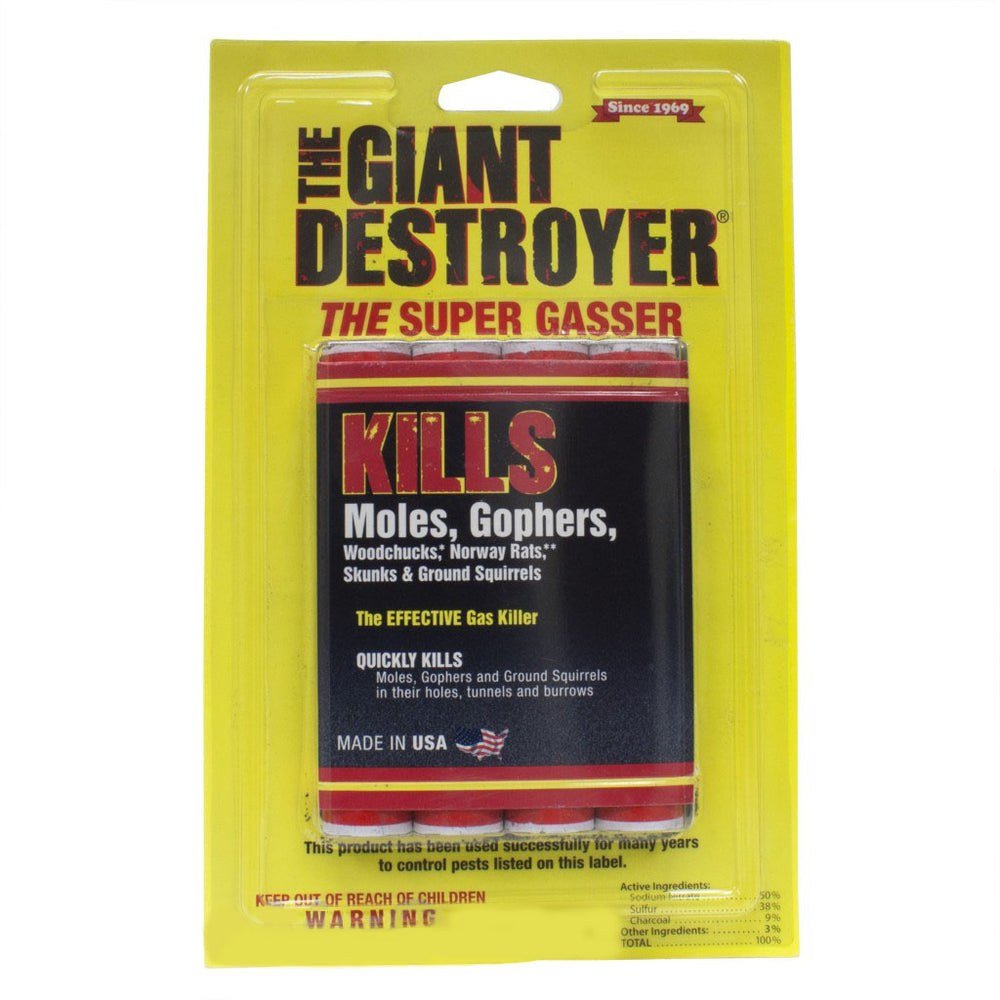 |
The Giant Destroyer (Gas Killer) Super Gasser 00333, 4-Pack EPA #10551-1 · Sodium Nitrate 50% · Sulfur 38% |
8/10 |
Check Price on Amazon |
| 2 | 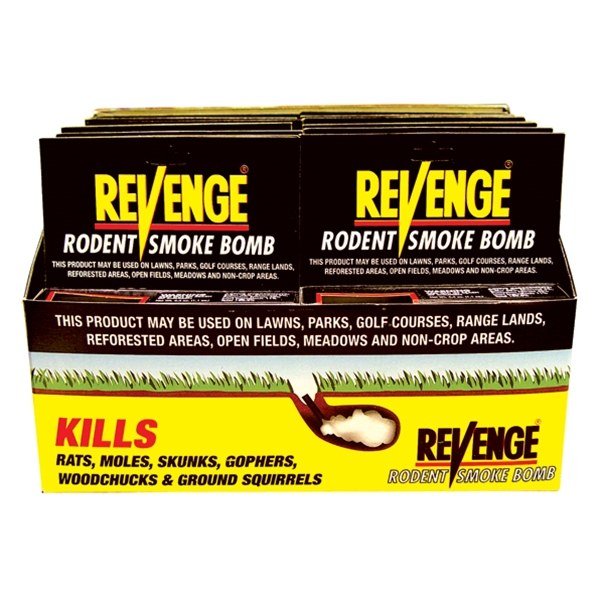 |
Bonide Revenge Rodent Smoke Bombs, 4-Pack Sulfur 39.4% · Potassium Nitrate 38.8% · one bomb per burrow |
7/10 |
Details below. |
| 3 | 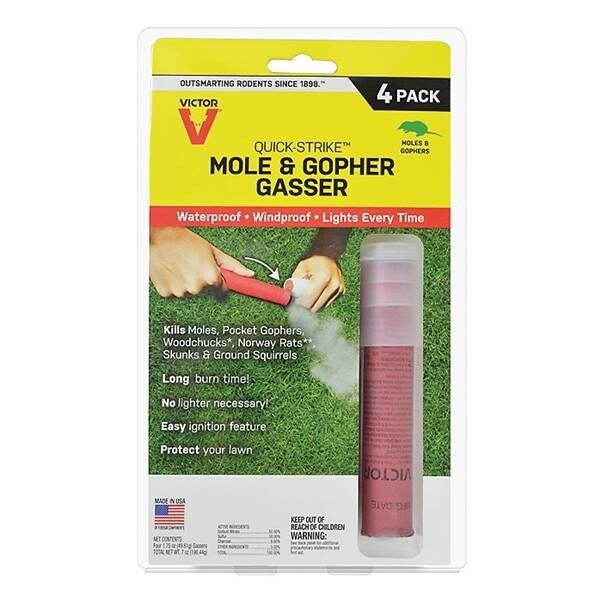 |
Victor Quick-Strike Mole & Gopher Gasser, 4-Pack (M6004B) Self-igniting · waterproof/windproof · long burn |
7/10 |
Details below. |
| 4 | 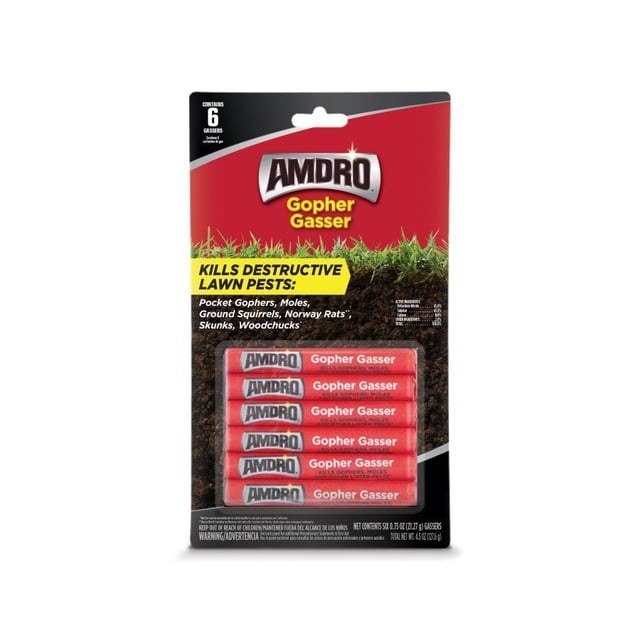 |
Amdro Gopher and Mole Killer, 6 Gassers (0.75 oz) Compact sticks · pocket gophers, moles, ground squirrels |
8/10 |
Details below. |
| 5 | 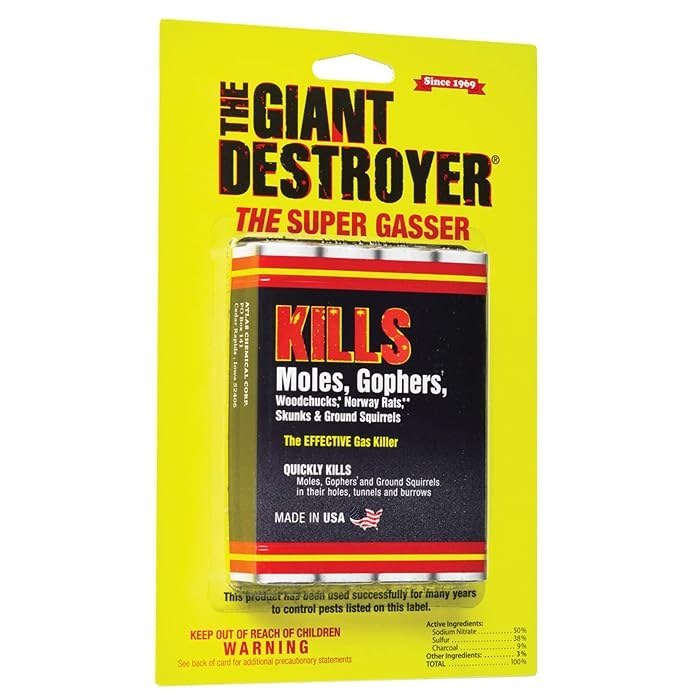 |
Giant Destroyer 8-Pack (32 tubes) Bulk bundle · third-party seller · same classic formula |
7/10 |
Check Price on Amazon |
Safety Warnings: Read Before You Buy
Fire hazard. These are incendiary devices that produce flames and hot ash. Never use them near dry vegetation, mulch, combustibles, or structures — buyers have reported yard fires from gopher bombs. Do not use on windy days, and keep a hose or fire extinguisher within reach.
Toxic smoke. The smoke is the point — and it’s poisonous. Outdoor use only: never indoors, under buildings, or in enclosed spaces. Keep children, pets, and non-target animals far away during and after use, and follow the label’s re-entry guidance.
These are EPA-registered pesticides, not casual garden products, and some retailers do not ship them to California — check your state and local regulations before ordering. Effectiveness is mixed and not guaranteed: rodents frequently seal tunnels or push bombs out, so a failed attempt doesn’t necessarily mean you did it wrong.
1. The Giant Destroyer (Gas Killer) Super Gasser 00333, 4-Pack — The Classic
The Giant Destroyer from Atlas Chemical Corp. is the name most people know — a trusted classic since 1969. The 4-pack contains cartridges whose label and photos show 2 oz, though the Amazon listing text says 1.75 oz — an inconsistency worth noting honestly. Active ingredients: Sodium Nitrate 50%, Sulfur 38%, Charcoal 9%, other 3%. It’s an EPA-registered pesticide (EPA #10551-1) labeled for moles, gophers, ground squirrels, skunks, woodchucks, and Norway rats in tunnels. Use is simple: light the fuse, insert into an active burrow, seal with dirt.
What buyers like: The track record — decades on the market, heavy smoke output, long burn time, dead-simple operation.
What buyers complain about: Duds and loose fuses are reported; rodents sometimes seal tunnels or push the bomb out; and the fire risk is real.
Editorial score: 8/10.
2. Bonide Revenge Rodent Smoke Bombs, 4-Pack — Simple Dosing
Bonide’s Revenge Rodent Smoke Bombs come as a 4-pack with a straightforward formula: Sulfur 39.4%, Potassium Nitrate 38.8%, Charcoal 9.3%, inert ingredients 12.5%. One bomb per burrow — simple dosing with a no-poison-residue angle, since the smoke dissipates rather than leaving bait behind.
What buyers like: Buyers report cleared activity after proper use, and the one-bomb-per-burrow simplicity is appreciated.
What buyers complain about: Effectiveness is mixed, and the fire and toxicity hazard warnings apply in full.
Editorial score: 7/10.
3. Victor Quick-Strike Mole & Gopher Gasser, 4-Pack (M6004B) — No Lighter Needed
Victor’s Quick-Strike (M6004B) differentiates with self-igniting cartridges — strike like a match, no lighter needed — that are waterproof and windproof with a long burn. It targets moles, gophers, woodchucks, Norway rats, ground squirrels, and skunks.
What buyers like: The fuse-free convenience is the selling point, and reliability in wet or windy conditions gets credit.
What buyers complain about: There’s limited public feedback to go on, and the tunnel-blocking caveat applies — rodents can still seal off the treated tunnel.
Editorial score: 7/10.
4. Amdro Gopher and Mole Killer, 6 Gassers — Best for Spot Treatment
Amdro’s offering is six compact 0.75 oz gasser sticks targeting pocket gophers, moles, ground squirrels, Norway rats, skunks, and woodchucks. The small stick format is easy to place in individual burrow openings.
What buyers like: Buyers report success where baits and traps failed, and the compact sticks are easy to place precisely.
What buyers complain about: Extensive tunnel networks need many sticks, which gets pricey — and effectiveness hinges on correctly locating active burrows.
Editorial score: 8/10.
5. Giant Destroyer 8-Pack (32 Tubes) — Best Bulk Value
This is a bulk bundle: 8 packs of 4 tubes (32 cartridges) of the same Giant Destroyer formula. Note that this is a third-party seller bundle, not brand-direct, and availability may be intermittent. Same fuse-and-seal operation.
What buyers like: Bulk quantity for large yards and farms at a better per-cartridge cost; same simple operation as the classic.
What buyers complain about: Third-party bundle means generic marketing copy and no brand-direct support; the same category caveats (duds, tunnel-blocking, fire risk) apply.
Editorial score: 7/10.
Buying Guide
How Gopher Bombs Work
The cartridge contains an incendiary mixture (typically a nitrate, sulfur, and charcoal). Lighting it produces dense toxic smoke that fills the burrow system. Sealing the entrance with dirt keeps the smoke in, and any animal in the connected tunnels is overcome. That’s the entire mechanism — no poisoned bait, no traps to check.
Finding Active Burrows
This is the step most people get wrong. Flatten or mark all mounds, then check the next day — reopened or fresh mounds mark active tunnels. Treating inactive burrows wastes cartridges and accomplishes nothing, so confirm activity first.
Application Basics
Work in the evening when rodents are likely home. Clear dry vegetation from around the burrow, have water ready, light the fuse, insert the cartridge as far as it goes, and seal the opening with dirt immediately. Treat every active opening you can find — missing one lets the colony survive.
When to Call a Professional
If you’ve treated correctly twice with no result, if the tunnel network is extensive, if you’re near structures or dry brush where fire risk is unacceptable, or if local regulations restrict these products — call a licensed pest control operator. Burrowing rodents are genuinely hard to eliminate, and there’s no shame in bringing in a pro.
Frequently Asked Questions
How do gopher bombs work?
You light a smoke-producing cartridge, insert it into an active burrow, and seal the opening with dirt. The cartridge’s incendiary mixture (typically nitrate, sulfur, and charcoal) generates dense toxic smoke that fills the tunnel system. They are EPA-registered pesticides, not casual garden products.
Are gopher bombs safe for pets?
No — keep pets (and children and non-target wildlife) far away. The smoke is toxic, the cartridges produce flames and hot ash, and misuse has caused yard fires. Use outdoors only, never indoors or under buildings, and follow all label safety directions.
Do gopher bombs actually work?
Sometimes. Effectiveness is genuinely mixed — rodents frequently seal off tunnels or push the bomb out before the smoke does its job. Success depends heavily on correctly identifying active burrows and treating every opening. They are not guaranteed, and repeat attempts are common.
Are gopher bombs legal everywhere?
No. They are EPA-registered pesticides subject to state and local regulations, and some retailers will not ship them to California. Check your state and local rules before buying or using them.
Conclusion
Gopher bombs occupy a specific niche: a simple, lower-cost intervention for active burrow systems when traps and baits haven’t worked. The Giant Destroyer remains the benchmark on track record, the Victor’s self-igniting design is the convenience pick, and Amdro’s sticks suit precise spot treatment.
But go in clear-eyed: they’re incendiary devices with real fire and toxicity risks, effectiveness is mixed, and the law varies by location. Used carefully on confirmed active burrows — with water handy and pets indoors — they’re a legitimate tool. Used carelessly, they’re a liability.
