


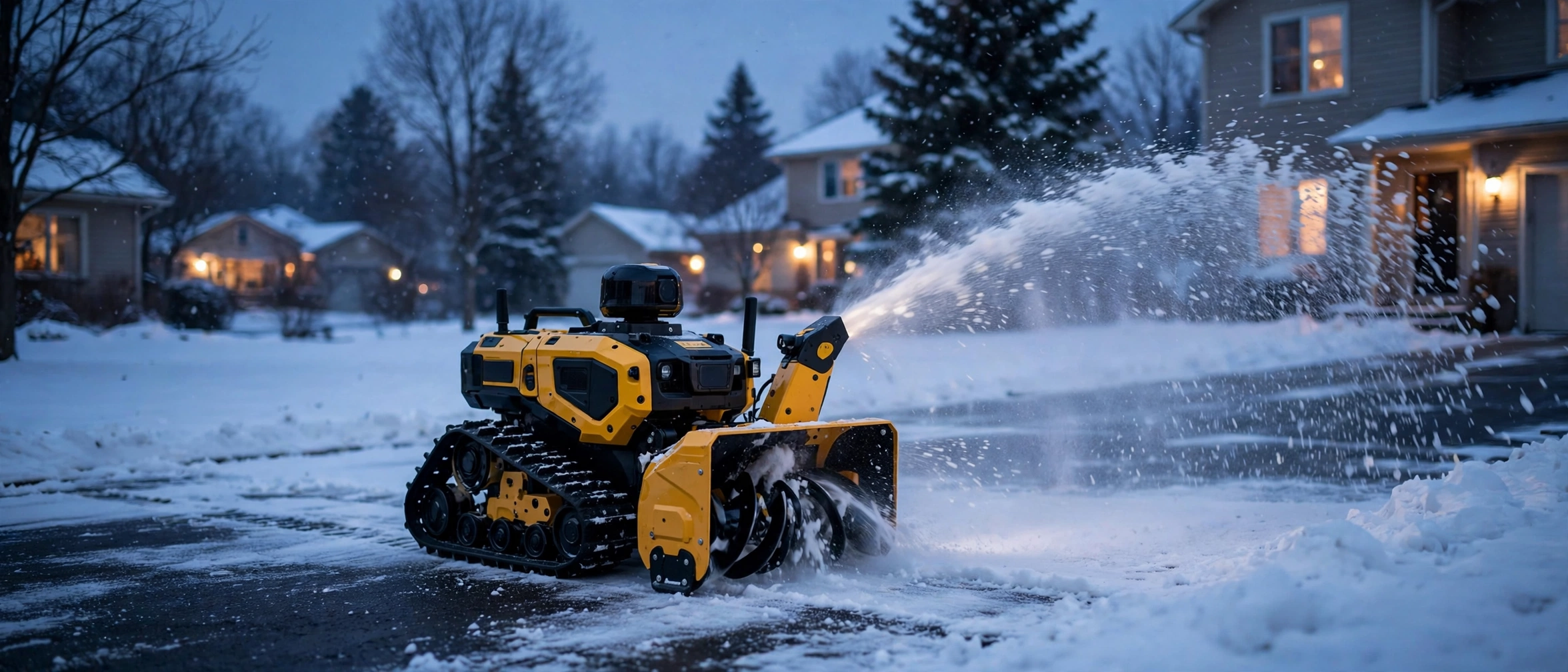
The Yarbo Snow Blower S1 is a 2-stage, cordless electric snow blower that drives itself: an autonomous robot built to clear your driveway on a schedule, day or night, without you standing outside in a storm. It navigates with auto-mapping, AI vision, and RTK GPS, rides on a track-drive system with cleats and a recovery algorithm, and throws snow 6 to 40 feet with a 12-inch cleaning height.
The honest short version: the S1 is an impressive piece of autonomy for homeowners with big driveways in heavy-snow regions — scheduled clearing without manual labor is genuinely compelling. But it is a roughly 220-pound machine with multi-thousand-dollar pricing and a complex setup involving an RTK base station, boundary mapping, and app configuration. This Yarbo snow blower review covers the specs, the setup reality, what owners like, the complaints, and the red flags.
| Product at a Glance | |
|---|---|
| Detail | Spec |
| Photo | 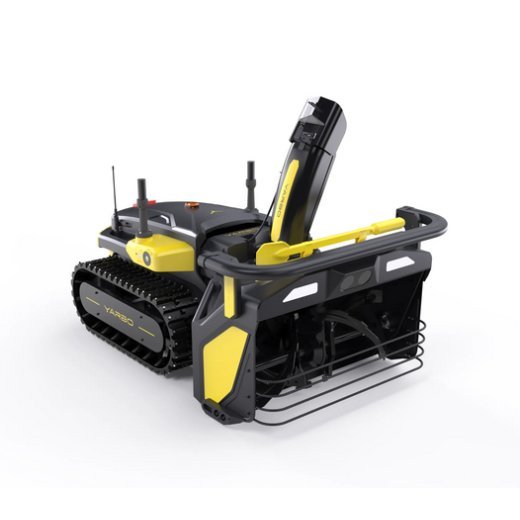 |
| Product | YARBO Snow Blower Robot S1 — 24/7 Autonomous 2-Stage Robotic Snow Blower |
| Key Specs | 2-stage cordless electric snowblower; approx. 62.99 x 23.62 x 13.78 inches; approx. 220 lbs; 6–40 ft throwing distance; 12-inch cleaning height; auto-mapping, AI vision, and RTK GPS navigation; track-drive system with cleats and recovery algorithm; handles slopes. |
| Best For | Homeowners with large driveways in heavy-snow regions who want autonomous, scheduled snow clearing without manual labor. |
| Check Price on Amazon | |
As an Amazon Associate we earn from qualifying purchases.
What the Yarbo S1 Actually Is
The S1 is Yarbo’s snow-clearing robot: a 2-stage cordless electric snow blower on a tracked drive base, designed to operate autonomously on a schedule — the brand’s 24/7 framing. Instead of pushing a blower through a storm, you map your driveway once, set a schedule in the app, and the machine handles clearing on its own, including while you are asleep or away.
The physical specs tell you this is serious equipment: roughly 63 x 24 x 14 inches and about 220 pounds. That is not a machine you carry — it has the presence of a small riding mower. The 2-stage design (auger plus impeller) is what you would expect from a full-size snow blower, and the 12-inch cleaning height with a 6-to-40-foot throwing distance puts its clearing capability in real winter-storm territory.
How the Autonomy Works: RTK GPS, AI Vision, and Mapping
The S1 navigates with a combination of auto-mapping, AI vision, and RTK GPS. RTK (real-time kinematic) GPS uses a fixed base station to correct satellite positioning down to centimeter-level accuracy — far more precise than the GPS in your phone — which is what lets the robot hold a steady path across your driveway instead of wandering.
Setup means installing the RTK base station, completing the boundary-mapping process to define your clearing area, and configuring everything in the app. AI vision helps the machine recognize its surroundings and handle obstacles. The track-drive system with cleats provides grip on snow and ice, and a recovery algorithm is designed to get the machine unstuck when it loses traction. The brand also says it handles slopes, which matters for anyone whose driveway is not flat.
What the Brand Claims (and How to Read It)
The headline claim is 24/7 autonomous snow clearing on a schedule — the machine works while you do not. Paired with that is the claim of strong motor power for quick snow discharge. Both are plausible for the hardware described: a 2-stage electric blower with a 40-foot maximum throw is genuinely capable equipment.
The fine print is where expectations need managing. Autonomous still depends on mapping quality, RTK coverage at your specific property, and software that keeps working through updates. And the brand’s own FAQ notes that wet, heavy snow may need pre-plowing — even the robot has limits. Read the autonomy claim as scheduled clearing under the right conditions, not as never thinking about snow again.
What Owners Like
Scheduled autonomous operation is the whole point, and it is what owners praise most: the driveway gets cleared without anyone going outside. For people with long driveways, physical limitations, or travel schedules that leave the house empty during storms, that independence from manual labor is the core value proposition.
The clearing performance gets positive notes too — the 6-to-40-foot throwing distance and 2-stage design mean it moves serious snow, not just dustings. And the track drive with cleats plus the recovery algorithm addresses the obvious worry: a robot that gets stuck in a drift is worse than no robot at all. Traction and self-recovery are where this machine earns its keep.
The Complaints
Weight is the first reality check. At roughly 220 pounds, the S1 is not something you carry, lift into a truck bed, or easily reposition by hand. Delivery, placement, and any off-season storage move need a plan — and possibly a second person.
Then there is the price category: multi-thousand-dollar territory. That is the going rate for autonomous yard equipment, but it puts the S1 in a different universe from a conventional snow blower. The math only works if autonomous clearing is worth the premium to you — there is no budget argument here.
Finally, the setup complexity. An RTK base station, boundary mapping, and app configuration is a meaningful project, not an unboxing. Less technical buyers should expect a learning curve, and anyone with an unusual driveway layout should confirm mapping and RTK coverage will work for their property before committing.
Red Flags and Realistic Expectations
- Large upfront cost. Verify current pricing, warranty terms, and return policy before buying — for a multi-thousand-dollar machine, the return window and warranty coverage matter as much as the specs.
- Not suited to every driveway layout. Mapping and RTK coverage must be confirmed for your specific property; unusual layouts, heavy tree cover, or obstructions can complicate the autonomy.
- Wet, heavy snow may need pre-plowing, per the brand’s own FAQ. The robot has limits in the worst conditions — exactly when you need clearing most.
- Software-dependent navigation. Updates and ongoing app support matter enormously for a machine at this price; you are buying into a software platform, not just hardware.
Final Verdict
The Yarbo S1 is the real deal as a concept: a 2-stage autonomous snow blower with serious throwing distance, proper traction, and centimeter-level navigation. For a homeowner with a big driveway in a heavy-snow region who hates manual clearing — or cannot do it — scheduled autonomous operation is a genuinely life-improving feature.
But go in with eyes open about the weight, the multi-thousand-dollar price, and the setup project. Confirm RTK coverage for your property, read the warranty, and have a plan for the worst wet-snow storms. If all of that checks out, the robot earns its keep.
How does the RTK GPS work?
RTK (real-time kinematic) GPS pairs satellite signals with a fixed base station to achieve centimeter-level positioning accuracy — far more precise than phone GPS. That is what lets the S1 hold accurate paths across your driveway during autonomous clearing.
Can it handle steep driveways?
The brand says the S1 handles slopes, and the track-drive system with cleats is designed for traction on snow and ice. That said, confirm coverage and performance for your specific driveway layout before buying — steep or unusual driveways deserve extra scrutiny.
How heavy is the Yarbo S1?
About 220 pounds, at roughly 63 x 24 x 14 inches. It is not portable in any practical sense — plan for delivery, placement, and storage moves accordingly.
Is it worth the price compared to a regular snowblower?
It depends on what you are buying. A conventional blower is far cheaper and simpler; the S1’s premium pays for autonomous, scheduled clearing without manual labor. If that autonomy is worth multi-thousand-dollar pricing to you — big driveway, heavy snow region, limited mobility — the math can work. Otherwise, a regular blower wins on value.
The Yarbo S1 is an impressive machine solving a real problem — nobody enjoys clearing a long driveway at dawn in a blizzard. The autonomy, throwing distance, and traction are all serious. Just make sure your property, your budget, and your tolerance for a tech-heavy setup all line up first. This is a purchase to research thoroughly, not to impulse-buy.
