


Choosing a dry cat food feels like a bigger decision than it should be. Your cat eats this food every single day for years, and the wrong pick can mean digestive trouble, weight gain, or a cat that stages a hunger strike in front of a completely full bowl.
Wellness Complete Health is one of the names that comes up constantly whenever natural cat food enters the conversation. The brand has been around for decades, it positions itself as premium without tipping into luxury pricing, and its indoor grain-free recipe is one of the best-known formulas in the lineup. This review walks through what is actually in the bag, what owners report after feeding it for months, and the parts the marketing material glosses over — including the recall history, which you deserve to know about. One note up front: this is a research-based review. I did not run a feeding trial with a panel of cats, and I will not pretend otherwise.
Product at a Glance
| DETAIL | SPEC |
|---|---|
| Photo | 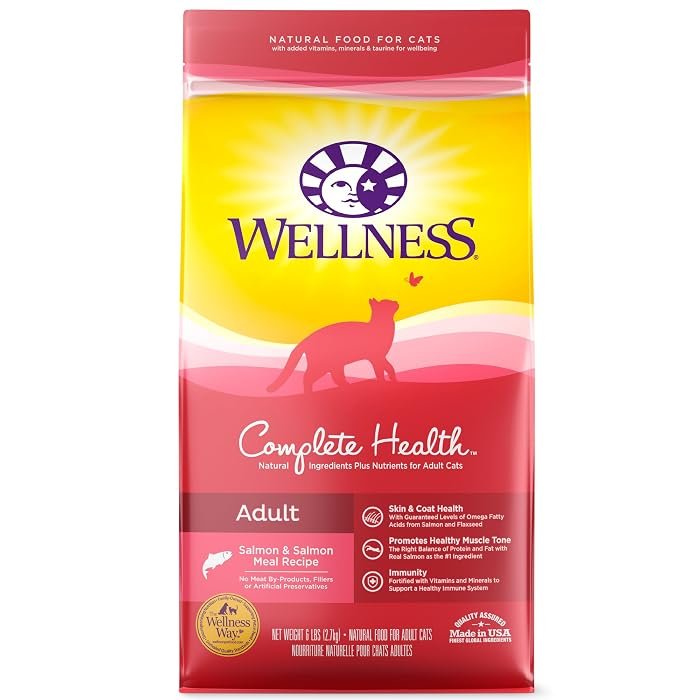 Pictured: the Salmon 6lb variant. The Amazon listing below is the Indoor Chicken 11.5lb recipe — same Complete Health product line, flavor may differ. |
| Product | Wellness Complete Health Adult Dry Cat Food, Indoor, Grain Free |
| Key specs |
|
| Best for | Indoor adult cat owners who want a natural, grain-free dry food with weight-management support |
| Check price | Check Price on Amazon |
As an Amazon Associate we earn from qualifying purchases.
What Wellness promises
On the brand’s telling, this is natural, complete and balanced nutrition for indoor adult cats. The label and marketing lean on a few big claims: support for the immune system, healthy digestion, and skin and a shiny coat. Those are brand claims, not independent findings, so treat them as the starting point for questions rather than the answer.
One phrase worth unpacking is “complete and balanced.” In pet food, that phrase has a specific meaning — the recipe is formulated to meet AAFCO nutrient profiles for the stated life stage, in this case adult maintenance. It is a real standard, but it is also the baseline every legitimate adult cat food has to hit. It tells you the food is nutritionally adequate, not that it is exceptional.
What is actually in the bag
The ingredient list opens with deboned chicken followed by chicken meal. That is a meaningful detail. Deboned chicken is fresh meat with high water content, which means it weighs more going in than it contributes after processing. Chicken meal is the concentrated, rendered version — and listing it second means there is a genuine animal-protein foundation here rather than a fresh-meat-first recipe that is mostly plant protein by the time the water cooks off.
The grain-free part means no corn, wheat, or soy. Grain-free does not automatically mean low-carbohydrate — the starch has to come from somewhere, and in recipes like this it typically comes from legumes, potatoes, or similar ingredients. What grain-free does mean here is that the recipe avoids the cheapest fillers in the category, and for cats with sensitivities to common grains, that is a real plus.
On the “what is left out” side: no meat by-products, no artificial colors, no artificial flavors, and no artificial preservatives. Whether by-products are actually a problem is a debated topic — rendered by-products can be nutritious — but many shoppers use their absence as a quality signal, and Wellness clearly formulates for that shopper.
The functional extras are where this recipe tries to earn its premium. Taurine is non-negotiable for cats — they cannot synthesize enough of it, and deficiency causes serious heart and eye problems — so its presence is expected, not a bonus. Omega fatty acids support skin and coat condition, which lines up with the brand’s shiny-coat claim. And the added probiotics are aimed at digestive health, which matters for indoor cats whose routines are, frankly, pretty sedentary.
What owners consistently like
Reading through owner feedback, a few themes come up again and again. The most common is coat condition: owners frequently report sleek, soft coats after switching to this food. It is the kind of change people actually notice, which makes it worth mentioning even though coat reports are subjective.
The second theme is acceptance. A lot of cats simply eat this food readily, including some that turned their noses up at other premium kibbles. That matters more than it sounds — the best-formulated food in the world is worthless if the cat will not touch it.
Two more practical positives show up regularly. Multiple owners report a less smelly litter box, which is a quality-of-life upgrade the whole household appreciates. And several owners say the food helped their indoor cats hold a healthy weight, which is the entire point of the indoor, weight-management positioning.
The honest complaints
No food pleases everyone, and this one has real, recurring criticisms. The biggest is price. This is premium kibble, and it costs noticeably more than grocery-store options. Households with several cats feel that difference every month, and a few owners admit they rotate it with cheaper food to keep the budget in check.
The second complaint is the mirror image of the praise above: some cats refuse it outright. Picky eaters exist in every breed, and a handful of owners report that their cats would not touch the recipe no matter how gradually it was introduced. If your cat is famously fussy, buy the smallest bag first.
Finally, a lineup gripe: the Complete Health range is thin on senior-specific formulas. If you are shopping for an aging cat with changing nutritional needs, you may find the options limited compared with brands that maintain dedicated senior lines.
Red flags and honest disclosures
Recall history. This is the part some reviews skip, and I will not. Wellness has a real recall history. In February 2011, the company recalled 21.6 million cans of canned cat food. There was a salmonella-related recall in 2012, and recalls in 2017 connected to metal fragments and thyroid hormone concerns. Critically, there have been no recalls since 2017 — nearly a decade of clean record at the time of writing. Also worth noting: the big 2011 recall involved canned food, not this dry line. But the history belongs to the brand, and you should know it before you buy.
Moisture matters. Dry food alone provides very little moisture, and cats are notoriously bad drinkers. A cat eating an all-dry diet should be actively encouraged to drink — a water fountain helps — and many veterinarians suggest mixing in wet food to raise total water intake. This is not a knock on this specific product; it applies to every dry kibble.
Transition slowly. Switching foods abruptly is one of the most common causes of vomiting and diarrhea in cats. Move to this food gradually over 7 to 10 days, mixing increasing amounts with the old food. If your cat has a sensitive stomach, stretch it even longer.
Talk to your vet about medical conditions. If your cat has kidney disease, urinary issues, or a weight condition being managed with diet, consult your veterinarian before switching foods. Prescription and therapeutic diets exist for a reason, and an over-the-counter food — however natural — is not a substitute for veterinary guidance.
Who this food is a good fit for
This food makes the most sense for indoor adult cat owners who want a natural, grain-free dry food with weight-management support and are willing to pay a premium over grocery-store kibble. It is a reasonable default pick for a healthy adult indoor cat with no special dietary needs.
It is a weaker fit if you have multiple cats and a tight budget, if your cat is an extreme picky eater (start small), or if you are shopping for a senior cat that needs an age-targeted formula. And if your cat has a diagnosed medical condition, the vet conversation comes before the food purchase.
Final verdict
Wellness Complete Health Adult Dry Cat Food is a solid, honestly formulated option in the natural dry food category. The named-meat protein base is legitimate, the no-junk-ingredients positioning is real, and owner feedback skews positive on the things you can actually observe — coat condition, acceptance, and litter box odor. The price is genuinely premium, the recall history deserves a clear-eyed look (with credit for a clean record since 2017), and dry food’s moisture limitations apply here as they do everywhere.
If that profile fits your cat and your budget, it is a reasonable buy.
Is Wellness cat food grain-free?
The Complete Health Indoor recipe reviewed here is grain-free, and it is also soy-free and wheat-free. That said, not every Wellness product across their lines is grain-free, so always check the specific recipe you are buying.
Has Wellness been recalled?
Yes. Wellness recalled 21.6 million cans of canned cat food in February 2011, followed by a salmonella-related recall in 2012 and recalls in 2017 connected to metal fragments and thyroid hormone concerns. There have been no recalls since 2017. The big 2011 recall involved canned food, not the dry line reviewed here — but it is brand history worth knowing.
Is it good for picky eaters?
Many cats eat this food readily — acceptance is one of its most commonly praised traits. But some cats refuse it outright, as with any recipe. If your cat is a known picky eater, buy the smallest bag first and transition gradually over 7 to 10 days.
Is dry food alone okay for my cat?
It can be, but dry food alone provides very little moisture, and cats tend to be poor drinkers. Actively encourage water intake — a fountain helps — and many owners mix in wet food to raise total water intake. Transition to this recipe gradually over 7 to 10 days, and talk to your vet first if your cat has kidney, urinary, or weight issues.
