

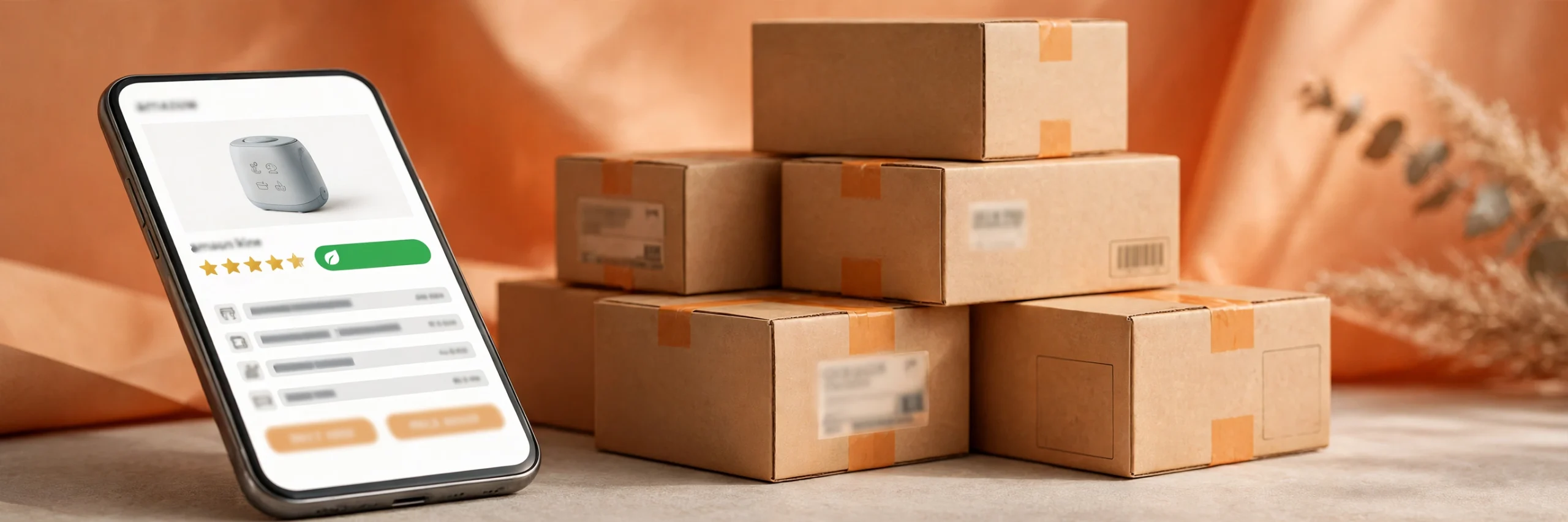
A Vine Customer Review of Free Product badge — the green stripe you sometimes see under an Amazon review headline — means the reviewer received the product for free through Amazon Vine, Amazon’s invitation-only review program. That is the entire meaning of the badge, and it is worth being precise about what it does not mean: it does not mean the review is positive. Vine Voices are required to submit honest reviews, whether positive, neutral, or negative.
Vine is Amazon’s sanctioned exception to its ban on incentivized reviews. Every other free-product-for-review arrangement violates Amazon’s policies — Vine is the one program Amazon itself runs, with its own rules, reviewer tiers, and quality scoring. Here is how it works, what the badge really tells you, and the catches most people miss, including a tax surprise.
What the Green Badge Actually Means
When you see Vine Customer Review of Free Product in green under a reviewer’s name, it means exactly one thing: Amazon sent that reviewer the product for free through the Vine program, and the reviewer posted a review of it. The badge is Amazon’s transparency mechanism — it tells you the reviewer did not pay for the item.
What it does not tell you is whether the review is positive. Vine Voices must submit honest reviews — positive, neutral, or negative. Amazon requires this explicitly: the program’s value to the marketplace depends on credibility, and a wall of guaranteed five-star reviews would destroy that. So the badge means free product, not favorable review.
How Amazon Vine Works
Vine is invitation-only — there is no public application. Amazon selects reviewers, called Vine Voices, based on their review history: people who write detailed, helpful reviews get invited. Once in, Voices browse a selection of products enrolled in Vine by sellers and request items they want to review, which arrive free.
The program exists because new products have a cold-start problem: no reviews means no trust, and no trust means no sales. Vine seeds those first reviews — but with the honesty requirement as the guardrail. Sellers pay to enroll products in Vine; reviewers get free products; shoppers get early reviews. Everyone’s incentives are visible, which is the point.
The Two Tiers: Silver and Gold
Vine Voices sit in one of two tiers. Silver Voices can request up to 3 items per day, limited to items under $100. Gold is the higher tier, with broader access. Tier status is not permanent — it is maintained by ongoing review activity and quality.
Since June 2025, a Review Insightfulness Score factors into tier status. Amazon scores reviews on how insightful they are — detailed, specific, genuinely useful reviews score higher than one-liners. Falling below the tier maintenance thresholds can get a Vine account removed from the program entirely. The message is clear: Vine wants substantive reviews, not free-product grabs.
Recent Changes Worth Knowing
Since July 2025, Vine Voices may post reviews even before a product is sold. That means you might see Vine reviews on a listing with no sales history — the review came through the Vine pipeline, not from a customer purchase. It is another reason to read the badge: it tells you the reviewer’s relationship to the product.
Then there is the tax catch: Amazon reports the fair market value of free products on a 1099-NEC for US reviewers. Many reviewers do not expect this — free products count as taxable income, and a year of enthusiastic Vine requesting can add up to a real tax bill. If you are a Vine Voice, track what you receive.
Red Flags and Misconceptions
- The badge does not guarantee the review is positive. Vine requires honesty — positive, neutral, or negative. A Vine badge on a two-star review is the system working as intended.
- Vine is Amazon’s sanctioned exception to the incentivized-review ban. Every other free-product-for-review program violates Amazon’s policies. If a seller offers you a free product for a review outside Vine, that is a policy violation — for both of you.
- Free products create a 1099-NEC tax liability many reviewers do not expect. The free in free products does not extend to taxes.
- Sellers should know: Vine does not guarantee positive coverage. Enrolling a product in Vine buys exposure to reviewers, not good ratings — the risk of honest negative reviews is real, and that is by design.
Are Vine Reviews Trustworthy?
More than most incentivized reviews, with caveats. The honesty requirement, the insightfulness scoring, and Amazon’s direct oversight make Vine reviews structurally more trustworthy than the paid-review schemes Amazon bans. A Vine reviewer has no financial relationship with the seller — their compensation is the product itself, and their continued participation depends on writing useful reviews.
But selection bias is real: Vine Voices choose which products to request, so they tend to review things they were already interested in — which skews positive. And the 1099-NEC means reviewers who request a lot have a mild incentive to keep the products coming, which means staying in Amazon’s good graces. Read Vine reviews as informed early impressions, not as gospel. The badge gives you context — use it.
What does the green Vine Customer Review badge mean?
It means the reviewer received the product for free through Amazon Vine, Amazon’s invitation-only review program. It is a transparency label: the reviewer did not pay for the item. It does not mean the review is positive — Vine Voices must write honest reviews, positive, neutral, or negative.
Can I apply to join Amazon Vine?
There is no public application. Vine is invitation-only — Amazon selects reviewers (Vine Voices) based on their history of writing detailed, helpful reviews. The path in is writing genuinely useful reviews on products you buy.
Do Vine reviewers pay tax on free products?
Yes, in the US. Amazon reports the fair market value of free products on a 1099-NEC, so the products count as taxable income. Many reviewers do not expect this, and a busy year of Vine requesting can produce a real tax bill.
Are Vine reviews trustworthy?
More than typical incentivized reviews. The honesty requirement, the Review Insightfulness Score introduced in June 2025, and Amazon’s direct oversight all help. But selection bias exists — Voices pick products they are interested in — so read them as informed early impressions, not gospel.
The Vine badge is one of the more honest labels in online shopping: it tells you exactly what the reviewer’s relationship to the product is. Free product, honest review required, quality scored, taxes owed. Understand those four facts and you will read Vine reviews the way they are meant to be read — as useful, contextualized, and human.
