

Creatine monohydrate is the most studied sports supplement on the market — and also one of the simplest. So why pay a premium for Thorne’s version? The answer is certification. Thorne Creatine is NSF Certified for Sport, a third-party testing program that screens for banned substances, which makes it the go-to pick for drug-tested athletes who cannot risk a contaminated product.
The short version of this Thorne creatine review: it is a clean, single-ingredient micronized creatine monohydrate that buyers describe as truly tasteless and easy to mix into water or shakes. The NSF certification is the real differentiator — and the reason it costs more than budget powders. If you are not drug-tested and just want cheap creatine, the premium is harder to justify.
| Product at a Glance | |
|---|---|
| Photo | 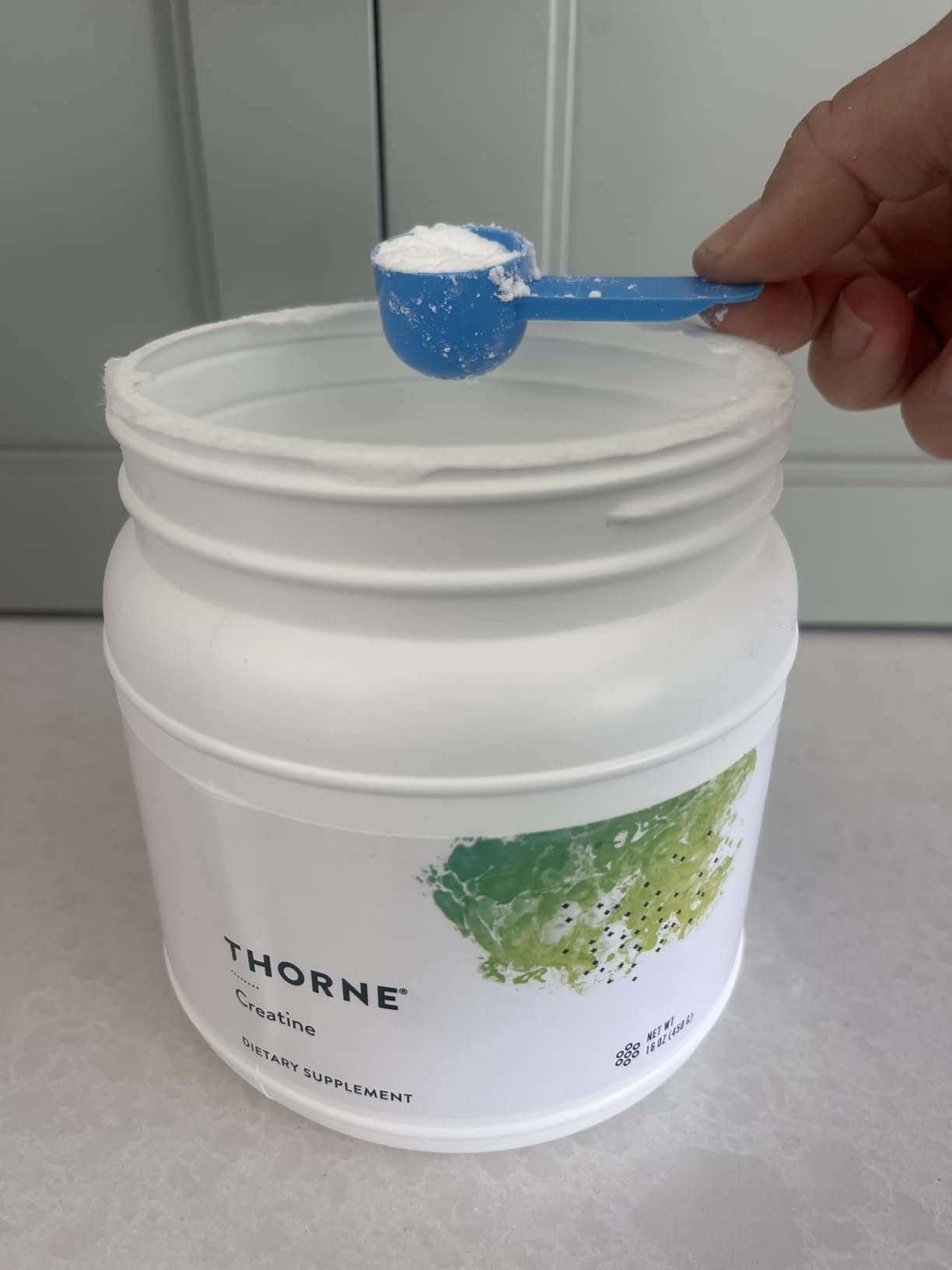 |
| Product | THORNE Creatine — Micronized Creatine Monohydrate Powder, Unflavored |
| Key Specs | Micronized creatine monohydrate powder; 5g creatine monohydrate per serving; 90 servings per 450g tub; unflavored; single-ingredient formula — no other ingredients; gluten-free, dairy-free, soy-free; keto-compatible |
| Best For | Drug-tested athletes and lifters who prioritize third-party sport certification and a clean single-ingredient formula |
| Check Price on Amazon | |
What Thorne Claims
Thorne’s pitch is built on trust, not hype. The headline claim is NSF Certified for Sport — third-party testing that verifies the product contains what the label says and screens for banned substances. For athletes subject to drug testing, that certification is the entire value proposition.
Beyond certification, Thorne says the creatine supports muscle mass, strength, endurance, and cellular energy — standard creatine positioning backed by a large body of sports-nutrition research. The brand also notes it is an official partner of the UFC Performance Institute and claims to be “trusted by 45K+ health pros” on its Amazon listing. The formula itself is deliberately minimal: micronized creatine monohydrate and nothing else, unflavored, with no gluten, dairy, or soy.
These are brand claims, but the NSF certification is independently verifiable — look for the current NSF Certified for Sport mark on the product you receive.
What Buyers Praise
Taste — or the lack of it — is the most consistent compliment. Buyers frequently describe Thorne Creatine as truly tasteless, with no gritty texture when mixed into water or shakes. For a supplement taken daily for months, being able to disappear into a morning shake matters more than it sounds.
The NSF certification is the second recurring confidence point. Drug-tested athletes specifically call out that the third-party sport certification is why they chose Thorne over cheaper powders — the peace of mind is the product, as much as the creatine itself.
Simplicity rounds out the praise. The single-ingredient label — just creatine monohydrate, no flavors, fillers, or proprietary blends — appeals to buyers who read labels carefully and want to know exactly what they are taking.
Common Complaints
Mixability opinions are split. While many buyers report smooth mixing, a notable minority describe grainy texture or incomplete dissolving — powder settling at the bottom of the glass. Micronized creatine dissolves better than standard monohydrate, but “micronized” does not mean “instantized,” and buyers expecting it to vanish like sugar are sometimes disappointed. Stirring thoroughly or mixing into a shake solves it for most.
Price is the other big complaint. Thorne costs notably more than budget creatine powders from brands like Nutricost or BulkSupplements — and since creatine monohydrate is a commodity ingredient, price-sensitive buyers question what the premium buys. A few reviewers report switching away on price alone. The honest answer: you are paying for the NSF certification and brand quality control, not for a more effective form of creatine.
Red Flags and Honest Caveats
Digestive issues are usually a dosing problem. Some buyers report bloating or cramping, but this typically traces to over-dosing (taking far more than the 5g serving) or dumping dry powder into too little liquid. Stick to the serving size, mix it well, and drink enough water.
Talk to your doctor first if you have certain conditions. Creatine affects water retention and is processed through the kidneys. If you have kidney disease, high blood pressure, or take medications that affect the kidneys, consult a healthcare professional before using creatine. This is not a supplement to start casually with a medical history — get professional guidance.
The premium pushes some buyers toward risky alternatives. Thorne’s pricing drives price-sensitive shoppers toward cheap, uncertified powders — including counterfeit products that carry contamination risks. If the Thorne price stings, that is understandable, but the cheapest unknown-label creatine is not the safe way to save money.
Cognitive benefits are brand-adjacent claims. You may see creatine discussed for focus or cognitive support. Treat those as emerging-research talking points and brand claims, not established effects — the strong evidence base for creatine is in muscle and exercise performance.
Who Should Buy It — and Who Should Skip It
Buy it if you are a drug-tested athlete, a competitive lifter, or anyone who wants third-party verified purity and a clean single-ingredient label — and you are willing to pay for that assurance. The tasteless, easy-mixing powder makes daily use painless.
Skip it if you are a casual gym-goer on a budget who just wants basic creatine monohydrate. A reputable budget powder gives you the same 5g of creatine for less — you are paying Thorne for certification and quality control, not for stronger creatine.
Frequently Asked Questions
How much creatine per serving?
Thorne Creatine provides 5g of creatine monohydrate per serving — the standard daily dose used in most research. One serving a day, mixed into water or a shake, is the typical routine. Don’t megadose; more isn’t better and raises the odds of stomach discomfort.
Is it really NSF certified?
Thorne states the product is NSF Certified for Sport, which means third-party testing for label accuracy and banned substances. Verify the current NSF mark on the packaging of the product you receive — certification applies to specific products and can change, so the mark on your tub is what counts.
Will it cause bloating?
Some buyers report bloating or cramping, but it usually comes from taking too much or mixing poorly. Stick to the 5g serving, mix it thoroughly into enough liquid, and drink water through the day. If digestive issues persist, stop and talk to a healthcare professional.
Thorne vs budget creatine?
The creatine itself is the same commodity ingredient — 5g of monohydrate is 5g. Thorne’s premium buys NSF Certified for Sport testing, brand quality control, and a tasteless single-ingredient powder. If you’re drug-tested or value certification, it’s worth it. If you just want cheap creatine, a reputable budget powder does the same job.
The Bottom Line
Thorne Creatine is the premium you pay for peace of mind. The creatine itself is standard micronized monohydrate — 5g per serving, tasteless, single-ingredient — but the NSF Certified for Sport testing is what justifies the price for drug-tested athletes and label-readers. Mixability complaints are real but minor; the price gap versus budget powders is the actual decision point.
If certification matters to you, this is one of the safest creatine buys available. If it does not, save your money. And as with any supplement, check with a healthcare professional first if you have kidney issues, high blood pressure, or take regular medications.
As an Amazon Associate we earn from qualifying purchases.
