


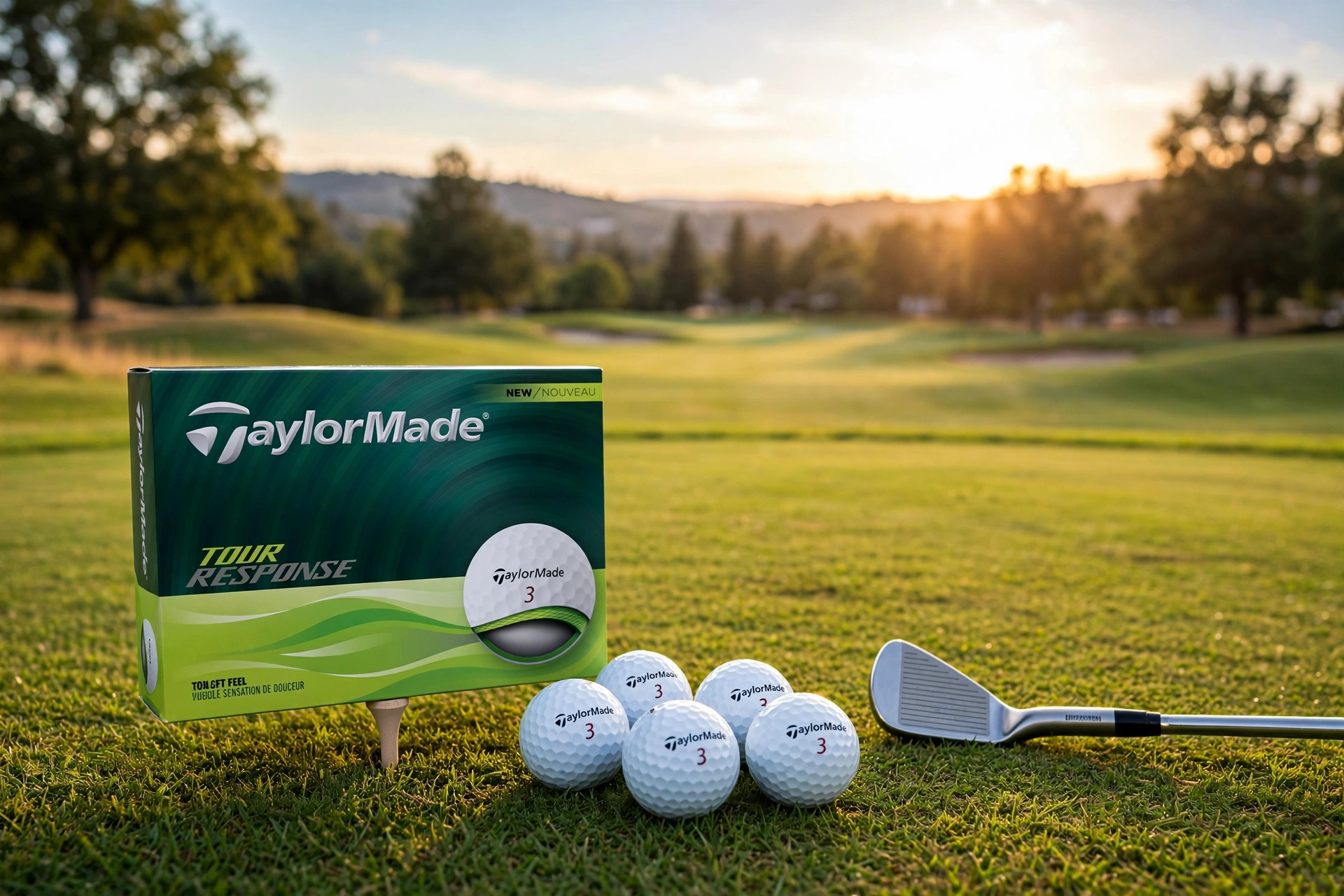
If you like the idea of a urethane-cover golf ball but not the tour-ball price tag, the TaylorMade Tour Response deserves a long look. TaylorMade markets it as a “tour level ball for non-tour swing speeds” — a three-piece ball built around a genuine 100% cast urethane cover, sold well below the TP5 line. That combination is genuinely rare: most balls anywhere near this price use ionomer-style covers, not cast urethane.
The short version of this TaylorMade Tour Response review: it is one of the softest-feeling urethane balls in TaylorMade’s lineup, with real greenside spin for the money and solid driver distance. It suits mid-handicap golfers (roughly a 12–22 handicap) with moderate swing speeds of about 90–105 mph. But it is not a TP5, and one independent robot-test result should shape your expectations before you buy.
| Product at a Glance | |
|---|---|
| Photo |  |
| Product | TaylorMade Tour Response Golf Ball (2025) — White, One Dozen |
| Key Specs | 3-piece construction; 100% cast urethane cover; compression around 70 (soft); Speed Wrapped Core (soft inner, firmer outer layer) plus SpeedMantle layer; built for moderate swing speeds (~90–105 mph) |
| Best For | Mid-handicap (approx. 12–22) and moderate-swing-speed golfers who want a soft-feel urethane ball with decent greenside spin at a lower price |
| Check Price on Amazon | |
What TaylorMade Claims
TaylorMade’s pitch for the Tour Response is aimed squarely at the everyday golfer who wants tour-style technology without a tour-level swing. The headline claim is a “tour level ball for non-tour swing speeds,” and the construction is built to back that story up — at least on paper.
The centerpiece is the 100% cast urethane cover, the same cover material family used on premium tour balls. According to TaylorMade, it delivers a “tour-like” soft feel and the kind of greenside spin that ionomer covers cannot match. Underneath sits the Speed Wrapped Core — a soft inner core wrapped in a firmer outer layer — plus a SpeedMantle layer, which TaylorMade says produces fast ball speeds and “explosive” distance off the tee.
These are brand claims, not independent findings, but they explain who the ball is for: golfers with moderate swing speeds who want to feel what a urethane ball does around the greens without paying the premium price of the TP5 or TP5x.
What Golfers Praise
Across equipment reviews and buyer feedback, one compliment comes up more than any other: feel. The Tour Response is repeatedly described as the softest urethane option in TaylorMade’s lineup, with a gentle, muted sensation off the putter face and irons that many golfers prefer over firmer tour balls. If you like a ball that feels soft without feeling mushy, this is the core appeal.
Distance gets positive marks too. Reviewers report good driver distance, with the low-compression core helping moderate swing speeds launch the ball efficiently. For golfers in the 90–105 mph driver range, that easy launch is arguably more valuable than the extra spin a faster swinger might want.
Wedge and greenside spin earns genuine respect at this price. Nobody confuses it with a TP5 around the greens, but buyers consistently say the urethane cover checks up better than any ionomer ball they have played — a “tour level” feel at a non-tour price, as the saying goes. For the mid-handicap golfer who loses balls and winces at premium prices, that value equation is the whole argument.
Common Complaints
The most consistent criticism is about wedge spin — specifically, that it falls short of the premium tier. Golfers who switched down from the TP5 or TP5x notice the difference around the greens: the Tour Response spins well for its price, but control on checked-up chips and pitches is good rather than elite. If your short game depends on ripping the ball back, this is not that ball.
One equipment review also noted driver spin running slightly higher than ideal, which can cost a few yards for golfers who already spin the ball a lot off the tee. Related to that, the ball’s overall low full-swing spin means less workability — shaping deliberate draws and fades is harder than with a higher-spinning tour ball. Better players who flight the ball both ways tend to notice this most.
None of these are surprising for a ball built for moderate swing speeds, but they are worth knowing: the Tour Response is optimized for straight, easy distance, not shotmaking.
Red Flags to Know Before You Buy
The robot-test spin result. Independent robot testing (MyGolfSpy’s 2026 ball test) found the Tour Response produced the lowest full-swing spin of all 48 balls tested. That is a striking data point: it confirms the ball is distance-focused rather than workability-focused. If you want maximum greenside grab and shot-shaping spin, this test says to look at higher-spinning options instead.
Conflicting compression numbers. Older spec sheets and listings disagree on compression — some say around 70, others 74. Independent testers describe it as the softest urethane ball TaylorMade makes, but if compression matters to your fitting, verify against the current product listing rather than trusting an old spec sheet.
The recycled-ball trap. Several sellers on Amazon list balls under the “Tour Response” name that are recycled or used balls, not new dozens. A new-ball buyer who clicks the wrong listing can end up with refinished balls at new-ball expectations. Buy from the official TaylorMade listing and check that the seller and product details describe new balls before ordering.
On price. Retail has historically sat roughly in the mid-$30s to low-$40s per dozen in the US, but prices move and listings vary — we are not stating a live price here, so check the current listing.
Who Should Buy It — and Who Should Skip It
Buy it if you are a mid-handicap golfer (about 12–22) with a moderate swing speed who wants the soft feel and greenside performance of a urethane cover without the premium price. It also makes sense as a “step-up” ball for golfers moving on from hard ionomer distance balls who are curious what urethane does for their short game.
Skip it if you are a low-handicap shotmaker who needs high full-swing spin and workability, or if you already play a TP5/TP5x and expect the same greenside control. Faster swingers who compress the ball hard may also find the soft core feels less stable than a firmer tour ball.
Frequently Asked Questions
What compression is the Tour Response?
The Tour Response is a low-compression ball — independent testers place it around 70 compression, making it the softest urethane ball TaylorMade makes. Note that some older spec sheets list 74, so listings can conflict; the on-course takeaway is the same either way: this is a soft-feeling ball built for moderate swing speeds.
How does the Tour Response compare to the TP5?
Both have cast urethane covers, but the TP5 is a five-layer tour ball with higher full-swing spin, more workability, and more greenside grab. The Tour Response is a three-piece ball with lower spin and a softer feel, built for moderate swing speeds. Think of it as the value alternative, not a discount TP5.
Is the Tour Response good for high handicappers?
Yes, it can be a good fit. The soft feel, easy launch, and straight, low-spin flight suit golfers who want help getting the ball airborne. Just know that its greenside spin is good for the price rather than elite, and check that you are buying new balls from the official listing — not recycled ones.
Should I buy new or recycled Tour Response balls?
Buy new from the official TaylorMade listing. Recycled and refinished balls sold under the Tour Response name can have worn covers and inconsistent performance, which defeats the purpose of paying for a urethane cover. Verify the seller and product details describe new balls before ordering.
The Bottom Line
The TaylorMade Tour Response is the soft urethane value ball done right: a genuine cast urethane cover, a soft feel that reviewers consistently praise, and greenside spin that embarrasses ionomer balls at similar prices. Its weaknesses — lower wedge spin than the TP5 line, minimal workability, and that last-place robot-test spin ranking — are the honest trade-offs of a ball engineered for moderate swing speeds and straight distance.
For the mid-handicap golfer it was built for, those trade-offs are easy to accept. Just buy new balls from the official listing, and go in knowing exactly what it is: distance-first softness, not a discount TP5.
As an Amazon Associate we earn from qualifying purchases.
