

Seed’s DS-01 Daily Synbiotic might be the most talked-about probiotic on the internet — and the most expensive one many shoppers will ever consider. The pitch is transparency: 24 probiotic strains, every one published with its research identifiers, wrapped in a patented 2-in-1 capsule, sold through a sleek direct-to-consumer subscription.
But fifty dollars a month is real money for bacteria in a jar. Is DS-01 actually the science-first standout it claims to be, or just premium pa
Red flags worth knowing before you buy
First, the supplement reality check: DS-01 is a dietary supplement, not FDA-approved to treat or prevent any disease — no probiotic is. Marketing that drifts toward disease claims should be read carefully. Second, no probiotic “colonizes” the gut permanently; the strains pass through, which is why benefits generally require continuous use — and continuous spending. Third, the direct-to-consumer subscription model: convenient, but compare the total annual cost against alternatives, and make sure you know how to pause or cancel before you sign up.
Finally, talk to a healthcare professional before starting DS-01 — especially if you’re immunocompromised, pregnant, nursing, or managing a medical condition. That’s not fine print; it’s the responsible move with any live-microorganism supplement, and it applies no matter how polished the brand’s science page looks.
Should you buy it?
If you want the most transparently documented probiotic on the market, can comfortably afford about $1.67 a day indefinitely, and you’ve cleared it with your healthcare provider, DS-01 is a legitimate premium choice — the strain transparency and delivery design are genuinely best-in-class. If the price makes you wince or you just want a basic daily probiotic, there are far cheaper options that cover the fundamentals.
The bottom line
Seed DS-01 is the science-first probiotic it claims to be — on transparency, formulation, and delivery design, it’s ahead of the pack. But the premium price, the proprietary AFU measurement, and the subscription model mean it’s a considered purchase, not an impulse one. Know the costs, know the caveats, talk to your doctor, and you’ll know whether it’s worth it for you.
ckaging on a crowded shelf? We dug into the formula, the proprietary AFU measurement, and the honest complaints to find out.
As an Amazon Associate we earn from qualifying purchases.
| Product at a Glance | |
|---|---|
| Photo | |
| Name | Seed DS-01 Daily Synbiotic — Prebiotic + Probiotic, 60 capsules |
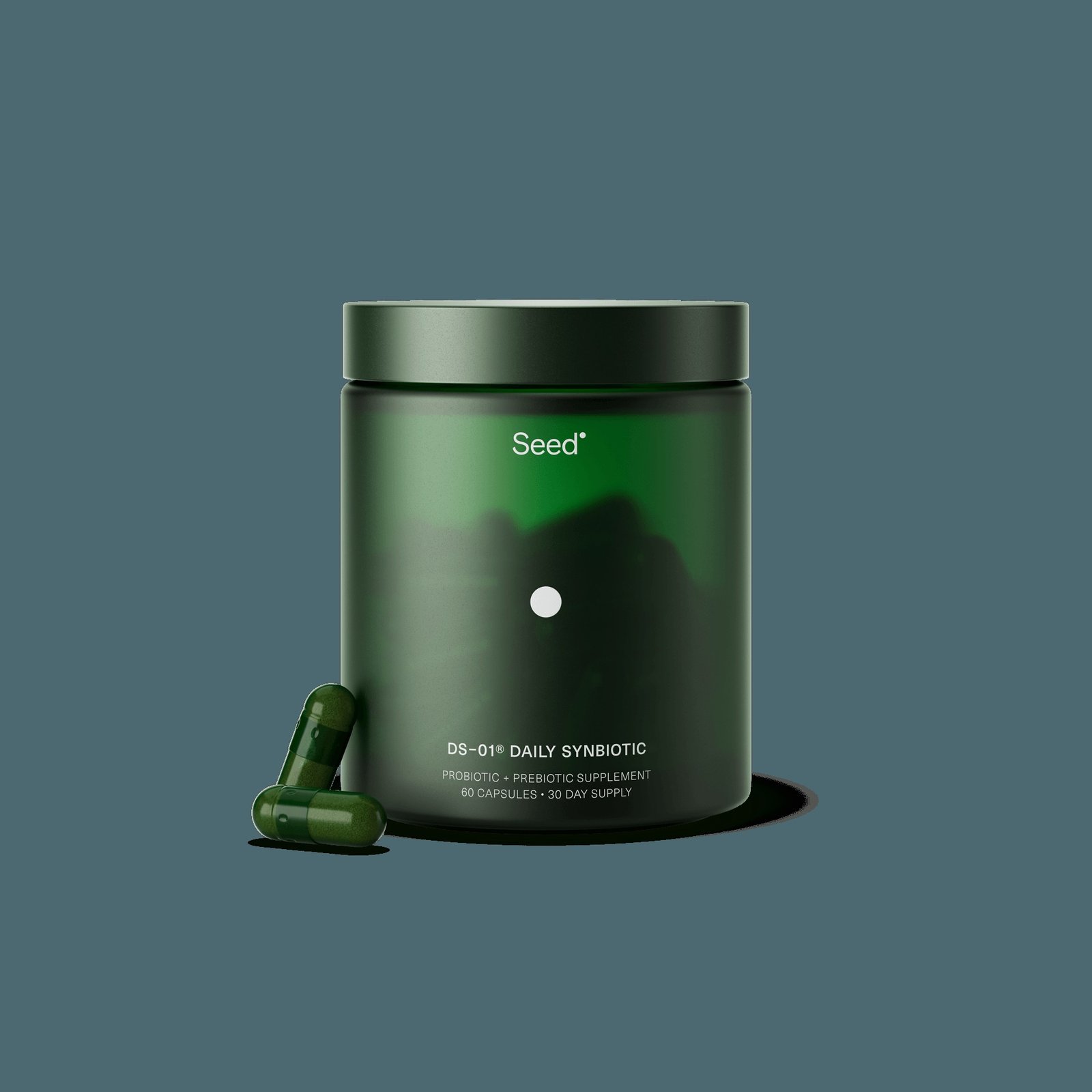
| Key specs | 24 probiotic strains · 53.6B AFU (proprietary measure — not standard CFU) · 2-in-1 capsule: prebiotic outer + probiotic inner · 60 capsules (30-day supply), 2 capsules/day · Vegan, gluten-free, non-GMO; no binders · Glass jar; compostable refills for subscribers |
| Best for | Buyers who want the most transparently documented, science-focused probiotic and can afford about $1.67 per serving long-term |
| Check Price on Amazon | |
What the brand claims
Seed positions DS-01 as a 2-in-1 synbiotic: 24 probiotic strains plus a prebiotic, delivered in a patented capsule designed to release its payload in the colon rather than the stomach. The headline number is 53.6 billion AFU — more on that below — and the claimed benefits span digestive health, immune function, and skin health. The brand’s whole identity is scientific rigor: strain-level transparency, published research identifiers, and a supplement-facts panel with nothing to hide.
What’s genuinely good about it
The transparency is best-in-class, full stop. Most probiotic labels hide behind proprietary blends; Seed publishes every strain with research identifiers you can actually look up. The patented 2-in-1 capsule — prebiotic outer, probiotic inner — is a thoughtful delivery design aimed at getting live organisms past stomach acid and into the colon. The formula is vegan, gluten-free, and non-GMO with no binders, and the glass jar plus compostable refills for subscribers is a genuine sustainability edge over the industry’s plastic-bottle norm.
The honest complaints
The price is the elephant in the room. At around $49.99 a month on subscription (an observed figure, not a live price), DS-01 is one of the most expensive probiotics per serving on the market — roughly $1.67 a day, every day, indefinitely, since probiotic benefits generally require ongoing use. Then there’s the AFU question: 53.6 billion AFU sounds precise, but AFU (active fluorescent units) is Seed’s proprietary measurement, not the industry-standard CFU (colony-forming units), which makes direct potency comparisons with other brands harder than they should be. Some users also report an adjustment period with bloating or digestive rumbling in the first week or two — common with probiotics, but worth knowing before you commit to a subscription.
What does AFU mean?
AFU stands for active fluorescent units, Seed’s proprietary way of measuring live microorganisms, using flow cytometry instead of the traditional CFU (colony-forming unit) plate counts. It’s a legitimate lab technique, but because it’s proprietary, you can’t directly compare 53.6B AFU to another brand’s CFU number.
How many strains are in Seed DS-01?
24 probiotic strains, plus a prebiotic in the capsule’s outer layer, hence “synbiotic.” Seed publishes every strain with research identifiers, which is unusually transparent for the category.
Is Seed worth the price?
It depends on your budget and priorities. At around $49.99/month on subscription (observed, not a live price), it’s one of the priciest probiotics per serving. You’re paying for strain-level transparency, the 2-in-1 delivery capsule, and the sustainability packaging. Cheaper probiotics cover the basics for much less.
How long before it works?
Digestive adjustment effects like bloating can appear in the first week or two; the brand and most reviewers suggest giving it several weeks of consistent daily use before judging. Remember that probiotic benefits generally require ongoing use, the strains don’t permanently colonize the gut.
