



As an Amazon Associate we earn from qualifying purchases.
Short answer: Retrospec has earned its reputation by selling genuinely capable inflatable paddle boards at prices that undercut premium brands by hundreds of dollars. If you are shopping the lineup in 2026, the Weekender 10’6″ remains the best pick for most beginners thanks to its complete kit and unbeatable value, while the Weekender Plus is the smart choice if you want a board that converts into a kayak. The Tour, Yogi, and June models serve narrower needs — touring speed, on-board yoga, and fishing respectively.
This is a research-based guide. We did not personally paddle these boards; instead, we compared published specifications and analyzed aggregated buyer feedback to highlight what owners praise, what they complain about, and which model fits which paddler. Editorial scores below reflect our assessment of value and versatility within the Retrospec lineup — they are not Amazon star ratings.
Quick Comparison
| # | PRODUCT IMAGE | PRODUCT NAME | RATING | ACTION |
|---|---|---|---|---|
| 1 | 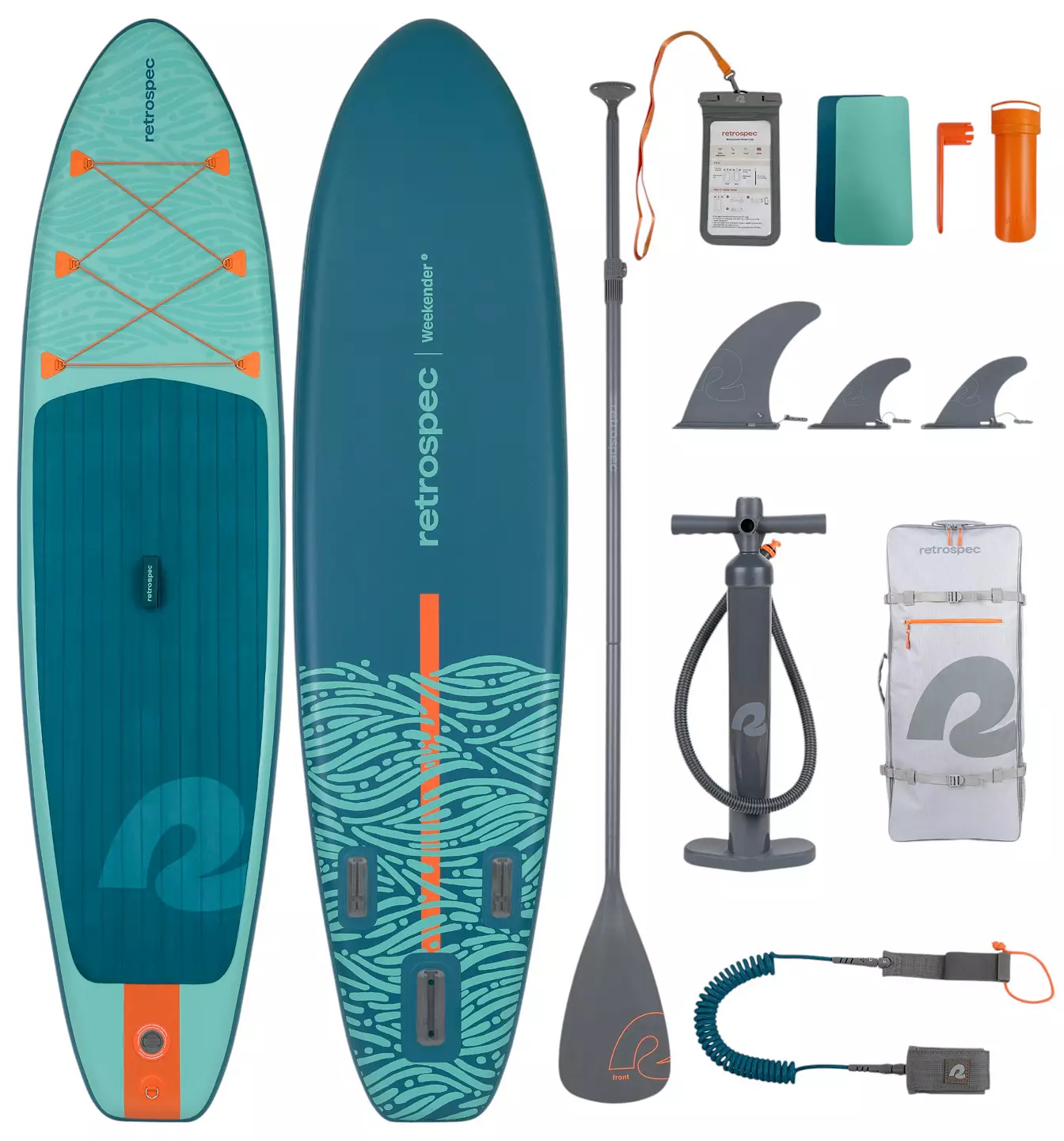 |
Retrospec Weekender Inflatable Paddle Board 10’6″ x 32″ | 10/10 editorial |
Check Price on Amazon |
| 2 | 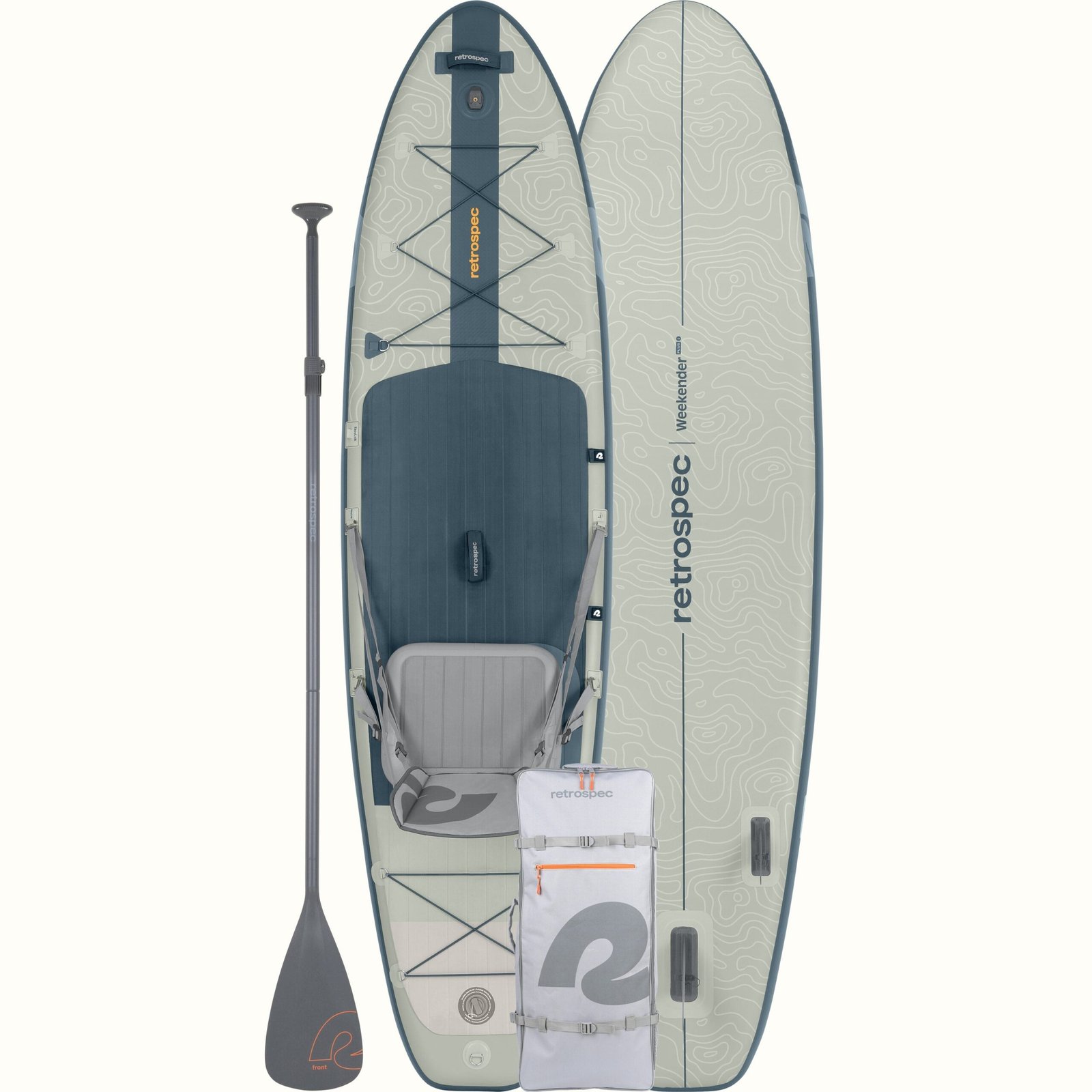 |
Retrospec Weekender Plus 10’6″ Inflatable Paddle Board Kayak Hybrid | 9/10 editorial |
Check Price on Amazon |
| 3 | 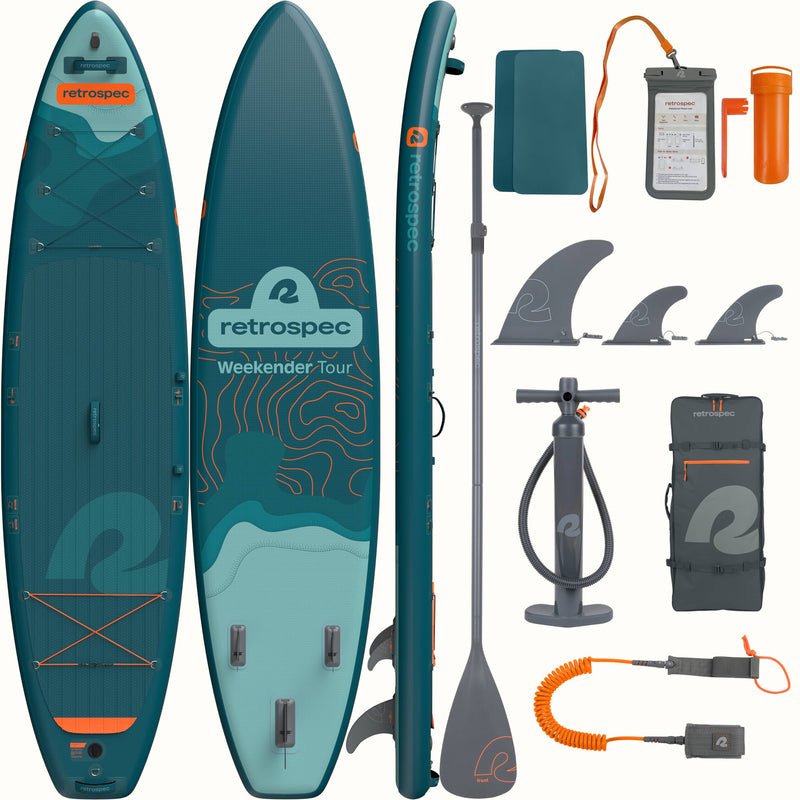 |
Retrospec Weekender Tour 11’6″ Inflatable Touring Paddle Board | 8/10 editorial |
Details below |
| 4 | 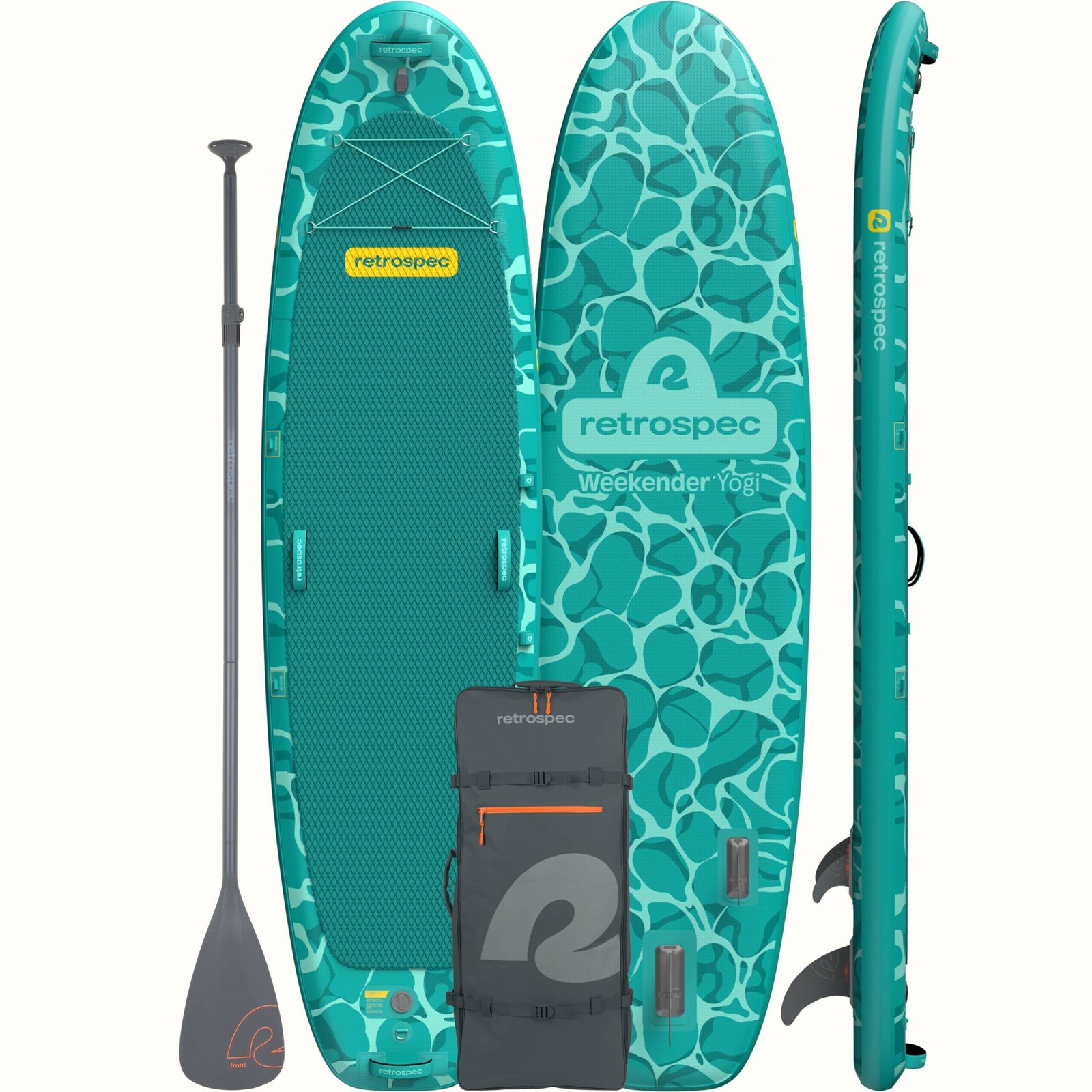 |
Retrospec Weekender Yogi 10’8″ Inflatable Yoga Paddle Board | 8/10 editorial |
Details below |
| 5 | 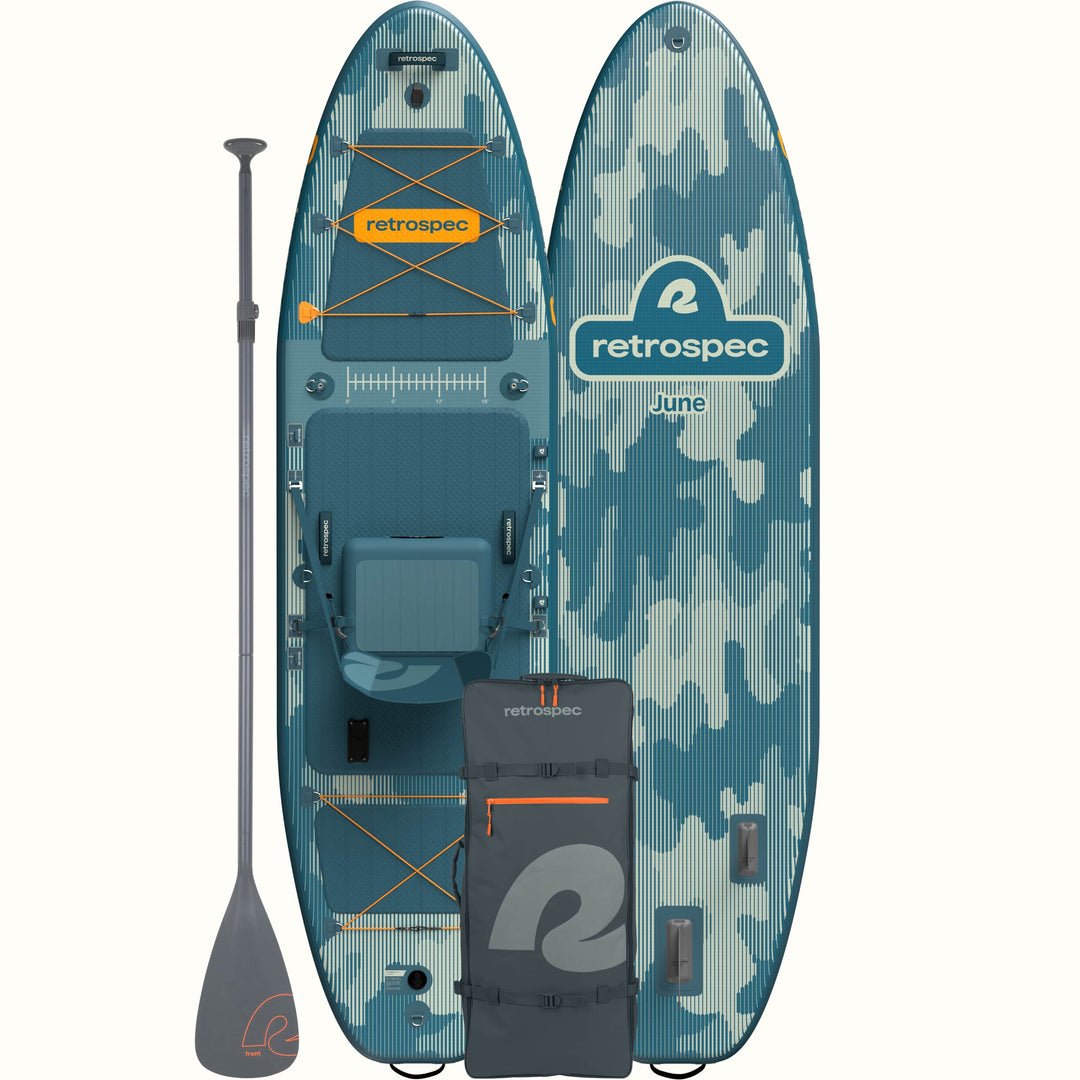 |
Retrospec June 11’6″ Inflatable Fishing Paddle Board Kayak Hybrid | 7/10 editorial |
Details below |
1. Retrospec Weekender Inflatable Paddle Board 10’6″ x 32″ — Best Overall
The Weekender 10’6″ is the board that built Retrospec’s name, and it remains the default recommendation for first-time buyers. The beach bundle includes everything needed to get on the water: the board itself, an adjustable paddle, a hand pump, three fins, a leash, a travel backpack, and even a waterproof phone case. At 17.5 pounds with a 275-pound capacity, it strikes a practical balance between portability and stability for the average adult paddler.
Specifications: 10’6″ x 32″ x 6″ inflatable SUP; 17.5 lbs; 275 lbs weight capacity; AerGlide-Lite laminated PVC construction; kit includes paddle, pump, 3 fins, leash, backpack, and phone case.
What buyers like: Owners consistently call it the best bang for the buck in the entry-level category. The complete kit means no extra purchases, the board rolls up small enough to fit in a car trunk, and setup is straightforward. For casual lake and calm-bay paddling, buyers say it performs well beyond its price.
What buyers complain about: Stability and tracking are average rather than exceptional — experienced paddlers notice the difference versus premium boards. The included accessories are functional but basic, and inflating to full pressure with the hand pump is a genuine workout that some owners solve by buying an electric pump separately.
2. Retrospec Weekender Plus 10’6″ Inflatable Paddle Board Kayak Hybrid — Most Versatile
The Weekender Plus takes the standard Weekender formula and adds meaningful upgrades for paddlers who want options. The double-layer AerGlide Fusion PVC bumps rigidity and raises capacity to 300 pounds, and the headline feature is the kayak conversion: with the included four-piece paddle and inflatable seat, the board becomes a sit-on-top kayak in minutes. Eleven D-rings provide generous attachment points for gear, coolers, and the seat.
Specifications: 10’6″ x 32″ x 6″; double-layer AerGlide Fusion PVC; 300 lbs capacity; 12–15 PSI recommended pressure; converts to kayak with 4-piece paddle and inflatable seat; 11 D-rings.
What buyers like: Owners praise the sturdy feel underfoot and the genuine versatility of the SUP-to-kayak conversion — it is effectively two crafts for barely more than the price of one. For the money, buyers consider it strong value, especially for families who want one board that can do everything.
What buyers complain about: The upgrades add weight and bulk, so it is heavier to carry and slower to inflate than the base Weekender. A few owners note the valve needs periodic tightening to prevent slow leaks, and hand-pumping to 15 PSI remains laborious.
3. Retrospec Weekender Tour 11’6″ Inflatable Touring Paddle Board — Best for Distance
At 11’6″ with a pointed touring nose, the Weekender Tour is built for paddlers who want to cover distance efficiently. The longer waterline improves glide and tracking, and the displacement-style nose handles light chop better than the all-around shapes above. It is the pick for fitness paddling, longer lake crossings, and anyone who finds 10’6″ boards a little slow.
Specifications: 11’6″ x 32″ x 6″; 23.5 lbs; 300 lbs capacity; pointed touring nose for improved glide.
What buyers like: Owners report a noticeably faster glide and straighter tracking than shorter boards, and the Tour stays composed in choppy conditions that push all-around boards around. For its price, buyers consider it a legitimate entry into touring performance.
What buyers complain about: At 23.5 pounds it is heavy to carry solo, especially inflated. It costs more than the base Weekender, and the longer board needs more storage space — a real consideration for apartment dwellers.
4. Retrospec Weekender Yogi 10’8″ Inflatable Yoga Paddle Board — Best for SUP Yoga
The Yogi is a specialist: a 10’8″ board widened to 33 inches with an extra-grippy full-length deck pad designed for practicing yoga on the water. The added width creates a stable platform for poses, and at 19.7 pounds it remains portable enough to carry to the launch. If SUP yoga is your primary goal, the purpose-built deck makes a real difference versus adapting an all-around board.
Specifications: 10’8″ x 33″ x 6″; 19.7 lbs; 300 lbs capacity; extra-wide deck with high-traction yoga pad.
What buyers like: Yoga practitioners praise the stable, grippy platform — the full-deck traction pad inspires confidence in poses where a standard board feels slippery. Despite the width, owners say it still packs down small enough for easy transport.
What buyers complain about: The wide, yoga-optimized shape is inefficient for distance paddling, so it is a poor choice as a general touring board. Non-yogis pay for features they will never use, and it sits at a higher price than the base Weekender.
5. Retrospec June 11’6″ Inflatable Fishing Paddle Board Kayak Hybrid — Best for Fishing
The June targets anglers: an 11’6″ fishing-oriented SUP/kayak hybrid with rod mounts, a measuring ruler, and a camo colorway. It can be paddled standing or seated, giving fishermen the flexibility to cast from either position. It is an interesting option for shore-bound anglers who want to reach water that boats cannot.
Specifications: 11’6″ fishing SUP/kayak hybrid; integrated rod mounts; measuring ruler; camo colorway; stand-up or seated paddling.
What buyers like: Owners appreciate getting dedicated fishing features — rod holders, ruler, stable casting platform — at a price well below fishing-specific paddle craft from premium brands. The sit-or-stand flexibility suits long days on the water.
What buyers complain about: It is bulky to transport and store, it carries a premium price within the Retrospec lineup, and independent review coverage is thin compared to the Weekender models — so buyers have less third-party feedback to rely on. Note it is sold through retrospec.com rather than Amazon.
Frequently Asked Questions
Should I get an inflatable or hard paddle board?
Inflatables like the Retrospec lineup win on portability, storage, and durability against dings — they roll up into a backpack and bounce off rocks. Hard boards win on glide and responsiveness. For most beginners without garage space, an inflatable is the practical choice.
What size paddle board do I need?
For all-around use, 10’6 to 11’6 long and 32 to 33 inches wide suits most adults. Longer boards glide faster and track straighter; wider boards feel more stable. Heavier paddlers should prioritize higher weight capacity, like the 300-pound rating on the Weekender Plus, Tour, and Yogi.
How do you inflate a Retrospec paddle board?
Use the included hand pump to inflate to the recommended pressure — typically 12 to 15 PSI. Expect 5 to 10 minutes of solid pumping effort. Many owners eventually buy an electric SUP pump to save time and energy.
Is Retrospec good for beginners?
Yes. Retrospec built its reputation on beginner-friendly boards: stable all-around shapes, complete kits with everything included, and prices that make the sport accessible. The Weekender 10’6 is one of the most common first boards for good reason.
Verdict
For most buyers in 2026, the Retrospec Weekender 10’6″ remains the right starting point: a complete, portable, genuinely fun board at a price that makes the sport accessible. Choose the Weekender Plus if the kayak conversion appeals to you, the Tour for covering distance, the Yogi for on-water yoga, and the June if fishing is the mission. Whichever you pick, budget for an electric pump — your arms will thank you.
