

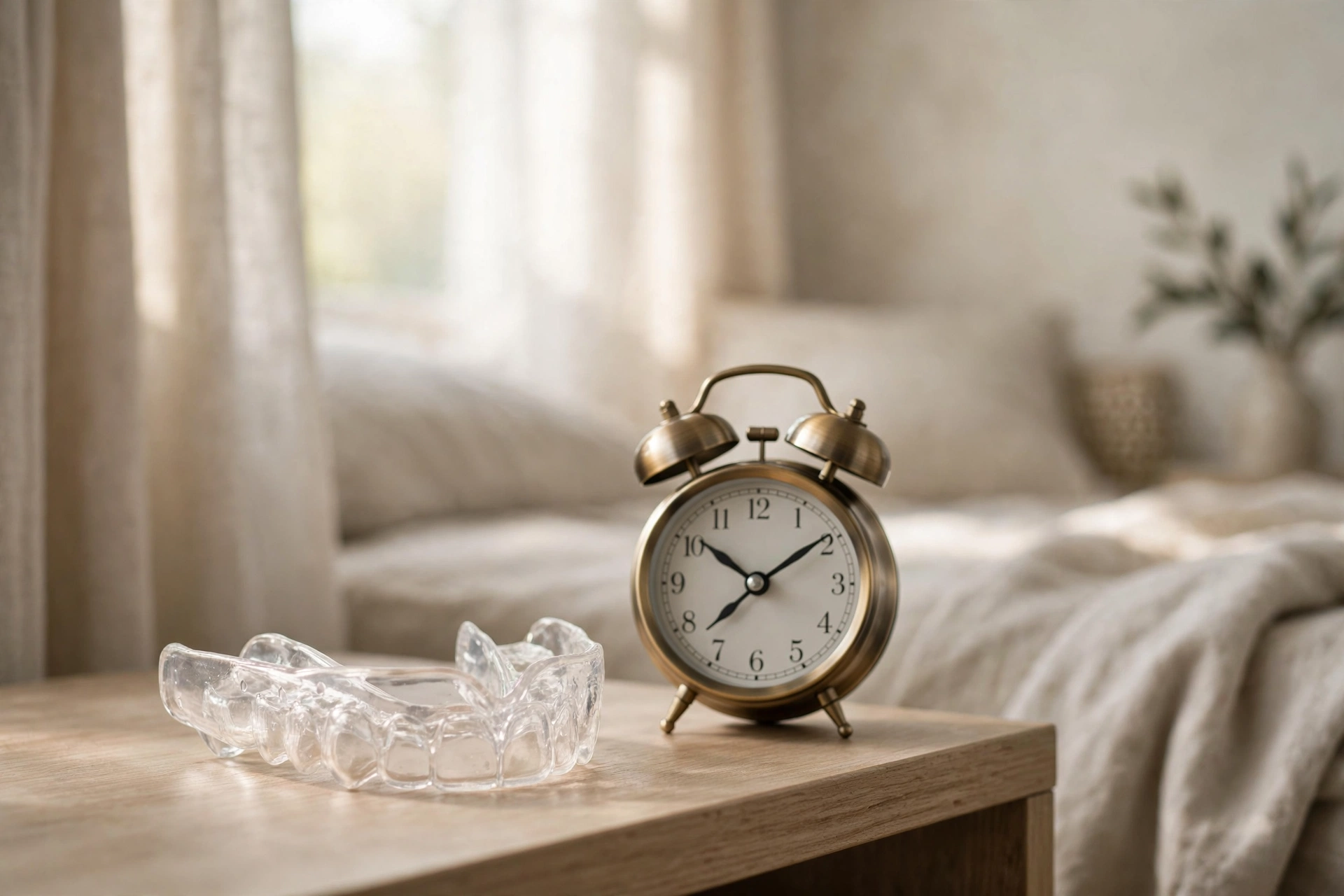
Snoring ruins sleep for the snorer and everyone nearby. Mouthpieces that reposition the jaw — mandibular advancement devices — are one of the most common over-the-counter approaches, and they range from simple boil-and-bite guards to custom dental devices costing hundreds of dollars.
The QuietLab Pro Anti-Snoring Mouthpiece pitches itself as the low-cost, low-hassle entry point: an adjustable mouth guard with 25 adjustment settings, no boiling or molding required, made from medical-grade BPA-free materials per the brand. The brand claims over 350,000 users.
The important questions are not just about comfort. Is it actually cleared by the FDA? Can a mouthpiece treat sleep apnea? And what are the risks of shifting your jaw night after night? This review covers the specs, the praise, the complaints, and the safety questions you should settle before buying.
As an Amazon Associate we earn from qualifying purchases.
| Product at a Glance | |
|---|---|
| Photo | 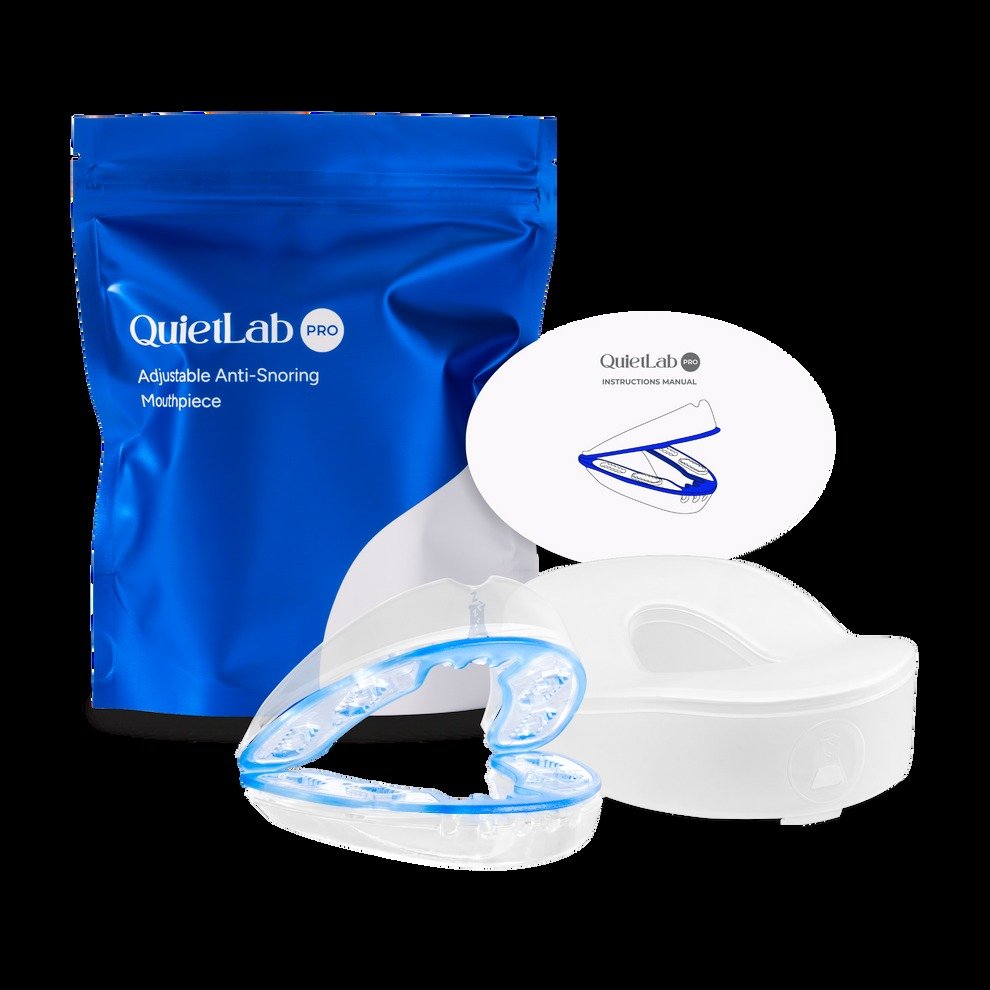 |
| Name | QuietLab Pro Anti-Snoring Mouthpiece — Adjustable Snoring Mouth Guard |
| Key Specs |
|
| Best For | Primary snorers (without sleep apnea) wanting a low-cost, adjustable, no-boil mouthpiece as a first try. |
| Check Price on Amazon | |
What the QuietLab Mouthpiece Is
The product is the QuietLab Pro Anti-Snoring Mouthpiece, an adjustable snoring mouth guard built around a mandibular advancement design — it gently holds the lower jaw forward during sleep, which can keep the airway more open and reduce the vibration that causes snoring. The headline feature is adjustability: 25 settings offering roughly 6mm of advancement (per a third-party review), so users can fine-tune how far forward the jaw sits.
Unlike boil-and-bite guards, it requires no boiling or molding and is meant to work out of the box. The brand states the materials are medical-grade and BPA-free, claims it works in any sleep position, and describes the design as orthodontist-designed. The brand also claims over 350,000 users — a brand claim, not an independently verified figure.
Key Specs
- Design: mandibular advancement (jaw repositioning)
- Adjustability: 25 settings, ~6mm of advancement (per third-party review)
- Fitting: no boiling or molding required — works out of the box
- Materials: medical-grade, BPA-free (per brand)
- Sleep positions: works in any sleep position (per brand)
- User base: brand claims over 350,000 users (brand claim)
What Buyers Like
The no-boil setup is the most praised feature. The mouthpiece works out of the box, and the 25 adjustment settings let users dial the jaw position forward in small steps until snoring drops — a level of fine-tuning most cheap guards do not offer. Buyers who struggled with boil-and-bite guards that never fit right appreciate skipping the fitting process entirely.
Comfort gets decent marks. Buyers and testers describe it as comfortable enough for side sleepers, and the brand claims it works in any sleep position. For primary snorers looking for a first, low-cost try before considering pricier custom devices, the adjustability-plus-simplicity combination is the appeal — it is a small investment to find out whether a mouthpiece approach works for you at all.
A third point of praise is the price. Custom dental devices for snoring can cost hundreds of dollars and require dentist visits. The QuietLab mouthpiece costs a fraction of that, which makes it an easy experiment for buyers who are not sure a mouthpiece will work for them.
Complaints and Downsides
The adjustment period is real. Jaw soreness and excess saliva are common during the first few nights, and some buyers find the first week uncomfortable enough to question the purchase. Most mouthpiece types have a break-in period, but it is worth expecting — the jaw is being held in an unfamiliar position for hours, and it protests at first.
It does not work for everyone. Mouth-breathers may keep snoring even with the jaw advanced, since the device does nothing about nasal or throat anatomy beyond jaw position. Buyers whose snoring comes from congestion or other causes report little improvement.
The 30-night guarantee is shorter than the 60-night offers some competitors provide — less time to decide whether it works for you, especially given that the first week or two is the adjustment period. Cleaning is a minor but recurring mention: the mouthpiece needs regular rinsing and occasional deeper cleaning, like any oral device, and buyers who skip it report odor buildup.
Safety Notes and Red Flags
Read this section before buying. First, the QuietLab mouthpiece is NOT FDA cleared — it was not found in the FDA device database, according to an independent review. That does not automatically make it unsafe, but it means no US regulator has reviewed it as a medical device.
Second, it is NOT a treatment for sleep apnea. A mouthpiece cannot treat apnea, and using one instead of getting evaluated can delay real treatment. If you snore loudly, gasp or choke in your sleep, or feel exhausted despite a full night in bed, see a doctor — those are signs worth evaluating, not self-treating.
Third, mandibular devices carry real dental risks: jaw pain, TMJ issues, and gradual tooth shifting with long-term use. Talk to a dentist or doctor before using one, especially if you have jaw problems, dental work, braces, or missing teeth.
Fourth, counterfeit lookalikes exist — buy from the official QuietLab store rather than random marketplace listings, where copycat guards of unknown materials are common.
Verdict: Who Should Buy It
The QuietLab mouthpiece suits primary snorers — people who snore without signs of sleep apnea — who want a low-cost, adjustable, no-boil mouthpiece as a first try. The 25 settings and out-of-box setup are genuine advantages at this price. It is not for anyone with suspected sleep apnea, jaw or TMJ problems, or anyone who expects an FDA-cleared medical device. When in doubt, a dentist or doctor’s opinion comes before a purchase.
Frequently Asked Questions
Does the QuietLab mouthpiece stop snoring?
It can reduce snoring for primary snorers by holding the jaw forward, and the 25 adjustment settings let users fine-tune the fit. It does not work for everyone — mouth-breathers, for example, may keep snoring.
Is it FDA cleared?
No. It was not found in the FDA device database, according to an independent review. No US regulator has cleared it as a medical device.
Can it treat sleep apnea?
No. A mouthpiece cannot treat sleep apnea. If you snore loudly, gasp during sleep, or feel tired despite sleeping, see a doctor for evaluation instead of self-treating.
How do I adjust it?
The mouthpiece has 25 adjustment settings (about 6mm of total advancement, per a third-party review). Start at the lowest setting and move forward gradually over several nights until snoring decreases without jaw discomfort.
The Bottom Line
The QuietLab mouthpiece is a reasonable first try for uncomplicated snoring: adjustable, no boiling, and inexpensive. The honest caveats are the lack of FDA clearance, the adjustment period, and the fact that it cannot treat sleep apnea. Anyone with apnea symptoms, jaw issues, or dental concerns should talk to a doctor or dentist first — and buy from the official store to avoid counterfeits.
