

Creatine monohydrate is one of the most studied sports supplements in existence, and also one of the simplest: a single ingredient, a five-gram scoop, no proprietary blends to decode. The only real question is which tub to buy — and for a lot of lifters, the answer comes down to price per serving. That is where Nutricost’s Creapure Creatine Monohydrate has built its reputation: a 500-gram tub of unflavored, micronized creatine monohydrate that consistently ranks among the cheapest per-serving options from a major brand.
In this review, we break down what Creapure actually means, do the per-serving math, and go through what buyers praise and complain about — plus the safety notes that matter for any creatine product.
| DETAIL | SPEC |
|---|---|
| Photo | 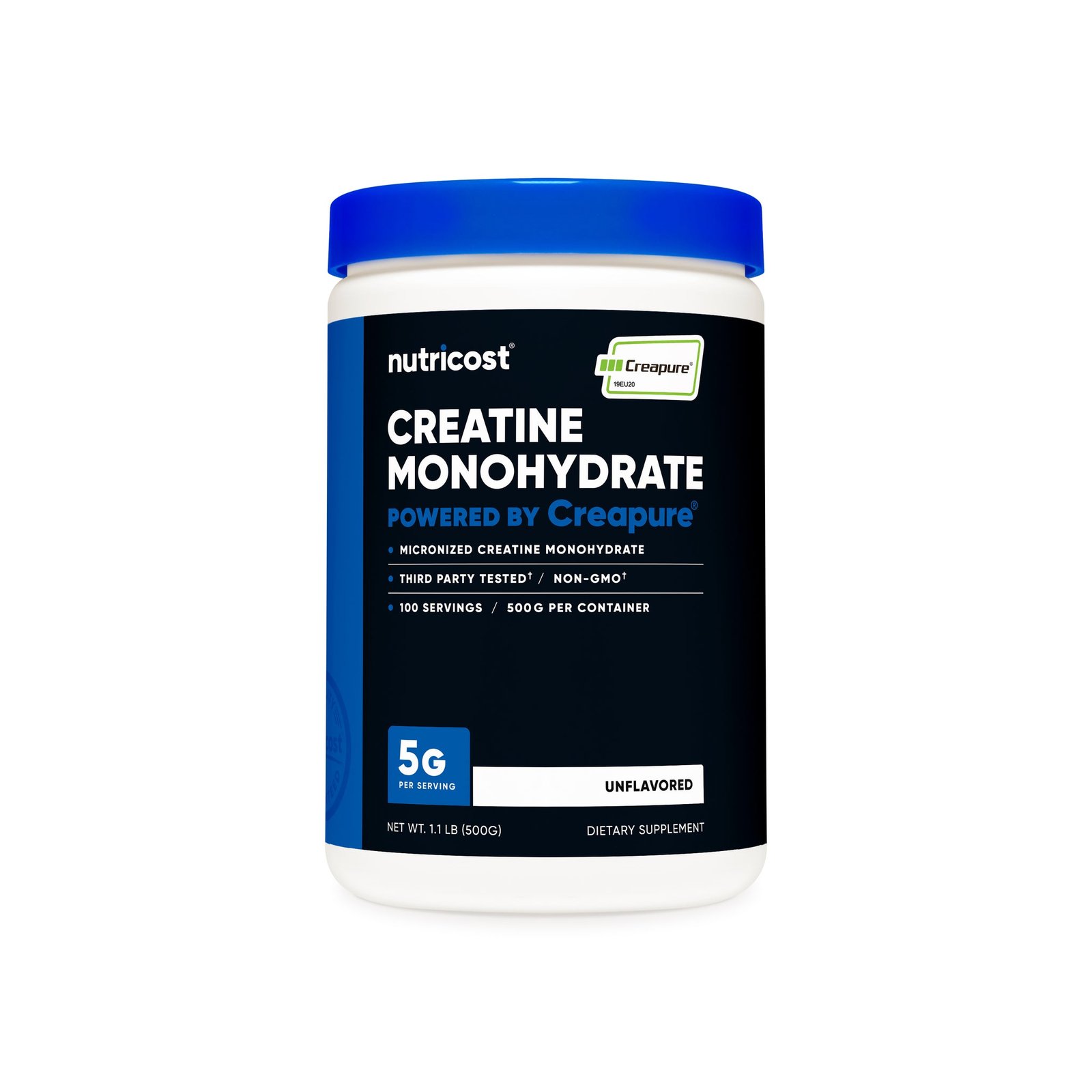 |
| Name | Nutricost Creapure Creatine Monohydrate 500 Grams, Unflavored |
| Key specs | 5g micronized creatine monohydrate per serving; 100 servings per 500g container; Creapure-branded creatine monohydrate; unflavored; non-GMO, gluten-free; third-party tested; made in a GMP-compliant, NSF-certified facility |
| Best for | Budget-conscious lifters who want a simple, single-ingredient creatine from a certified raw-material source |
| Check Price on Amazon | |
What You’re Getting
Five hundred grams of one thing: micronized creatine monohydrate. Each serving is 5 grams, which works out to 100 servings per container. It is unflavored, non-GMO, and gluten-free. Nutricost says the product is third-party tested and made in a GMP-compliant, NSF-certified facility. There are no added flavors, sweeteners, or fillers — the ingredient list is exactly one line long, which is precisely the point.
What Does “Creapure” Mean?
Creapure is a branded raw material — creatine monohydrate produced under that brand name and marketed as the gold standard of creatine monohydrate. Nutricost leans on the Creapure name as a quality signal, along with the brand’s claims that creatine supports muscle strength and recovery. Those are the brand’s claims, and this review treats them as marketing statements.
What Creapure means in practical terms is traceability: you know the branded source of the raw material rather than buying an unbranded commodity powder. Whether branded creatine performs differently from any other pure creatine monohydrate is not something a label can prove — creatine monohydrate is a commodity compound, and purity is what matters most.
The Per-Serving Math
Five hundred grams divided by five grams per serving gives you 100 servings — simple division, no tricks. Third-party price analyses have cited roughly $0.23 per serving for this product, which puts it among the cheapest creatine options from a recognizable brand. Treat that figure as an observed snapshot, not a live price: online prices move constantly, so check the current listing. The structural advantage is real either way — a big tub of a single inexpensive ingredient will almost always beat small tubs and flavored blends on cost per serving.
What Buyers Like
Value dominates the positive feedback. Buyers consistently describe it as one of the cheapest ways to get straightforward creatine monohydrate from a major brand, and the 100-serving count means a single tub lasts months at one scoop a day. The clean formula gets praise too — one ingredient, nothing to decode, no artificial flavors. For lifters who want creatine and nothing else, that simplicity is the selling point.
Common Complaints
The most notable gap is certification. This variant does not carry a sport-specific certification such as NSF Certified for Sport or Informed-Sport. The brand says it is made in an NSF-certified facility and third-party tested — but athletes subject to drug testing generally look for product-level sport certification, and this one doesn’t have it.
Then there are the powder gripes. Some users report that it doesn’t fully dissolve in cold liquids, leaving grit at the bottom of the shaker. The unflavored powder can taste chalky to some people — “unflavored” doesn’t mean “tasteless.” And the branding is plain to the point of generic; if premium packaging matters to you, this isn’t it.
Safety Notes Worth Knowing
Check with a professional first. Consult a healthcare professional before use if you are pregnant, nursing, or taking medications.
Stay hydrated. Creatine draws water into muscle tissue, so drink plenty of fluids — skimping on water is the most common avoidable mistake with creatine.
Watch your stomach. Discontinue use if you experience stomach pain. Loading phases of around 20g per day increase the chance of digestive discomfort; most people do fine with a standard 5g daily serving.
Adults only, and not FDA-evaluated. Keep out of reach of children — this product is for healthy adults 18 and over. Like all dietary supplements, its efficacy claims have not been evaluated by the FDA.
This article is for informational purposes only and is not medical advice. Talk to a healthcare professional before starting any new supplement, particularly if you are pregnant, nursing, taking medication, or managing a health condition.
As an Amazon Associate we earn from qualifying purchases.
How much creatine is in each serving of Nutricost Creapure Creatine?
Each serving contains 5 grams of micronized creatine monohydrate — a single-ingredient formula with no fillers or flavors. The 500-gram container holds 100 servings at that scoop size.
Is Creapure better than regular creatine monohydrate?
Creapure is a branded source of creatine monohydrate, marketed as a gold-standard raw material. Chemically, creatine monohydrate is creatine monohydrate — what matters most is purity and accurate labeling. The practical advantage of the Creapure branding is traceability to a certified raw-material source.
Does Nutricost creatine need a loading phase?
No. A loading phase (around 20g per day for several days) saturates muscles faster, but it also increases the chance of digestive discomfort. A steady 5g daily serving reaches the same saturation over a few weeks. The loading phase is optional, not required.
Nutricost vs Optimum Nutrition creatine — which should I buy?
Both sell plain creatine monohydrate, so compare the specifics that matter: price per serving, serving count, flavor options, and certifications on the exact variant you’re considering. We haven’t tested either hands-on; buy based on the label and your budget, and check current prices since they change frequently.
The Bottom Line
Nutricost’s Creapure Creatine Monohydrate is a commodity product sold the right way: one ingredient, a big tub, a low per-serving cost, a branded raw material, and third-party testing. There is nothing fancy about it, and that is the appeal.
The honest downsides: no sport-specific certification on this variant, occasional mixability gripes, and packaging that looks like it was designed in a spreadsheet. None of those affect what is in the scoop.
If you want the cheapest reputable creatine monohydrate and you don’t need Informed-Sport or NSF Certified for Sport status, this is a strong pick. If you are a tested athlete, spend a little more on a certified-for-sport option instead.
