

As an Amazon Associate we earn from qualifying purchases.
Protein powder has a trust problem. Labels promise 24 grams of protein per scoop, but the fine print — protein blends, amino acid profiles, sweetener systems — tells the real story. Just Ingredients has built its brand on the opposite pitch: a short, whole-food-style ingredient list with no artificial sweeteners, gums, or fillers, aimed at buyers who read labels for a living.
The short answer: this is a genuinely clean-label powder with a taste people like and grass-fed whey sourcing that’s easy to feel good about. But the 24g-per-serving headline deserves scrutiny — the blend includes collagen, an incomplete protein, and the brand doesn’t disclose how much of each protein source is in the mix. At a premium price of roughly $2 or more per serving, you’re paying for the ingredient philosophy as much as for the protein itself.
Here’s the full breakdown: what’s in the blend, the collagen question, what buyers praise and complain about, and whether the math works for you.
| Product at a Glance | |
|---|---|
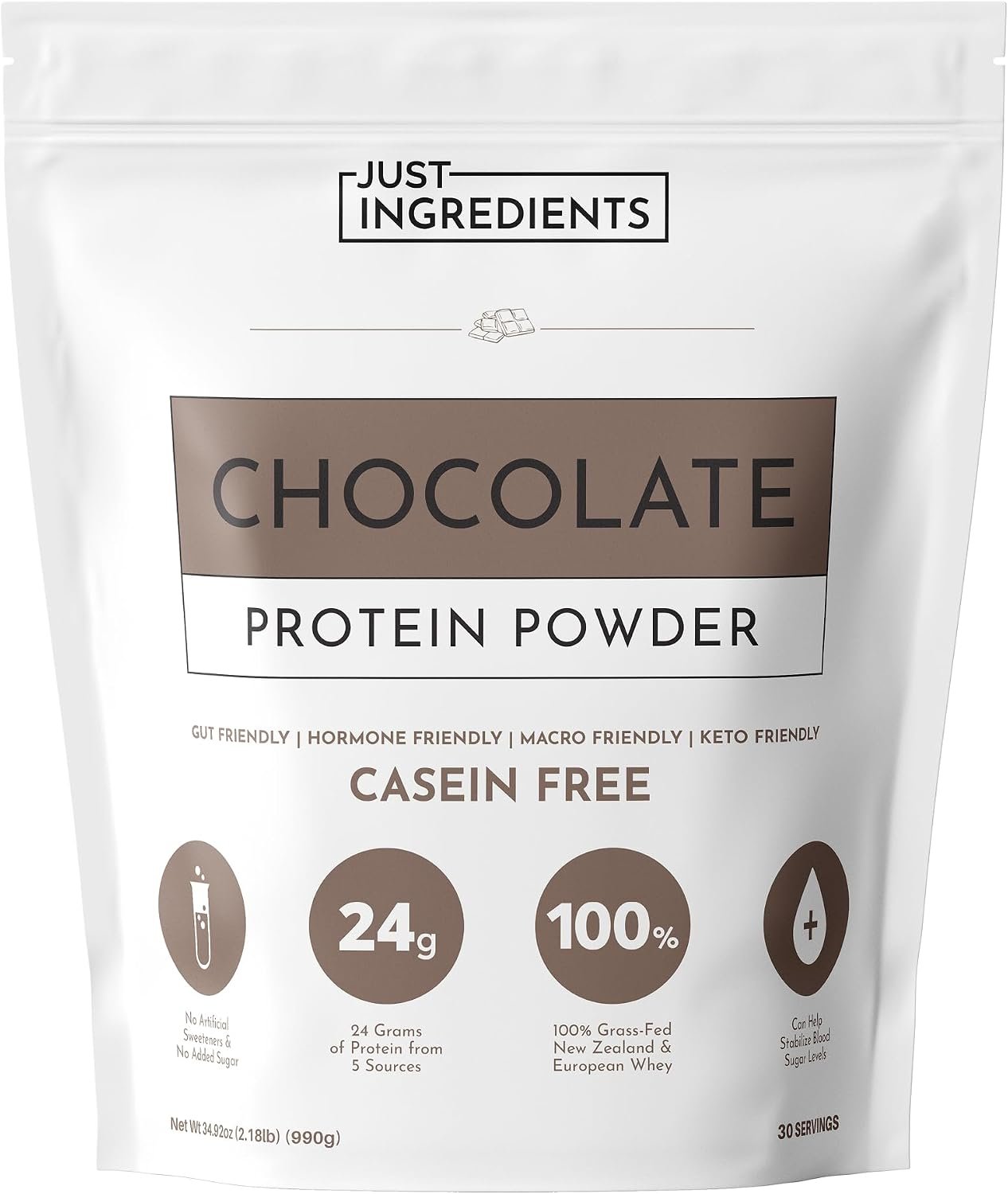 |
Just Ingredients Chocolate Protein Powder – 30-Serving Blend
Best for: buyers who prioritize a clean-label, whole-food ingredient list over maximum cost-efficiency. |
| Check Price on Amazon | |
What’s Actually in the Blend
The ingredient list reads more like a pantry than a chemistry set, and that’s the point. The protein comes from five sources: 100% grass-fed non-denatured whey, organic pea protein, grass-fed collagen, chia seed protein, and coconut milk. The brand claims its “non-denatured” whey processing retains bioactive compounds, and positions the powder as supporting muscle recovery and energy — standard supplement marketing, but the sourcing story is the real differentiator here.
What isn’t in the bag matters just as much: no artificial sweeteners, no gums, no fillers. Sweetness comes from whole stevia leaf or monk fruit, depending on the flavor. For buyers who’ve spent years avoiding sucralose, xanthan gum, and “natural flavors” with mysterious provenance, this is exactly the label they’ve been asking for. The brand also sells an NSF Certified for Sport line — a meaningful third-party credential for competitive athletes — plus a vegan line for dairy-free buyers.
The Collagen Question
Here’s where the label deserves a closer read. Collagen is an incomplete protein — it’s low in essential amino acids, including leucine, the key driver of muscle protein synthesis. It still counts toward the 24g-per-serving total on the label, which means some unknown share of that headline number may come from a protein source that does less for muscle building than whey or pea.
The problem isn’t that collagen is in the blend — it’s that the brand doesn’t disclose the split. There’s no published breakdown of how much of the 24g comes from whey versus collagen versus pea, no disclosed leucine content, and no public third-party amino-acid testing to verify the profile. For general daily protein intake that may be fine. For buyers choosing a powder specifically to support training, the missing data matters: you’d want to know how much complete, leucine-rich protein you’re actually getting per scoop.
What Buyers Like
Taste is the standout win — protein buyers are notoriously hard to please, and this powder gets widely liked reviews for flavor, especially the chocolate. The clean ingredient list is the second pillar: buyers who switched from mainstream powders describe the short label as the reason they came and the taste as the reason they stayed.
Grass-fed whey sourcing earns genuine goodwill, and the absence of gums and fillers shows up in the mixing experience — buyers report it blends smoothly without the gluey texture some gum-heavy powders produce. For households trying to keep ingredient lists short across the board, this powder fits the philosophy.
What Buyers Complain About
Price is the main friction point. At roughly $2 or more per serving, this is a premium powder, and value-focused buyers note you can get more verified complete protein per dollar elsewhere. The collagen question above feeds directly into that complaint — premium pricing plus an undisclosed blend split is a tough combination for label-readers.
The other recurring complaint is listing confusion: old dated-formula listings and new formula listings coexist on Amazon, so what’s in the bag you receive may not match the label you read online. Check the actual product label when it arrives, and buy from the listing that matches the current formula.
Red Flags to Know Before You Buy
No public third-party amino-acid profile. The brand doesn’t publish one, so the 24g claim can’t be independently verified for completeness. (The separate NSF Certified for Sport line carries third-party certification — the standard line does not.)
Expensive per gram of verified complete protein. With collagen in the undisclosed blend and a premium price, the cost per gram of leucine-rich complete protein is high compared with straightforward whey isolates.
Formula confusion on Amazon listings. Old and new formula listings coexist. Verify the label on the bag you receive, not just the listing you ordered from.
A note on supplements: protein powders aren’t one-size-fits-all. If you’re pregnant, nursing, managing a medical condition, or taking medication, talk to a healthcare professional before adding one to your routine — and anyone with milk or coconut allergies should read this label carefully.
Frequently Asked Questions
How much protein is in each serving?
24g per serving, according to the brand’s label. Note that this total includes collagen — an incomplete protein — and the brand doesn’t disclose how much of the 24g comes from each protein source.
Is the collagen in the blend a problem?
Collagen is an incomplete protein, low in essential amino acids like leucine. It counts toward the 24g label total, so an undisclosed share of the headline number may do less for muscle building than the whey or pea protein. Without a disclosed blend split, you can’t tell how much.
What sweeteners does Just Ingredients use?
No artificial sweeteners. The powder is typically sweetened with whole stevia leaf or monk fruit, depending on the flavor — consistent with the brand’s no-artificial-anything positioning.
Is Just Ingredients worth the price?
If you value a clean, whole-food-style ingredient list and you’re happy paying roughly $2+ per serving for that philosophy, buyers generally say yes. If you want maximum verified complete protein per dollar, simpler whey isolates cost less.
The Verdict
Just Ingredients makes one of the cleanest-label protein powders on the market, and it tastes good — a combination that’s genuinely hard to find. If your priority is a short, whole-food-style ingredient list with grass-fed whey and no artificial sweeteners, gums, or fillers, this is an easy powder to feel good about buying.
The caveat is the math. Collagen in an undisclosed blend means the 24g headline is softer than it looks, there’s no public amino-acid profile to check the brand’s work, and the premium price stings if you’re counting grams of complete protein per dollar. Read the label, check which formula listing you’re buying from, and decide whether you’re paying for protein or for philosophy.
Who should buy it: label-readers who put a clean ingredient list first and are comfortable paying a premium for it.
Who should skip it: buyers maximizing complete protein per dollar, and anyone who wants a disclosed amino-acid profile before committing.
