


The short answer: realistic “before and after” results with Amaira Natural Lightening Serum are gradual, not dramatic. Based on user-reported themes, some consistent users notice visible brightening or fading within 2–4 weeks of twice-daily use; others report minimal change after 5+ weeks. Intimate-area lightening is the most discussed use case, and consistency over 6–8 weeks is the deciding factor cited by satisfied users. One firm rule for this article: before/after photos on affiliate review-farm sites are untrustworthy, so we describe text-reported themes only — no imagery presented as verified results. This is a research-based article; we did not test the product ourselves.
If you came here looking for photographic proof that Amaira works, this article will disappoint you — deliberately. The internet is flooded with “before and after” galleries attached to AI-spam review farms promoting this serum, and those images cannot be trusted. What can be useful is understanding the realistic timeline: what changes when, what affects your results, and when to conclude the product isn’t working for you.
| Detail | Spec |
|---|---|
| Product photo | 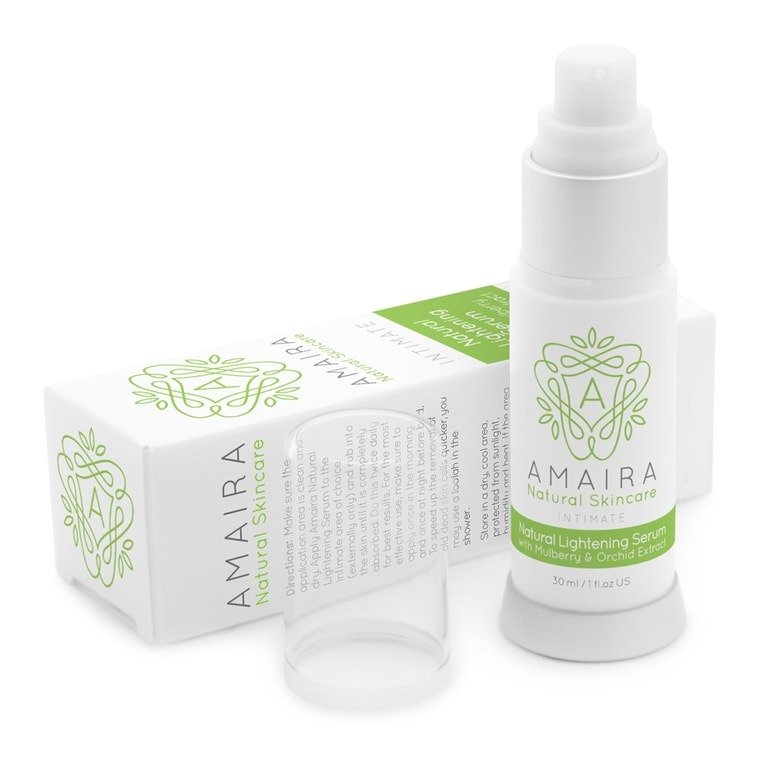 |
| Name | Amaira Natural Lightening Serum (also sold as Amaira Intimate Lightening Serum) |
| Key specs |
|
| Best for | Patient, consistent users with mild-to-moderate pigmentation who want a realistic week-by-week picture before committing. |
| Availability | Not sold on Amazon — details below. |
Product Snapshot
Amaira Natural Lightening Serum is a kojic-acid-based brightening serum marketed for dark spots and hyperpigmentation — most famously for underarms, inner thighs, and intimate areas. The routine is simple: twice-daily application to clean, dry skin, with an evaluation window of 6–8 weeks. For the full ingredient and claims breakdown, see our main Amaira review; this article focuses on one question: what does the timeline of results realistically look like?
A Realistic Results Timeline
Weeks 1–2: expect minimal visible change. This is normal, not a sign of failure. The skin’s renewal cycle runs roughly 28 days, and tyrosinase inhibitors like kojic acid need time to affect newly forming skin. In the first two weeks, the most you should expect is getting used to the texture and confirming your skin tolerates the formula. Do not judge the product yet.
Weeks 3–6: the gradual phase. This is the window where satisfied users typically first report visible brightening or fading of dark spots. Note the word gradual: user themes describe subtle lightening, not transformation. If you are taking progress photos for personal reference (same lighting, same angle, same time of day), this is when comparing week 1 to week 4 can reveal changes too subtle to notice in the mirror.
Weeks 6–8: the evaluation point. The brand’s suggested window. If you have applied the serum twice daily, protected treated areas from sun, and see no change by week 8, the honest conclusion is that this product is unlikely to work for your pigmentation. Continuing to buy bottles past this point without results is throwing money at hope.
Factors That Affect Your Results
- Depth and cause of pigmentation. Surface-level darkening (recent friction darkening, mild sun spots) responds more readily than deep, long-standing, or hormonally driven pigmentation. This is the single biggest reason two people can use the same serum and get different outcomes.
- Consistency. Twice daily, without gaps. Satisfied users consistently cite uninterrupted routine as the deciding factor — missed applications dilute the already-gradual effect.
- Sun protection. UV exposure stimulates melanin production, directly opposing what kojic acid is trying to do. Treated areas need daily sunscreen, or you are working against yourself.
- Skin sensitivity. Irritation is counterproductive: inflamed skin can develop post-inflammatory hyperpigmentation — new darkening caused by the very routine meant to lighten. If the serum stings persistently, stop rather than push through.
What User Reports Actually Describe
Aggregating text-based buyer themes (not photos), the pattern looks like this:
- Visible brightening within 2–4 weeks — reported by a subset of consistent, twice-daily users, usually describing gradual fading rather than dramatic change.
- Minimal change after 5+ weeks — reported by a significant share of users, particularly those with deep or stubborn pigmentation. This is the most common disappointment theme.
- Intimate-area lightening is the most discussed use case — the product’s signature positioning, and the context in which both the best and most disappointed reports appear.
- Consistency over 6–8 weeks is the deciding factor cited by satisfied users — nearly every positive theme includes an explicit note about not skipping applications.
A Warning About Before/After Photos
Search results for this serum are flooded with templated AI-spam “I Tested” review farms, many running fake “Check Price on Amazon” buttons — and their before/after galleries are part of the spam apparatus. Beyond outright fabrication, even genuine-looking photos are unreliable: lighting, angle, skin hydration, and camera exposure can manufacture “results” from nothing. Our position: do not trust before/after photos from affiliate review sites for this product. Rely instead on patterns across many text reports — which is what this article is built from.
Safety Red Flags (From Our Main Review)
- Kojic acid can irritate. Patch-test before full use, avoid broken or freshly shaved skin, and stop if redness or stinging persists.
- Excluded in pregnancy/breastfeeding. Safety guidance for this product excludes these periods — talk to a doctor first.
- Sunscreen is non-negotiable on treated areas, both for results and for safety.
- Counterfeit risk: observed prices swing wildly ($30–$90) across third-party sellers, signaling gray-market product. Brand sources say the official website is the only authorized channel — and note that amairaskincare.com.au is an affiliate review farm, not the brand.
Frequently Asked Questions
How long until I see results with Amaira?
The brand’s guidance is 6–8 weeks of twice-daily use. User-reported themes: some notice visible brightening within 2–4 weeks, while others report minimal change after 5+ weeks. Weeks 1–2 typically show little; weeks 3–6 are the gradual phase; week 8 is the honest evaluation point.
Do before/after photos for Amaira lie?
The galleries on affiliate review-farm sites cannot be trusted — many come from templated AI-spam “review” operations, and even honest photos are distorted by lighting and angle. We present no before/after imagery as verified results; rely on patterns across many text reports instead.
What if Amaira doesn’t work for me?
If you have been consistent — twice daily plus sunscreen — and see nothing by week 8, stop buying it; the product is unlikely to work for your pigmentation. Check the refund terms promptly, and consider seeing a dermatologist about stubborn pigmentation rather than cycling through more brightening products.
Can I speed up Amaira results?
There is no safe shortcut. The levers that matter are consistency (twice daily, no gaps) and daily sunscreen on treated areas. Do not layer strong exfoliating acids to “boost” it — irritation can cause post-inflammatory darkening, the opposite of the goal — and using more product per application does not accelerate the skin-renewal cycle.
The Verdict
Amaira’s realistic “before and after” story is unglamorous: gradual fading for some consistent users over 6–8 weeks, minimal change for a significant share of others — with pigmentation depth, consistency, and sun protection determining which group you land in. Week 8 of a disciplined routine is the moment of truth.
Our take: set a calendar reminder for week 8 before you buy the first bottle, take reference photos under identical lighting for your own eyes only, and ignore every before/after gallery on affiliate review sites. If the timeline above sounds too slow or too uncertain for the $50–$90 observed price, trust that instinct — and read our full Amaira review for the complete picture of complaints and red flags.
