

Glass skin is having a moment, and Medicube’s Collagen Jelly Cream is one of the products riding the wave. The Korean gel moisturizer promises a “24H Glow & Lifted Look” built on freeze-dried hydrolyzed collagen and niacinamide — and buyers say the dewy, bouncy finish it gives right after application is very real.
The short version of this Medicube collagen jelly cream review: it delivers an instant glass-skin glow with a lightweight, cooling jelly texture that layers beautifully under sunscreen and makeup. But it goes on tacky and needs 10–15 minutes to settle, it is not rich enough for very dry skin or harsh winters, and the collagen marketing deserves a science check. If you want hydration and glow — not a wrinkle treatment — it is worth a look.
| Product at a Glance | |
|---|---|
| Photo | 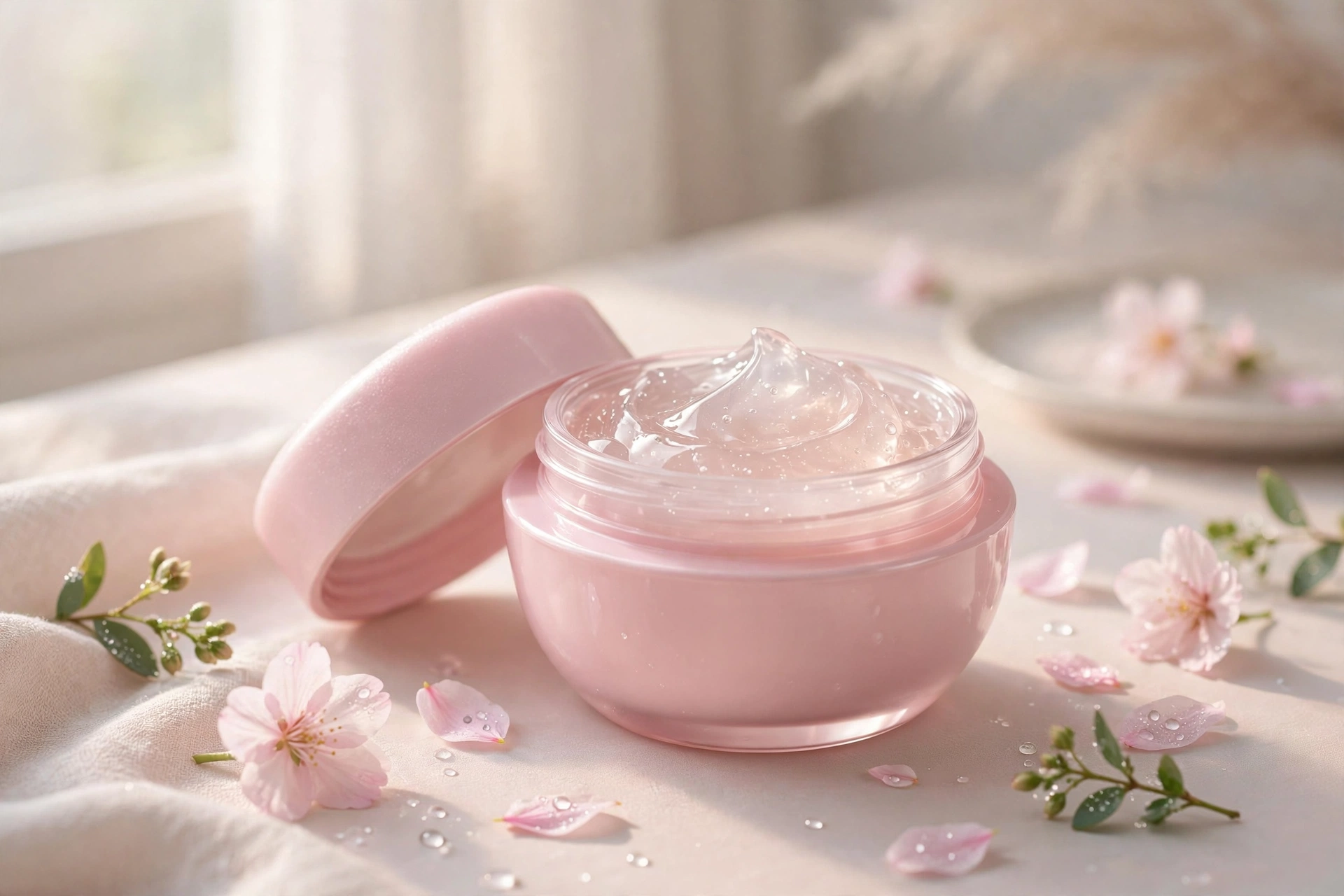 |
| Product | Medicube Collagen Jelly Cream — Niacinamide & Freeze-Dried Hydrolyzed Collagen |
| Key Specs | 50 ml / 3.71 fl oz jar (also sold in 1.69 fl oz); hydrolyzed collagen (freeze-dried), niacinamide, squalane, adenosine; dermatologist-tested, low-irritating formula (brand claim); skin-friendly pH 5.69–7.69 (brand claim); includes applicator spatula |
| Best For | Normal to dry skin types chasing instant hydration and a dewy “glass skin” finish, especially in humid weather |
| Check Price on Amazon | |
What Medicube Claims
Medicube’s marketing leans hard into the glow. The headline promises are “24H Glow & Lifted Look” and a “Korean Glass Glow” effect — the translucent, lit-from-within finish that defines the glass-skin trend. The formula centers on freeze-dried hydrolyzed collagen, which the brand says absorbs better than standard collagen, paired with niacinamide to support the skin barrier.
The supporting cast includes squalane for lightweight moisture and adenosine, a common K-beauty firming ingredient. Medicube describes the formula as dermatologist-tested and low-irritating, with a skin-friendly pH of 5.69–7.69. The brand even cites clinical-style figures, including “skin elasticity 1.793% improved.” The jar includes a small plastic spatula for hygienic application.
These are brand claims, not independent findings — and the elasticity figure in particular should be read as marketing, not science. What matters for buyers is simpler: does the jelly texture hydrate and glow without causing problems?
What Buyers Praise
The glow is the headline, and buyers say it delivers immediately. Reviewers describe a bouncy, plump look right after application — the dewy glass-skin finish the product promises, visible in the mirror within minutes. For a moisturizer, that kind of instant gratification is rare, and it explains the product’s viral traction.
Texture gets high marks too. The jelly is lightweight, cooling, and refreshing going on, and it absorbs without the greasy residue that heavier creams leave behind. Buyers in humid climates especially appreciate a moisturizer that hydrates without feeling heavy or suffocating.
Layering is the third consistent compliment. Reviewers report that it sits well under sunscreen in the morning and under makeup, without pilling — a practical detail that matters more than marketing copy for daily use. The included spatula also gets small but genuine appreciation for keeping the jar hygienic.
Common Complaints
Tackiness is the most reported downside. The jelly goes on sticky and needs a good 10–15 minutes to fully absorb and settle. Buyers who apply it and immediately try to get dressed or apply makeup end up frustrated; those who build in the waiting time mind it far less. If your routine has no patience built in, this will annoy you.
Richness is the second limitation. The lightweight gel finish that feels perfect in humid weather can fall short for very dry skin or cold, dry winters — several reviewers say they need a heavier cream on top when the air gets harsh. Think of it as a hydrating gel, not a winter barrier cream.
Expectations also need managing. A moisturizer — even a good one — will not fix deep wrinkles or sun damage, and a few disappointed buyers seemed to expect more dramatic anti-aging results. The product hydrates and plumps the surface; it does not remodel skin.
Red Flags and the Collagen Science Check
Topical collagen cannot rebuild deep skin collagen. This is the central science check: collagen molecules are too large to penetrate to the dermis where the skin’s own collagen lives. A cream can hydrate the surface and make skin look plumper temporarily, but it cannot rebuild structural collagen from the outside. The brand’s “collagen” story is marketing framing around a hydrating gel — judge the product on hydration and glow, not on anti-aging promises.
Marketing numbers are not clinical proof. Figures like “skin elasticity 1.793% improved” are brand-generated numbers presented without published methodology. Treat them as advertising, not evidence.
Patch test first. The formula is described as low-irritating, but sensitive skin is individual — patch test on a small area before full-face use, especially if you react to new products easily.
Animal-derived ingredients. The formula includes gelatin and salmon egg extract, with the gelatin source unstated. Buyers avoiding animal-derived ingredients should know this upfront.
Fragrance in the formula. There is fragrance in the mix, so readers specifically seeking fragrance-free products should look elsewhere.
Not a medical treatment. This is a cosmetic moisturizer, not a treatment for medical skin conditions — see a dermatologist for those.
Counterfeit risk. Viral K-beauty products attract fakes. Buy from the official Medicube store or authorized sellers, and be wary of listings priced far below the norm.
Who Should Buy It — and Who Should Skip It
Buy it if you have normal to dry skin and want instant hydration with a dewy glass-skin finish — especially in humid weather, where heavy creams feel suffocating. It also suits anyone who layers multiple products and needs a moisturizer that plays well under sunscreen and makeup.
Skip it if you need a rich winter cream for very dry skin, if you want strictly fragrance-free or vegan formulas, or if you are buying it expecting real wrinkle reversal. This is a glow-and-hydration gel, and it is honest to judge it on exactly that.
Frequently Asked Questions
Does topical collagen actually work?
Not the way marketing implies. Collagen molecules are too large to penetrate to the dermis, so a cream cannot rebuild the skin’s structural collagen. What topical products can do is hydrate the surface, which temporarily plumps the look of skin. Judge this product on hydration and glow, not on anti-aging promises.
Is it good for dry skin?
For normal to slightly dry skin, yes — the jelly delivers solid lightweight hydration. But very dry skin, or skin facing cold dry winters, will likely find it insufficient on its own. Several reviewers layer a richer cream over it when the air gets harsh.
What does it smell like?
The formula contains fragrance, so it has a light scented note rather than being fragrance-free. Buyers don’t widely complain about the scent, but if you’re specifically avoiding fragrance, this isn’t the product for you.
Jelly cream vs regular moisturizer — what’s the difference?
A jelly cream is a water-based gel that feels lighter and cooler than a traditional cream, absorbing fast without greasy residue. The trade-off is less occlusive richness — it hydrates well but seals in less moisture than a heavier cream. It’s ideal for humid weather and layering; less ideal as a standalone winter moisturizer.
The Bottom Line
Medicube Collagen Jelly Cream is a very good hydrating gel with a misleading hero ingredient story. The glass-skin glow, the cooling jelly texture, and the clean layering are all real and consistently praised. The “collagen” framing is marketing — topical collagen cannot rebuild what time breaks down — but as a moisturizer judged on moisture and finish, it earns its fans.
Go in expecting tackiness for the first 10–15 minutes, buy from the official store, and enjoy the glow for what it is.
As an Amazon Associate we earn from qualifying purchases.
