


If your skin reacts to everything, sunscreen shopping is stressful. Chemical filters sting, fragrances trigger breakouts, and half the “gentle” formulas still leave your face burning by noon. Blue Lizard Australian Sunscreen Sensitive SPF 50 has built its reputation on being the exception — a 100% mineral sunscreen that reviewers with rosacea and breakout-prone skin say does not sting, burn, or clog pores.
The short version of this Blue Lizard sunscreen review: it is one of the most trusted mineral SPF 50 lotions for genuinely sensitive skin, with 80 minutes of water resistance and a formula free of fragrance, parabens, and phthalates. The trade-off is real, though — the mineral filters leave a visible white cast, and the thick texture takes work to rub in. If you can live with the cast, little else at this price protects reactive skin this well.
| Product at a Glance | |
|---|---|
| Photo | 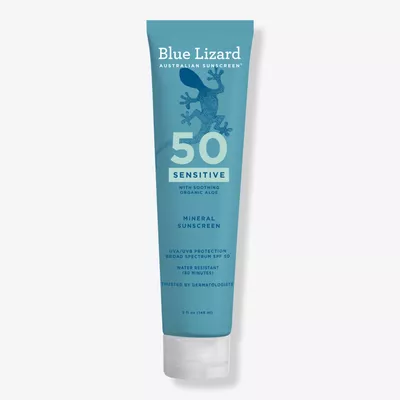 |
| Product | Blue Lizard Australian Sunscreen Sensitive SPF 50, 5 oz Lotion |
| Key Specs | 100% mineral actives (zinc oxide + titanium dioxide); broad spectrum SPF 50+; water/sweat resistant up to 80 minutes; fragrance-free, paraben-free, phthalate-free; aloe vera; no oxybenzone or octinoxate |
| Best For | Sensitive, acne-prone, or rosacea-prone skin owners who want a proven mineral SPF 50 for daily use, beach, and pool |
| Check Price on Amazon | |
What Blue Lizard Claims
Blue Lizard’s pitch centers on serious mineral protection. The brand calls this its “strongest UV protection yet” — a broad spectrum SPF 50+ that blocks 98% of UVB rays (the standard math for any true SPF 50). The active ingredients are 100% mineral: zinc oxide plus titanium dioxide, with no chemical UV filters.
The formula is built for sensitivity: fragrance-free, paraben-free, and phthalate-free, with soothing aloe vera. Blue Lizard says it is hypoallergenic and “trusted by dermatologists for over 20 years.” For beach and pool days, it claims up to 80 minutes of sweat and water resistance. The bottle’s Smart Cap turns blue in UV light as a reapply reminder — a small touch, but a useful one for people who forget to reapply. It also skips oxybenzone and octinoxate, which the brand frames as a reef-friendlier choice.
These are brand claims, not independent lab findings, but the ingredient list itself is verifiable: mineral-only actives, no fragrance, no parabens.
What Buyers Praise
The standout praise is about tolerance. Reviewers with very reactive skin — including rosacea and breakout-prone skin — repeatedly call Blue Lizard the one sunscreen that does not sting, burn, or cause breakouts. That is a rare consensus in sunscreen reviews, where “sensitive skin” formulas still draw complaints. Multiple buyers specifically mention no stinging in the eyes, which matters for anyone who sweats through their sunscreen by midday.
Protection confidence runs high too. Buyers who burn easily report getting through beach days and long outdoor stretches without burning, provided they apply enough and reapply. The 80-minute water resistance gets credit from swimmers and parents who need a sunscreen that survives the pool.
Parents of kids with eczema-prone or reactive skin also show up often in reviews, treating Blue Lizard as the family bottle when everything else causes problems. For households where one product has to work for multiple sensitive faces, that versatility is the selling point.
Common Complaints
The number-one complaint is the white cast. The mineral filters — zinc oxide and titanium dioxide — sit on the skin and leave a visible whitish layer, especially noticeable on deeper skin tones. Some buyers manage it by applying thin layers and blending thoroughly; others find it a dealbreaker for daily wear under makeup. If you have a deeper complexion, go in expecting this and consider it the main trade-off.
Texture is the second gripe. The lotion dispenses thick — reviewers describe it as feeling like paste going on — and it takes real effort to spread evenly. Rushing the application is how you end up streaky. Thin, patient layers work far better than one big dollop.
A few buyers also note the 5 oz bottle goes fast when the whole family uses it, and the price per ounce runs higher than basic chemical sunscreens. That is the mineral-sunscreen premium, and it is worth knowing before you commit to it as a daily driver.
Red Flags and Honest Caveats
The white cast is unavoidable physics. Mineral sunscreens protect by sitting on the skin and physically blocking UV — that is also why they start working the moment you apply them, with no waiting period. The same mechanism leaves a cast. Anyone promising a truly invisible mineral SPF 50 is overselling; set your expectations accordingly.
No sunscreen alone prevents skin cancer. SPF 50 blocks about 98% of UVB when applied correctly, but real-world protection depends on using enough, reapplying every two hours (sooner after swimming or sweating), and combining sunscreen with shade, hats, and protective clothing. Treat sunscreen as one layer of a broader sun-protection routine.
Fabric staining. The product label notes it may stain some fabrics — mineral pigments can mark light clothing and swimwear. Let it set before dressing, and wash swim gear promptly.
Babies under 6 months. For children under 6 months of age, ask a doctor before using sunscreen at all — shade and covering up are the recommended approach for infants.
One ingredient complaint, in context. A small number of reviewers raise concerns about titanium dioxide and endocrine disruption. That is a user complaint, not established science — regulatory bodies continue to permit these mineral filters in sunscreens. We mention it because buyers bring it up, not because the evidence supports avoiding the product on those grounds.
Who Should Buy It — and Who Should Skip It
Buy it if you have sensitive, reactive, rosacea-prone, or breakout-prone skin and want a proven mineral SPF 50 for daily use, beach days, and the pool. It is also a strong pick for parents who need one gentle bottle the whole family can share.
Skip it if a visible white cast is a dealbreaker for you — especially on deeper skin tones — or if you want a sheer, invisible daily sunscreen to wear under makeup. In that case, a tinted mineral formula or a well-tolerated chemical sunscreen may suit you better.
Frequently Asked Questions
Does Blue Lizard leave a white cast?
Yes — like all mineral sunscreens, the zinc oxide and titanium dioxide sit on the skin and can leave a visible white layer, especially on deeper skin tones. Applying thin layers and blending thoroughly minimizes it, but if an invisible finish matters to you, this is the main trade-off to weigh.
Is Blue Lizard reef-safe?
Blue Lizard’s Sensitive formula contains no oxybenzone or octinoxate — the two chemical filters most associated with reef concerns — which the brand frames as a reef-friendlier choice. “Reef-safe” has no legal definition, so treat it as a marketing term and check local regulations where you swim.
Is Blue Lizard good for rosacea?
Many reviewers with rosacea call it the one sunscreen that doesn’t sting or trigger flare-ups, thanks to the fragrance-free mineral formula. That said, rosacea triggers vary by person — patch test on a small area first, and check with your dermatologist if your rosacea is severe.
Mineral vs chemical sunscreen — which protects faster?
Mineral sunscreen starts protecting immediately on application because the zinc oxide and titanium dioxide physically block UV from the moment they sit on the skin. Chemical filters need roughly 15 minutes to absorb and activate. If you apply right before heading out, mineral is the faster option.
The Bottom Line
Blue Lizard Sensitive SPF 50 earns its reputation the hard way: by not hurting the people most sunscreens hurt. For reactive, rosacea-prone, and breakout-prone skin, the gentle mineral formula, genuine 80-minute water resistance, and no-sting wear make it one of the safest bets in its category. The white cast and thick texture are honest trade-offs — the price of mineral protection that starts working the second it goes on.
If your skin tolerates most sunscreens fine and you want an invisible finish, look elsewhere. But if your skin rejects everything else, this is the bottle buyers keep coming back to.
As an Amazon Associate we earn from qualifying purchases.
