


As an Amazon Associate we earn from qualifying purchases.
The Bose Solo Soundbar Series II is the soundbar for people who just want to hear what actors are saying: a compact 2.0-channel bar built around dialogue clarity, with Bose’s Dialogue Mode as its standout feature and a simple one-cable optical setup.
The short answer: if clearer TV dialogue in a small-to-medium room is your main goal, this little bar delivers — voices come through crisp and intelligible, and setup takes minutes. But it’s a 2021 design showing its age: there’s no HDMI port (the single most common complaint), no way to add a subwoofer, and Bose’s newer budget bars may be better value now. Still worth considering at a discount, but know exactly what you’re giving up.
| Product at a Glance | |
|---|---|
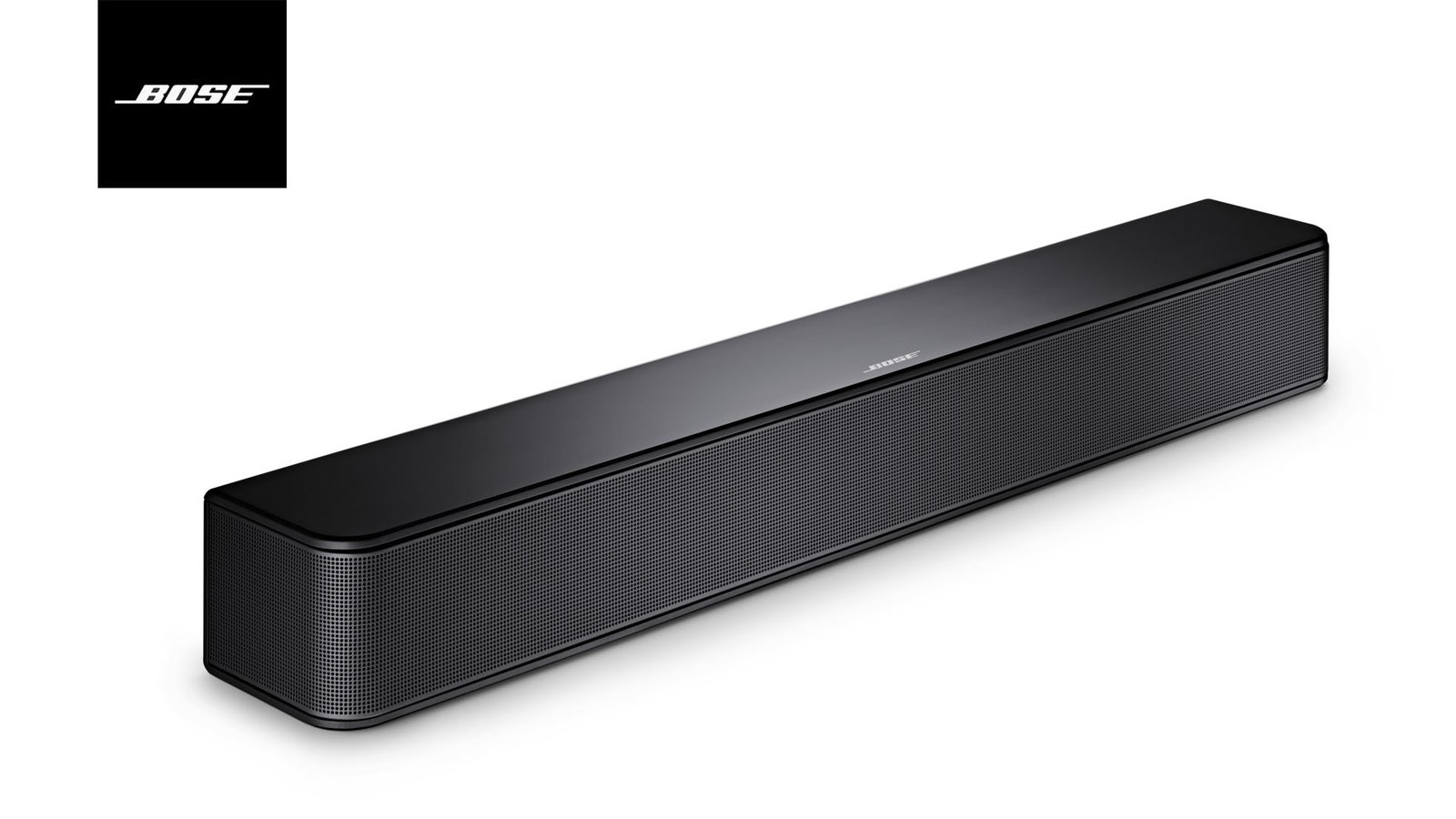 |
Bose Solo Soundbar Series II (Model 845194-1100)
Best for: TV owners in small-to-medium rooms who want clearer dialogue and better-than-TV-speaker sound on a modest budget, without surround-sound complexity. |
| Check Price on Amazon | |
Design and Setup: What You Get
The Solo Soundbar Series II is deliberately simple: a compact matte-black bar, 21.6 inches wide and under 3 inches tall, that slides under most TVs without blocking the screen or the remote sensor. At about 3.7 pounds it feels solid, and the understated design disappears into a living room.
It’s a 2.0-channel system — left and right, no separate subwoofer, no surround speakers — with built-in Dolby Digital decoding. Bose’s headline feature is Dialogue Mode, which the brand says makes every word easier to understand. In practice, reviewers consistently say voices come through crisp and intelligible, which is exactly what this bar is for.
Connectivity is where the age shows. Wired inputs are optical, coaxial, and 3.5mm AUX — there is no HDMI port, which means no HDMI-CEC auto power and input sync with your TV. Bluetooth 4.0 (around 33 feet of range) handles music streaming from a phone, and pairing is straightforward.
Setup is genuinely one-cable simple: connect the included optical cable from TV to soundbar, plug in power, and you’re done. The box includes the optical cable, a remote, and a wall-mount bracket. One quirk to know: there are no buttons on the unit itself, so the remote is essential — lose it and you lose most controls.
Daily operation is equally uncomplicated. The included remote covers power, volume, Bluetooth pairing, Dialogue Mode, and bass adjustment, with large clearly labeled buttons. There’s no display on the bar itself — a small LED indicates status — so you’ll rely on the remote for feedback. It’s infrared, which means it needs line-of-sight to the bar, but the generous button layout makes it easy to use without looking.
What Buyers Like
Dialogue clarity is the reason people buy this bar, and it’s the reason they recommend it. Reviewers consistently praise how crisp and intelligible voices sound, with Dialogue Mode singled out as the standout feature. If your main frustration is mumbling actors and constant volume-riding, this is the fix.
The compact design earns plenty of love too. It fits under most TVs without fuss, looks clean in matte black, and the build quality feels solid — very much a Bose product in fit and finish.
Buyers also appreciate the broad TV compatibility. Since the connection is optical, the bar works with virtually any TV that has an optical output — no HDMI handshake issues, no ARC quirks, no firmware mismatches. For older TVs especially, that’s a genuine advantage: it just works.
Simplicity rounds out the praise: one optical cable and you’re set, Bluetooth pairing is painless, and there’s no app, no firmware dance, no surround calibration to wrestle with. For buyers who want better TV sound without a home-theater project, that ease matters.
What Buyers Complain About
The missing HDMI port is the single most common complaint. Without HDMI-CEC, the soundbar won’t auto-power with your TV or sync inputs, so you’re juggling the Bose remote alongside your TV remote. In 2026, buyers expect one-remote living, and this bar can’t deliver it.
The remote dependency runs deeper: there are no buttons on the unit itself. Lose the remote — or have it die — and you lose access to most controls. Buyers recommend keeping a spare battery handy and the remote somewhere it can’t vanish into couch cushions.
Bass is limited, and it can’t be fixed: there’s no subwoofer output, so no external sub can be added later. Action movies and music sound thin on the low end compared with systems that have even a small sub. And if you want surround sound, look elsewhere — this is a stereo bar, full stop.
Red Flags to Know Before You Buy
Discontinued-adjacent status. The Solo Soundbar Series II launched in 2021, and Bose’s lineup has moved on. Newer Bose budget soundbars may offer better value — HDMI connectivity, newer Bluetooth, fresher tuning — so compare the current lineup before committing to a five-year-old design.
No subwoofer support. The bass you get on day one is the bass you keep. If deep low end matters to you, this bar will disappoint, and there’s no upgrade path — choose a system with a sub output or a bundled subwoofer instead.
Frequently Asked Questions
Does the Bose Solo Soundbar Series II have HDMI?
No. Its wired inputs are optical, coaxial, and 3.5mm AUX. The lack of HDMI means no HDMI-CEC auto power or input sync with your TV.
Is the Bose Solo Soundbar II good for dialogue?
Yes — dialogue clarity is its standout strength. Reviewers consistently praise the crisp, intelligible voices, with Bose’s Dialogue Mode singled out as the best feature.
Can you add a subwoofer to the Bose Solo Soundbar II?
No. There is no subwoofer output and no way to connect an external sub, so the bass performance cannot be upgraded.
Is the Bose Solo Soundbar II still worth buying in 2026?
At a discount, it remains a solid pick for dialogue-first buyers in small-to-medium rooms. But Bose’s newer budget soundbars may be better value, so compare the current lineup first.
The Verdict
The Bose Solo Soundbar Series II does one thing very well: it makes TV dialogue clear. Dialogue Mode is genuinely effective, setup is one-cable simple, and the compact matte-black design fits anywhere. If mumbling actors are your nemesis, this bar solves the problem.
Everything else is a compromise rooted in its 2021 vintage: no HDMI, no subwoofer support, no on-unit buttons, and thin bass. At full list price those would be harder to swallow; at a discount — and an Amazon Renewed option exists — the math improves considerably.
Who should buy it: TV owners in small-to-medium rooms who want clearer dialogue and better-than-TV-speaker sound on a modest budget, without surround-sound complexity.
Who should skip it: anyone who needs HDMI-CEC one-remote control, bass lovers, and buyers who want the latest features — compare Bose’s newer budget bars first.
