


As an Amazon Associate we earn from qualifying purchases.
The quip Sonic Toothbrush is the electric toothbrush for people who hate electric toothbrushes — slim, quiet, good-looking, and cheap to run. After comparing its specs against the competition and reading through hundreds of buyer reviews, my verdict: it’s genuinely pleasant to use every day, and the ADA Seal of Acceptance means it clears a real efficacy bar. But it cleans less powerfully than an Oral-B or Philips Sonicare, it has no pressure sensor, and the battery dies without warning. Buy it for the design and the gentle clean; buy a Sonicare if maximum plaque removal is the goal.
Product at a Glance
| DETAIL | SPEC |
|---|---|
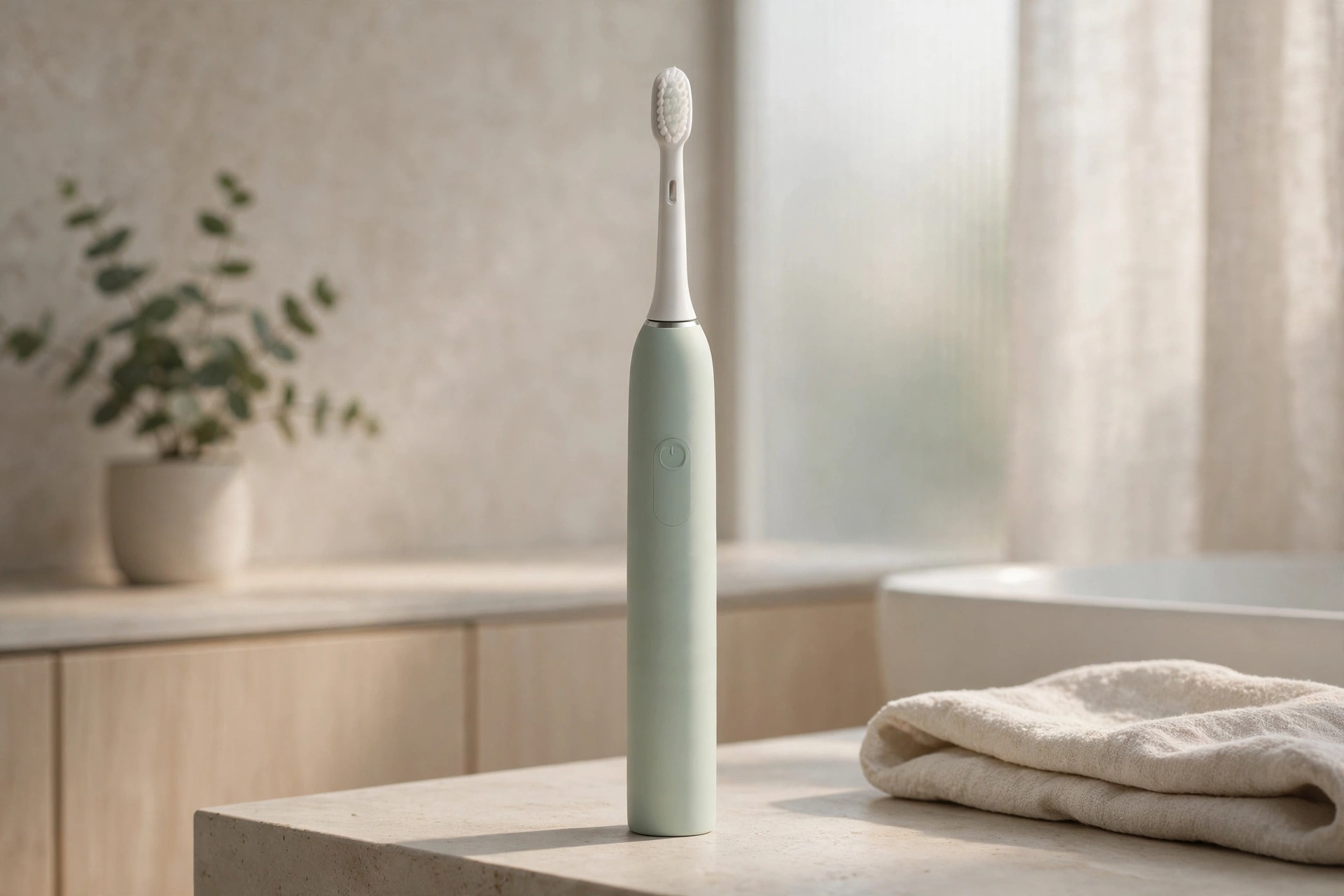
| Product photo |  |
| Name | quip Sonic Toothbrush for Adults with Timer — Metal Handle, Silver — Includes Extra Brush Head and Travel Cover Mount |
| Key specs |
|
| Best for | Design-conscious brushers and travelers who want a gentle sonic clean. |
| Where to buy | Check Price on Amazon Also sold in other colors and finishes. |
What the quip actually is
quip launched with a simple idea: most electric toothbrushes are bulky, loud, and packed with cleaning modes nobody uses. The quip strips it all back to a slim metal handle, one sensitive sonic mode, and a subscription that mails you a fresh brush head every three months. It’s the rare electric toothbrush designed to live on a bathroom counter without embarrassment — and the travel cover that doubles as a mirror mount shows real thought about how people actually travel.
The base model reviewed here is the straightforward one: no app, no Bluetooth, no gimmicks. Fancier quip models add smart features, but they cost extra — and honestly, the simplicity is half the appeal.
The cleaning experience
The vibrations are gentle — noticeably softer than a Sonicare’s 31,000 movements per minute or an Oral-B’s oscillating head. quip runs around 15,000 movements per minute according to third-party reviews, and you feel the difference: less buzz, less tickle. For sensitive teeth and gums, that gentleness is the whole point — aggressive brushing is how people end up with receding gums and worn enamel.
The 2-minute timer with 30-second pulses keeps you honest about covering all four quadrants of your mouth. It’s quiet, too — you can brush while half-asleep without the bathroom sounding like a construction site.
The honest trade-off: several reviewers describe the clean as less thorough than what they got from Philips or Oral-B. If your benchmark is walking out of the dentist with that polished-teeth feeling, quip may leave you wanting. Gentle and effective aren’t opposites, but here they do pull in different directions.
What buyers like
The design praise is effusive: slim, stylish, travel-friendly — quip is a longtime media favorite as a travel pick. People with sensitive teeth and gums love the gentle sonic vibrations. The ADA Seal of Acceptance gets mentioned by buyers who did their homework. Quiet operation, the quadrant-pulse timer, and a 3-month battery life on a single AAA all earn nods. And the brush-head subscription — a fresh head every three months — means owners actually replace their heads on time, which is a bigger deal for oral health than most people realize.
What buyers complain about
Power is the recurring theme. The quip is noticeably less powerful than an Oral-B or Philips Sonicare, and some buyers find the resulting clean less thorough — a fair criticism at this price, where the big brands sell stronger brushes.
Then there’s the missing pressure sensor, which is the quip’s most meaningful omission. Heavy brushers who press too hard get no warning, and over time that can damage gums. There’s also no battery warning light — the brush can die suddenly mid-routine, so keeping a spare AAA around is wise. Single mode only, no whitening or deep-clean settings. And if you want app tracking or smart features, those live on pricier quip models.
Red flags worth knowing
- No pressure sensor. Brushing too hard damages gums and enamel over time. If you’re a heavy-handed brusher, this matters more than any other spec on the sheet.
- It doesn’t replace dental checkups. No electric toothbrush, however good, substitutes for professional cleanings and exams.
- Counterfeits exist. Fake oral-care products circulate online. Buy from reputable sellers — a counterfeit brush head is worse than useless.
Where to buy
quip is sold on the brand’s website (bundled with the brush-head subscription) and on Amazon in several colors and finishes. If the Amazon listing is live, it’s the simplest way to grab one:
Is quip as good as Sonicare?
For gentleness, design, and travel-friendliness, many buyers prefer quip. For raw cleaning power, Sonicare’s ~31,000 movements per minute outclasses quip’s ~15,000. Sensitive teeth: quip. Maximum plaque removal: Sonicare.
Does quip have a pressure sensor?
No — the base model has no pressure sensor, which is its most meaningful omission for heavy brushers. If you tend to press hard while brushing, choose a brush that warns you before you damage your gums.
How long does the battery last?
Up to 3 months on one replaceable AAA battery, per the brand. There’s no low-battery warning light, so it can die suddenly — keep a spare handy.
Is quip ADA accepted?
Yes. quip carries the ADA Seal of Acceptance, which means it’s passed the American Dental Association’s efficacy and safety criteria.
Verdict
Here’s my honest read: the quip is a wonderful second toothbrush and a compromised primary one. As a travel brush or a bathroom-counter object, it’s close to perfect — slim, quiet, handsome, cheap to run. As your only toothbrush, the missing pressure sensor and the gentler clean are real compromises, especially at a price where Oral-B and Philips sell more powerful brushes. I’ll recommend it without hesitation to gentle brushers, design lovers, and anyone whose dentist has told them to ease off. Power-brushers and heavy-handed brushers should look at a Sonicare or Oral-B with a pressure sensor instead.
