


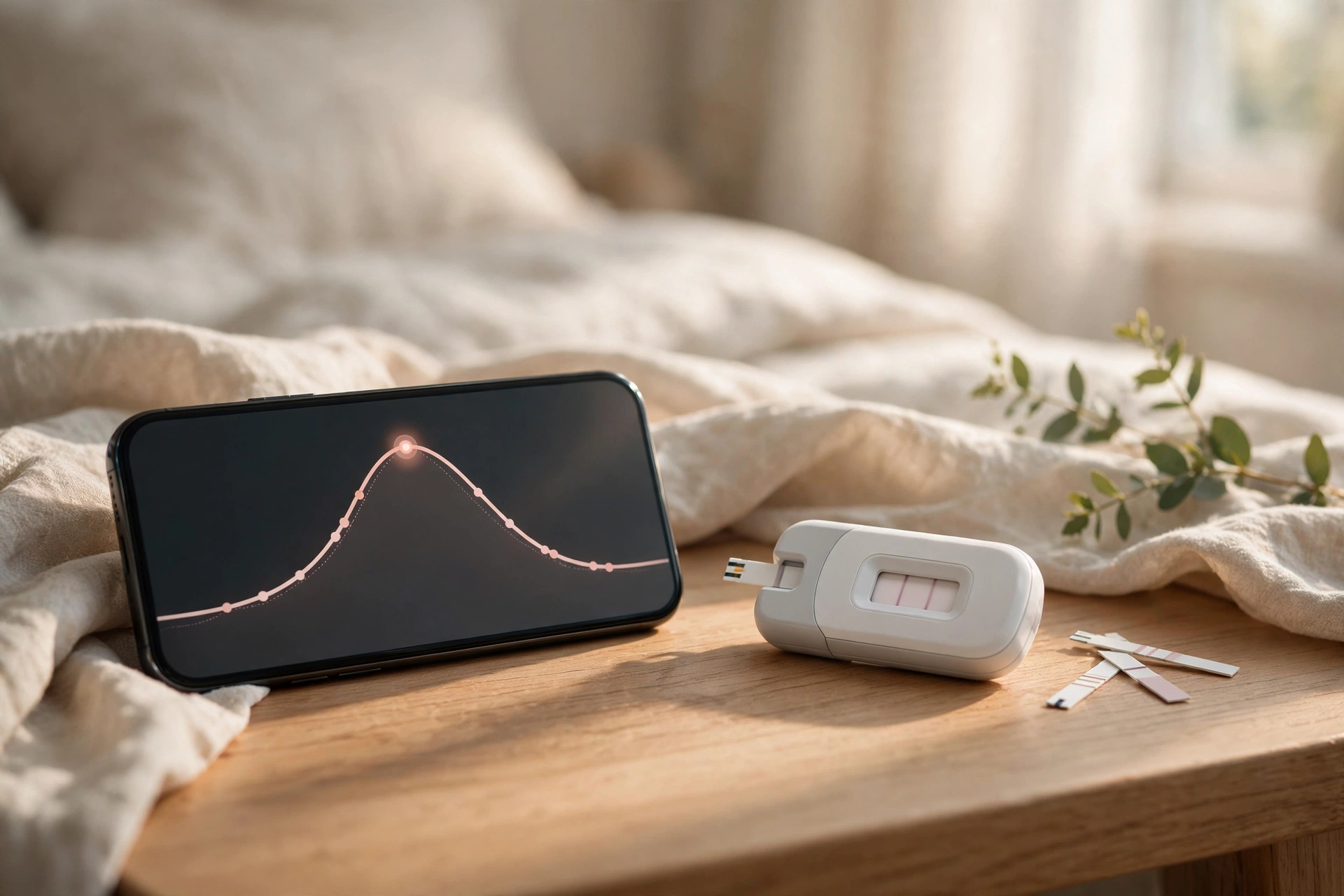
If you’re trying to conceive and you’re tired of squinting at faint lines on cheap ovulation strips, the Inito Fertility Monitor promises something better: actual numbers. The Inito Fertility Monitor Starter Kit pairs a compact wireless reader — the InSight reader — with urine test strips that measure four fertility-related hormones, then charts everything in a free companion app. It’s one of the only at-home systems that tracks estrogen, LH, PdG (a progesterone metabolite), and FSH from a single strip.
So is it worth it? The short answer: for people who want real data — especially those with irregular cycles or PCOS, for whom standard LH strips are often unreliable — Inito delivers genuinely useful insight that budget strips can’t match. But the ongoing cost of refill strips adds up quickly, the app has its quirks, and some of the language used around accuracy and FDA status deserves a closer, more careful look. This research-based review (built from published product information and buyer feedback, not hands-on testing) breaks down what Inito does, what buyers praise and complain about, and the corrections worth knowing before you spend your money.
| Detail | Spec |
|---|---|
| Product photo | 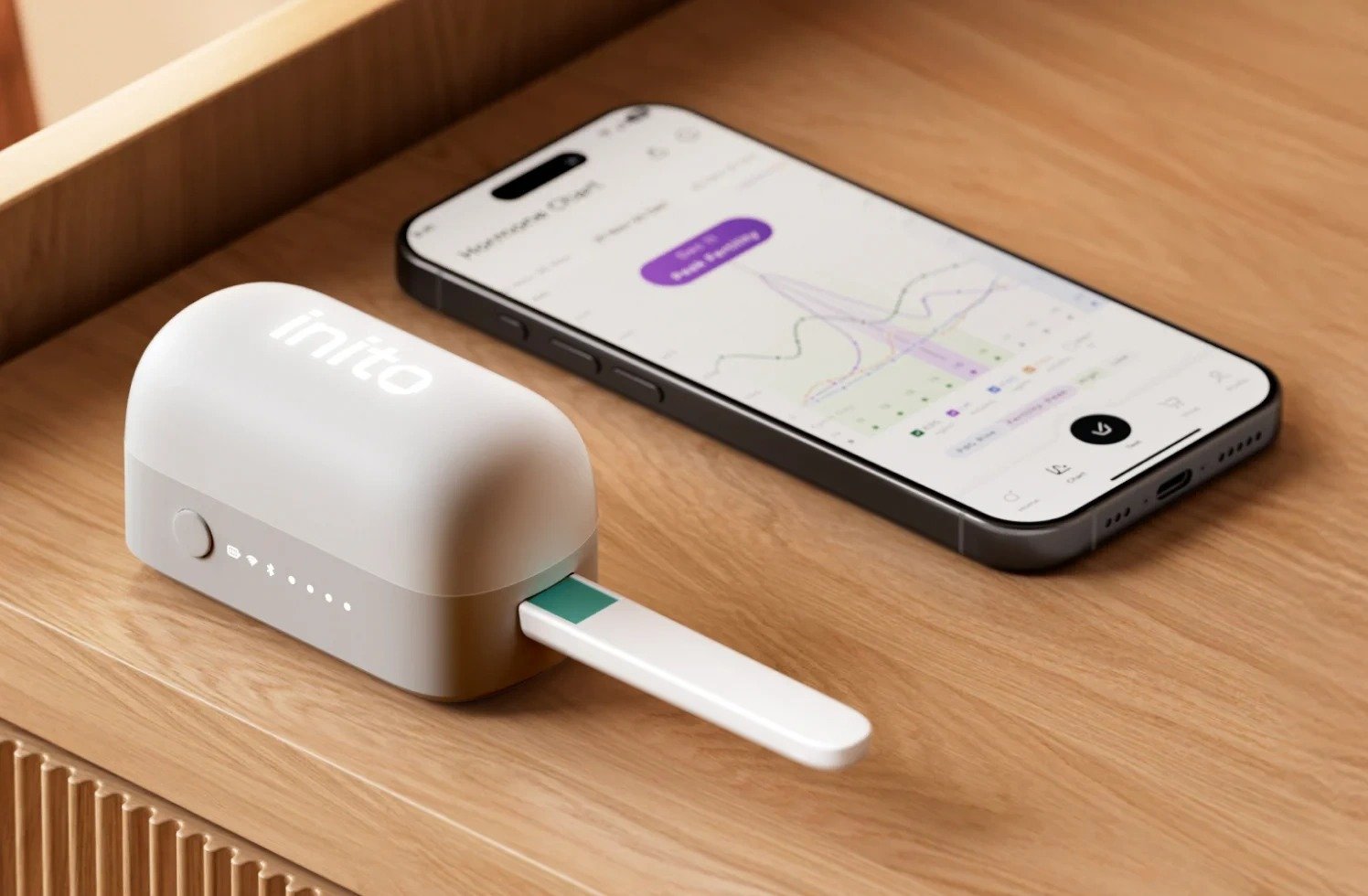 |
| Product name | Inito Fertility Monitor Starter Kit (InSight Wireless Reader + 15 fertility strips) |
| Key specs |
|
| Best for | People tracking fertility who want numeric hormone data rather than line-reading, including those with irregular cycles. |
| Where to buy | Not sold on Amazon — details below. |
Inito Fertility Monitor Overview
The Inito system centers on the InSight wireless reader, a small device that replaces the older phone-attached reader Inito previously sold. The starter kit includes the reader, 15 fertility test strips, a urine collection cup, and a USB-C charging cable. The daily routine is straightforward: dip a strip in collected urine for 15 seconds, insert it into the reader, and the free iOS/Android app delivers your results in about 10 minutes.
What sets Inito apart from standard ovulation predictor kits is the breadth of what it measures. Instead of a single LH surge reading, you get numeric values for four hormones — estrogen, luteinizing hormone (LH), PdG (a progesterone metabolite), and follicle-stimulating hormone (FSH) — plotted as charts in the app. Your fertile window is estimated from these hormone trends, and ovulation itself is confirmed by detecting the rise in PdG that follows ovulation. The app also generates shareable PDF cycle reports you can bring to a doctor’s appointment — a feature frequently praised by users working with fertility specialists.
There’s no subscription fee for the app, which is a genuine plus in a market full of paywalled features, and the kit is HSA/FSA eligible, which can soften the upfront cost if you have those funds available.
What Buyers Like
The standout praise for Inito is the numbers. Instead of guessing whether a test line is dark enough, users get actual numeric hormone values charted over time. Buyers with irregular cycles or PCOS — the people least served by standard LH strips — value this most, since LH-only kits can be misleading when surges are unpredictable or absent.
Ovulation confirmation via PdG is the second big draw. Standard strips predict ovulation; Inito aims to confirm it happened by measuring the progesterone metabolite rise afterward. Combined with the shareable PDF cycle reports, several buyers describe bringing Inito charts to OB-GYN or fertility clinic appointments and having more productive conversations than a stack of strip photos would allow.
The daily routine itself gets good marks: dip, insert, wait about ten minutes. Buyers generally describe the app as intuitive, and the roughly 10–12 minute per-test routine fits into a morning without much friction.
What Buyers Complain About
Cost dominates the complaints. Refill strips run about $49 for 15 — over $3 per test — and regular daily testing across a cycle turns refills into a recurring expense that feels subscription-like in everything but name. This is by far the most common criticism, and it’s worth doing the strip math before you buy the starter kit.
The app draws mixed feedback. While many find it intuitive, others report occasional glitches and sync issues between the reader and the phone — frustrating when you’re testing on a schedule and can’t afford a lost reading.
Some buyers report inconsistent readings depending on test timing, and there’s a learning curve: understanding four hormone charts takes more effort than reading a single LH strip, and a few users felt that curve wasn’t well supported by the onboarding.
Red Flags and Important Corrections
An important correction on regulatory status: Inito is registered with the FDA as a Class I medical device that is exempt from premarket notification. Some review sites describe Inito as FDA-cleared, which overstates what that registration means — exemption from premarket notification is not the same as FDA clearance. If a retailer or review leans on FDA-cleared language, treat it as marketing gloss rather than a regulatory fact.
On accuracy, the company’s headline figures — 95% accuracy to corresponding blood hormone trends and 92.2% accuracy confirming ovulation — are company-reported figures drawn from company data and reviewer citations. They have not been independently verified. Inito’s own disclaimer notes that accuracy can be reduced with irregular or anovulatory cycles, certain medical conditions, medications, and inconsistent testing. The company also describes system-level precision in lab testing versus other at-home monitors — again, a company claim, not an independent finding.
Inito is a tracking aid, not a diagnostic tool. If you’re dealing with fertility difficulties, cycles that concern you, or conditions like PCOS, the responsible move is to consult a healthcare professional rather than relying on any at-home monitor alone. Nothing in this review is medical advice, and a monitor’s charts are no substitute for clinical guidance.
One practical note: the current InSight wireless reader replaces Inito’s older phone-attached reader model. If you’re buying secondhand or reading older reviews, make sure you know which hardware generation is being discussed — the experience and compatibility differ.
Frequently Asked Questions
How accurate is the Inito Fertility Monitor?
Inito reports 95% accuracy to corresponding blood hormone trends and 92.2% accuracy confirming ovulation, but these are company-reported figures from company data and reviewer citations — they have not been independently verified. The company itself notes that accuracy can drop with irregular or anovulatory cycles, certain medical conditions, medications, and inconsistent test timing. Treat the numbers as the company’s claims, and interpret your own charts with appropriate caution.
How much do Inito refill strips cost?
Refill strips cost about $49 for a pack of 15, which works out to over $3 per test. Since the system is designed for daily testing across your fertile window, refills become an ongoing expense — and it is the most common complaint among buyers. Factor the strip cost into your decision, not just the starter kit price.
Does Inito help with PCOS?
Many buyers with PCOS or irregular cycles value Inito precisely because it gives numeric hormone values instead of the line-reading that LH strips require — and LH strips are notoriously unreliable when surges are irregular. That said, Inito’s own disclaimer states accuracy is reduced with irregular or anovulatory cycles, so it is not a magic fix. If you have PCOS and are trying to conceive, discuss your tracking plan with a healthcare professional.
Is Inito better than cheap LH strips?
It measures more — four hormones with numeric values versus a single LH yes-or-no — and it aims to confirm ovulation via PdG rather than just predicting it. For people with regular cycles who just want a surge alert, cheap LH strips do the job for pennies. Inito’s advantage shows most for irregular cycles, data-driven trackers, and anyone who wants charts to share with a doctor. Whether that advantage is worth the strip cost is the real question.
Verdict: Is the Inito Fertility Monitor Worth It?
The Inito Fertility Monitor is worth it for a specific buyer: someone tracking fertility who wants numeric, multi-hormone data — particularly with irregular cycles or PCOS — and who can stomach roughly $3+ per test on an ongoing basis. The PdG-based ovulation confirmation and doctor-ready PDF reports are genuinely differentiating features that cheap strips can’t offer.
It’s harder to justify if your cycles are regular (inexpensive LH strips will serve you fine), if the refill cost makes you wince, or if you expect a diagnostic-grade answer — because Inito is a tracking aid, not a diagnosis, and its headline accuracy figures are company-reported rather than independently verified. And keep the FDA correction in mind: registered as a Class I exempt device is not the same as FDA-cleared.
Bottom line: a useful data tool with a real ongoing cost. Go in with eyes open about the strip math, keep your healthcare provider in the loop, and don’t let FDA-cleared marketing language do the deciding for you.
