

Fabula Coffee has built its brand on a promise that resonates with anyone who’s ever winced after a morning cup: coffee that’s naturally low in acid, lab-tested for hundreds of toxins, and certified organic. If regular coffee leaves your stomach churning or your teeth on edge, the pitch is hard to ignore. But “low-acid” and “mold-free” are marketing terms, not medical diagnoses, and the premium price tag demands a closer look. This review breaks down what Fabula actually sells, what customers report, and the red flags worth knowing before you spend the money.
Product at a Glance
| DETAIL | SPEC |
|---|---|
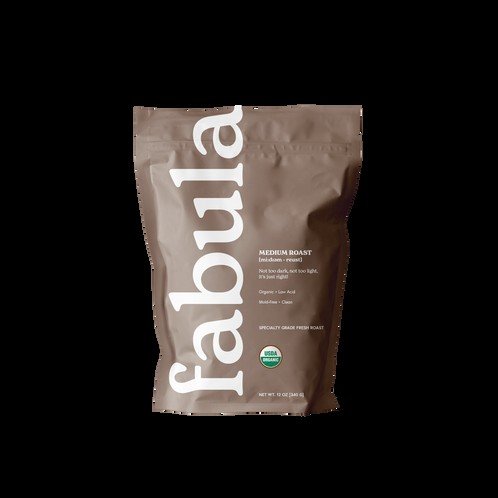 |
Fabula Low Acid Coffee, USDA Organic Ground Coffee Medium Roast, 12 oz |
| Key Specs | 12 oz (340 g) bag; also sold in whole-bean variant; medium roast, single-origin (Peru per Amazon listing); USDA Organic, non-GMO (per listing); lab-tested for 550+ toxins per brand; 30-day money-back guarantee (brand site) |
| Best For | Coffee drinkers who find regular coffee too acidic or stomach-upsetting and are willing to pay a premium for a certified-organic option |
| Check Price on Amazon | |
As an Amazon Associate we earn from qualifying purchases.
What Fabula Claims
Fabula’s marketing centers on three promises, all presented here as brand claims rather than verified facts. First, the coffee is described as naturally low-acid, achieved through specialty-grade beans and a roasting process the company says preserves flavor while keeping acidity down. Second, every batch is said to be lab-tested for more than 550 toxins, with the brand advertising its coffee as mold-free and pesticide-free. Third, Fabula states that a 12 oz bag yields about 30 to 35 cups of 6 oz coffee, which frames the per-cup cost more favorably than the sticker price suggests.
The USDA Organic certification is the most concrete of the brand’s credentials. Unlike “low-acid” — a term with no standardized definition or regulatory threshold in coffee — organic certification follows a defined standard with third-party auditing. The non-GMO positioning follows from the organic label. The lab-testing claim is harder for a shopper to evaluate: Fabula says testing covers 550+ toxins, but no independent lab report was located for this review, so buyers are taking the brand’s word for it.
The single-origin Peru sourcing (per the Amazon listing) and medium roast place Fabula squarely in specialty-coffee territory. A whole-bean variant is also sold for those who grind at home. The 30-day money-back guarantee on the brand’s own site lowers the risk of trying it, at least for direct purchases.
What Customers Praise
The most consistent positive in customer feedback is taste. Many brand-hosted reviewers describe the coffee as smooth and non-bitter, with several reporting less stomach discomfort compared to the regular coffee they drank before. For people who love coffee but dread the aftereffects, that subjective improvement is the entire value proposition — and the reviewers who feel it tend to become loyal.
Roast-to-order freshness comes up repeatedly as a positive. Fabula roasts after the order is placed rather than shipping coffee that has sat in a warehouse, and customers notice the difference in aroma and flavor. Freshness is one of the few claims in coffee marketing that maps directly to something drinkers can taste, so this is a meaningful operational choice rather than just a slogan.
The USDA Organic certification earns genuine goodwill. Shoppers who prioritize organic groceries see the label as a baseline requirement, and Fabula clears it. Combined with the non-GMO positioning, the certification gives the brand credibility with the health-conscious audience it targets, even where the more exotic claims deserve skepticism.
What Customers Criticize
Price is the dominant complaint. At roughly $29.99 for a 12 oz bag on the brand’s site (observed October 11, 2026 — not a live Amazon price), Fabula costs about two to three times what many drinkers pay for regular specialty coffee. The brand’s math of 30 to 35 cups per bag softens the per-cup figure, but the upfront cost still stings, especially for households that brew multiple pots a day.
The “mold-free” framing draws criticism from coffee experts who argue that mold risk in commercially sold coffee is overstated. Coffee is an agricultural product, and while poor storage can cause problems, the mainstream supply chain already manages this. Critics see “mold-free” as a fear-based differentiator — a claim designed to make standard coffee sound dangerous rather than to describe a real, verified advantage. Whether you find that persuasive or manipulative likely depends on how much you trust the brand’s testing narrative.
Some buyers also note that “low-acid” didn’t translate into a noticeable difference for them. Acidity perception varies, and darker roasts, brewing method, and individual sensitivity all play roles. A medium roast marketed as low-acid may still taste bright to someone sensitive to it, which makes the guarantee important — it’s the fallback if the core promise doesn’t land for you.
Red Flags Worth Knowing
“Low-acid” is not a regulated term. There is no standard definition, no required test, and no certifying body for low-acid coffee. Fabula’s claim rests on its bean selection and roast process, which the brand describes but does not quantify against any benchmark. Treat it as marketing language, not a clinical fact.
“Mold-free” marketing has drawn industry pushback. Several coffee professionals have criticized mold-free positioning across the specialty segment as fear-based — implying that ordinary coffee is contaminated without evidence that it is. Fabula’s lab-testing claim (550+ toxins) sounds rigorous, but without a published, independent report, shoppers cannot verify what was tested, by whom, or against what thresholds.
The premium lacks independent verification. Paying two to three times the price of regular specialty coffee is justifiable if the testing and sourcing claims hold up, but the key differentiators — the toxin panel, the low-acid process — are asserted by the brand rather than confirmed by third parties. The organic certification is independently audited; the rest is trust.
Brand-hosted reviews deserve caution. Fabula showcases glowing customer feedback on its own site, which is normal for direct-to-consumer brands and also inherently selective. Glowing testimonials about smooth taste and settled stomachs are encouraging but not data. Read third-party retailer reviews too, and weigh the critical ones seriously.
Frequently Asked Questions
Is it really low acid?
Fabula markets its coffee as naturally low-acid through specialty-grade beans and roasting, but ‘low-acid’ is not a regulated term with a standard definition or test. There’s no clinical proof behind the claim — treat it as brand marketing rather than a medical fact.
What does the lab testing cover?
According to the brand, every batch is lab-tested for more than 550 toxins, and the coffee is marketed as mold-free and pesticide-free. However, no independent lab report was located for this review, so shoppers can’t verify what was tested, by whom, or against what thresholds.
How much coffee per bag?
Fabula states that a 12 oz (340 g) bag yields about 30 to 35 cups of 6 oz coffee. That’s the brand’s figure — your actual yield depends on how strong you brew.
Is the guarantee real?
Fabula offers a 30-day money-back guarantee on purchases made through the brand’s own website. If you’re buying on Amazon, the return falls under Amazon’s standard return policy instead — check the listing for details.
