

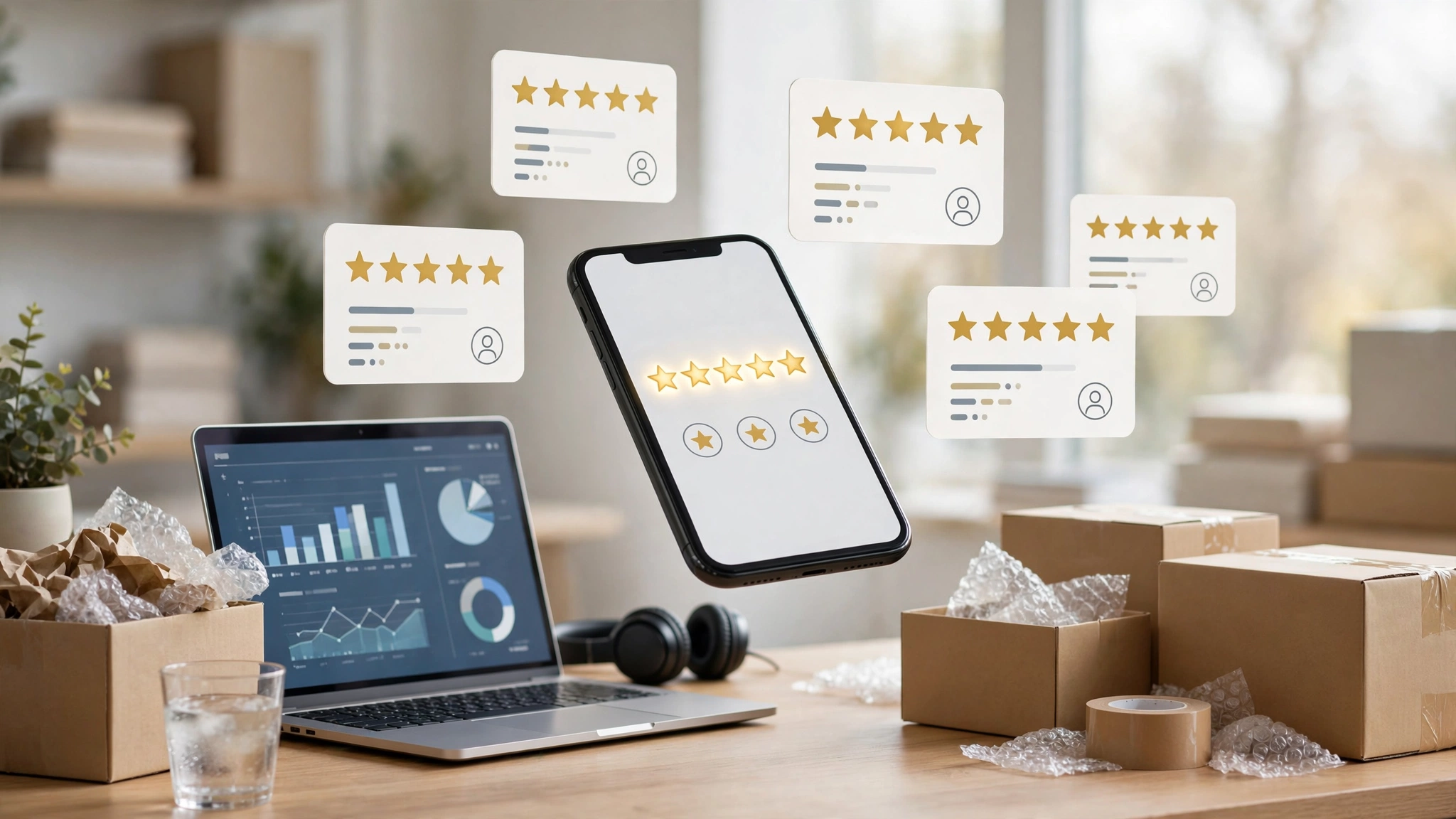
Amazon review products fall into three buckets — Amazon Vine (the only sanctioned review program), the Influencer program, and physical review-solicitation tools businesses buy. If you’ve seen offers for “free products for reviews” or gadgets that supposedly generate five-star ratings, this guide sorts the legitimate from the scams.
Reviews drive Amazon sales, so an entire ecosystem has grown around them. Some of it is official and above-board. Some of it will get your account banned. And some of it is just… stickers. Here’s what each bucket actually is, and the red flags that matter more than any tool.
Amazon Vine, Explained
Amazon Vine is Amazon’s invitation-only review program — and it’s the only review program Amazon itself runs for products. Here’s how it works: Amazon invites experienced reviewers (called Vine Voices) based on the quality and helpfulness of their past reviews. Participating sellers enroll eligible products (ASINs) through Seller Central — which requires Brand Registry — and Vine Voices can request those products for free.
In exchange, Vine Voices write honest reviews. The key word is honest — Vine reviewers aren’t paid for positive coverage, and their reviews count toward the product’s star rating just like any other review. Vine Voices operate in Silver and Gold tiers, with daily limits on how many products they can request.
For sellers, Vine is the legitimate way to get early reviews on new products — particularly useful right after launch when a listing has no social proof. For shoppers, a “Vine Customer Review” badge signals the reviewer received the product free through the official program, not that the review was bought. It’s about as trustworthy as Amazon reviews get.
The Amazon Influencer Program
Separate from Vine, the Amazon Influencer Program is for creators with an established social media audience. Influencers get a storefront page where they curate and recommend products to their followers, earning commissions on qualifying purchases. Think of it as the creator-tier version of Amazon Associates — the affiliate program where anyone (bloggers, publishers, site owners) can earn commissions by linking to Amazon products.
The distinction matters. Vine is about product reviews; the Influencer program is about product recommendations tied to an audience. Influencers aren’t necessarily testing products rigorously — they’re curating for followers. If you’re a shopper, treat influencer picks as what they are: monetized recommendations, not independent reviews. If you’re a creator, both programs are legitimate ways to earn, but they come with disclosure requirements you shouldn’t ignore.
Review-Solicitation Tools Businesses Buy
The third bucket is physical products businesses purchase to make leaving reviews easier: NFC tap cards, QR code stickers, and tabletop stands that send customers to a review page with a tap or scan. You’ve seen these at restaurant counters, salon desks, and auto shops — “Tap here to review us on Google.”
These tools don’t generate reviews by themselves — they just reduce friction. A tap card can’t overcome bad service; it only makes it easier for satisfied customers to act on their satisfaction. Used neutrally (offered to everyone, not just happy customers), they’re a legitimate marketing tool. The honest ones are sold as convenience products, not as “five-star generators” — anyone promising guaranteed ratings is overselling.
Paid-Review Schemes: The Warning
Now the red flags — and they matter more than any tool above:
- Paid-review schemes — paying for positive reviews or buying “review services” — violate Amazon’s policies and can get seller accounts banned. There’s no gray area here; Amazon treats this as manipulation.
- There is no legitimate “Amazon paid review program” for consumers. Emails or social ads offering free products or cash for reviews are scams — they harvest your data, your Amazon account, or both.
- Amazon prohibits incentivizing reviews and review gating. Offering discounts, gifts, or contest entries for positive reviews is banned, as is selectively soliciting only satisfied customers. Both can trigger enforcement against sellers.
- Third-party review products (tap cards, sticker kits) cannot overcome bad service — they only make reviewing easier. The tool is only as good as the experience behind it.
- Treat any “get free products for reviews” email or social ad with suspicion. If it’s not Amazon Vine, it’s not sanctioned — and it’s probably a scam.
Frequently Asked Questions
What is Amazon Vine?
Amazon Vine is Amazon’s invitation-only review program. Vine Voices — reviewers invited by Amazon based on their review history — receive free products from enrolled sellers in exchange for honest reviews. Vine reviews count toward the product’s star rating.
Can anyone join Vine?
No. Vine is invitation-only; Amazon selects participants (Vine Voices) based on the quality and helpfulness of their past reviews. Shoppers can’t apply. Sellers, meanwhile, can enroll eligible ASINs through Seller Central if they have Brand Registry.
Can sellers buy reviews?
No — not legitimately. Paying for positive reviews, buying ‘review services,’ or selectively soliciting only happy customers (review gating) all violate Amazon’s policies and can get seller accounts suspended or banned. The only sanctioned path is Amazon Vine.
Are review tap cards allowed?
Physical review-solicitation tools like NFC tap cards and QR stickers are allowed as long as they’re used neutrally — making it easier for any customer to leave a review. What’s prohibited is incentivizing reviews (offering discounts or gifts for positive reviews) or review gating (only asking happy customers).
The Bottom Line
Amazon review products aren’t mysterious once you know the three buckets: Vine (the official, invitation-only program), the Influencer and Associates programs (for creators earning commissions), and solicitation tools (for businesses reducing friction). Everything else — paid reviews, “review services,” free-product offers in your inbox — is either against the rules or an outright scam.
If you’re a seller, stick to Vine and neutral solicitation. If you’re a shopper, treat unsolicited review offers as spam and look for the Vine badge as a trust signal. And if you’re a business buying tap cards, remember: the tool only works if the experience deserves the stars.
