


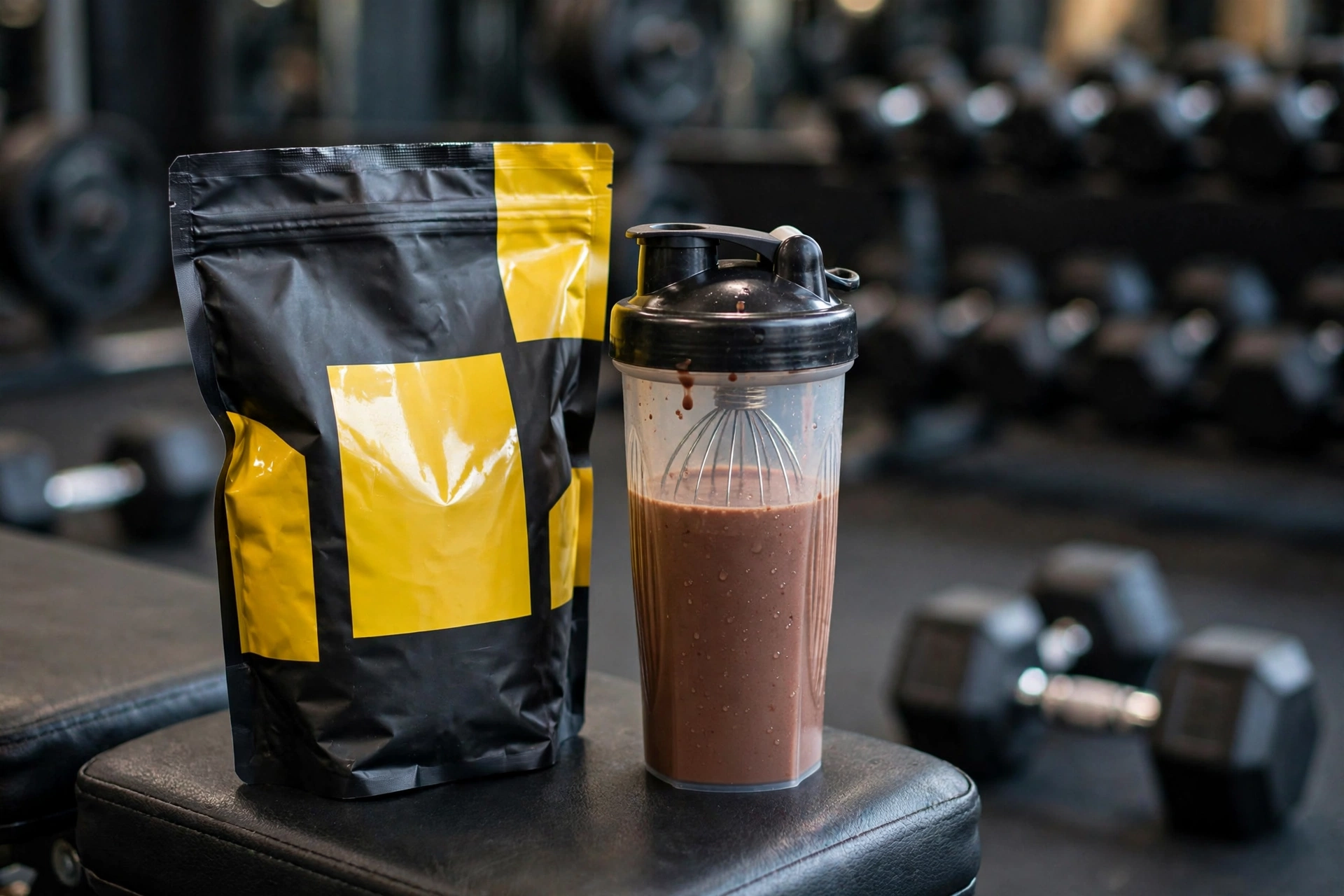
Whey protein is a crowded shelf, and most tubs compete on flavor count or price per serving. Ascent takes a different angle: native whey isolate with a short ingredient list, no artificial flavors or sweeteners, and third-party certifications. The 100% Whey delivers 25g of protein per scoop with 5.5g of BCAAs, aimed squarely at the post-workout window.
The brand calls it the “least-processed whey” on the market and leans on rapid digestion as the reason to drink it after training. It’s Informed Choice certified and gluten-free, which broadens the appeal. But it’s priced at a premium, the flavor lineup is limited, and some users report lumps. Here’s the full picture.
| Product at a Glance | |
|---|---|
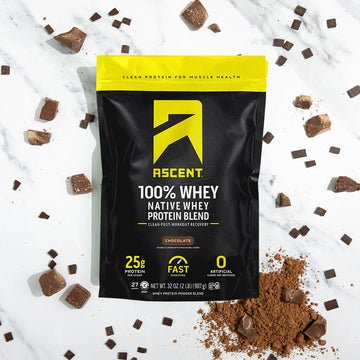 |
Ascent 100% Whey Post Workout Whey Protein Isolate Powder |
| Key specs | 25g native whey protein isolate per scoop; 5.5g BCAAs; 2.6g leucine; zero artificial flavors and sweeteners; certified gluten-free; Informed Choice certified; 27 servings per 2 lb bag; rapidly digesting. |
| Best for | Athletes and gym-goers wanting a clean, third-party-tested post-workout whey isolate. |
| Check Price on Amazon | |
As an Amazon Associate we earn from qualifying purchases.
What “native whey” means
Most whey protein is a byproduct of cheese-making — the liquid left over after milk is curdled gets filtered and dried. Native whey, by contrast, is processed directly from milk, skipping the cheese step. Ascent says this makes it the “least-processed whey” on the market.
Does that matter in practice? The theory is that less processing preserves more of the protein’s native structure. In reality, the nutritional difference between a good native isolate and a good regular isolate is modest — both deliver complete protein with all essential amino acids. The native claim is more about sourcing philosophy than a dramatic functional advantage. What matters more is what’s NOT in the tub: no artificial flavors, no artificial sweeteners, and a short enough ingredient list that you can actually read it.
What the brand claims
Ascent claims its whey is the “least-processed whey” on the market and that rapid digestion makes it ideal for the post-workout window. The rapid-digestion claim is reasonable — whey isolate is indeed fast-digesting compared to casein or whole-food protein — but the “ideal post-workout” framing is marketing. Total daily protein intake matters far more than precise timing for most people, and the “anabolic window” is wider than supplement ads suggest.
What’s good about it
- Clean taste and a simple ingredient panel. No artificial flavors or sweeteners — none of the chemical aftertaste some proteins have.
- Mixes well with no stomach issues for many users. Whey isolate is low in lactose, which helps if regular whey concentrate bothers you.
- Informed Choice certified for banned substances. A meaningful credential for competitive athletes subject to drug testing.
- 25g protein with 5.5g BCAAs and 2.6g leucine per scoop. Solid numbers for muscle-protein-synthesis support.
What’s not so good
- Premium price vs. mainstream whey. You’re paying for the clean label, the native sourcing, and the certifications.
- Lumps reported without vigorous shaking. It needs a good shake — a spoon stirred in a glass won’t cut it.
- Stevia bothers some users. The natural sweetener works for most but has a distinct aftertaste some people dislike.
- Flavor variety limited vs. bigger brands. If you like rotating through a dozen flavors, Ascent’s lineup is small.
Who Ascent is for — and who should look elsewhere
Ascent is built for the lifter or athlete who reads ingredient labels and cares about certifications. If you want a post-workout protein with minimal ingredients, no artificial sweeteners, and banned-substance testing, it checks those boxes cleanly. The 27 servings per 2 lb bag work out to roughly a month if you use one scoop daily, which makes it easy to budget as a training staple.
It’s less compelling if you’re price-sensitive, want a big flavor rotation, or don’t care about the native-whey story. There’s nothing wrong with a mainstream whey concentrate if your priority is cost per gram of protein — you’ll just get artificial sweeteners and a longer ingredient list along with the savings. And if you’re highly sensitive to stevia’s aftertaste, try a single-serve packet first before committing to a full bag.
Ascent vs. Optimum Nutrition
The inevitable comparison: Optimum Nutrition Gold Standard is the best-selling whey in the world, with a huge flavor lineup and an aggressive price. Ascent is the challenger — cleaner label, native whey sourcing, Informed Choice certification, but fewer flavors and a higher price.
Choose Ascent if ingredient simplicity and third-party testing are your priorities. Choose Optimum Nutrition if you want maximum flavor variety and the lowest cost per serving. Both deliver quality whey protein; the difference is philosophy and price, not a dramatic gap in results.
Red flags and safety notes
- Protein powder supports protein intake — it does not guarantee muscle growth. Training, total diet, and consistency drive results.
- Contains milk. Worth stating plainly for anyone with a dairy allergy.
- Check the label for sweeteners if you’re sensitive to stevia.
- Consult a healthcare professional before use if managing a health condition.
Healthcare-professional note: Talk to your doctor or another qualified healthcare professional before starting any new supplement, especially if you have a medical condition, take medication, or are pregnant or nursing.
Frequently asked questions
How much protein is in each scoop?
Each scoop delivers 25g of native whey protein isolate, with 5.5g of BCAAs including 2.6g of leucine.
Is it really native whey?
That is the brand’s claim — Ascent describes its whey as the “least-processed whey” on the market. Native whey means the protein is processed directly from milk rather than as a byproduct of cheese-making.
Does Ascent whey mix well?
It mixes well for most users, though some report lumps without vigorous shaking. Use a shaker bottle rather than a spoon for the smoothest result.
Ascent vs. Optimum Nutrition — which should I choose?
Choose Ascent for ingredient simplicity, native whey sourcing, and third-party testing. Choose Optimum Nutrition for a wider flavor selection and a lower price per serving. Both are quality whey proteins.
The bottom line
Ascent 100% Whey is a well-made protein powder for people who prioritize clean ingredients and third-party testing. The 25g of native whey isolate, the simple panel, and the Informed Choice certification make it a strong pick for the post-workout slot — especially if artificial sweeteners are a dealbreaker for you.
You’ll pay more than you would for mainstream whey, and the flavor options are limited. But if the clean-label philosophy resonates and you don’t mind shaking vigorously, Ascent delivers exactly what it promises: straightforward, fast-digesting whey protein without the extras.
